

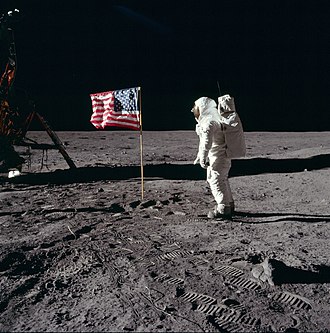
efforts by NASA to establish habitats on the moon have yet to yield a tangible result. The reason why the aspiration for lunar colonization has been elusive is clear; the moon, as Earth’s satellite, is devoid of the essential resources for sustaining life. It not only lacks liquid water but also has such a sparse atmosphere that it resembles a vacuum. A fundamental necessity for any prospective lunar colony would be a method for producing breathable air.
Creating such a system requires access to the components of air. It has generally been presumed that to generate breathable air on the moon, it would be necessary to bring in particles from our atmosphere to initiate the process. Transporting part of Earth’s atmosphere to the moon would be an unparalleled technological challenge, and one can only imagine the associated costs. Nevertheless, a recent research publication has indicated that natural processes may have already achieved this for us.
In a revolutionary study published in the journal Communications Earth & Environment in December of 2025, a research group from the University of Rochester’s Department of Physics and Astronomy presented findings suggesting that solar winds have been continuously carrying particles from Earth’s atmosphere to the moon, where they settle on its surface. If this is accurate, then the lunar material might be crucial for both Earth’s future and its history.