
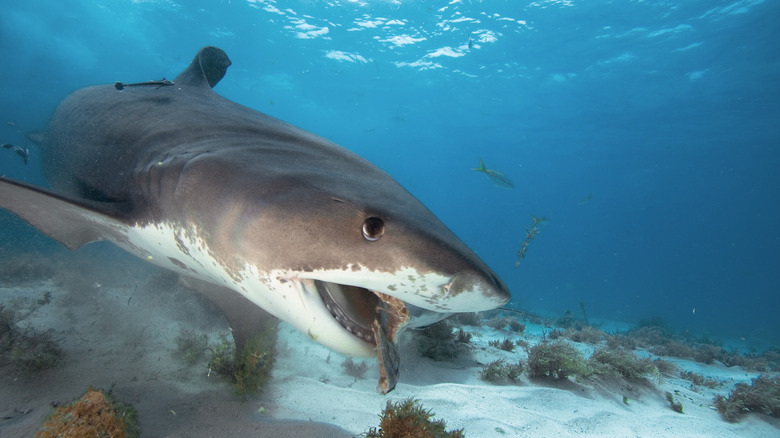

attributed to oceanic endeavors or specifically ship anchors. Anchors can occasionally directly interact with the cables, are dragged along the ocean floor and the cables themselves, or unintentionally deployed around a cable. Believe it or not, deliberate deployments occur as well, typically due to adverse weather conditions. However, there’s another method by which those cables can suffer damage that you likely wouldn’t anticipate — shark bites.
There have been accounts of sharks biting, or rather gnawing on, underwater cables dating back to the late 1980s. Scientists are uncertain as to the reason for this behavior. They hypothesize that the cables emit electromagnetic fields, which could cause them to resemble live prey to these marine predators. Such occurrences are infrequent compared to various other methods by which cables sustain damage. Merely 1% of total damage to deep-sea cables until 2006 was attributable to sharks, as opposed to natural disasters, earthquakes, or even sabotage. Between 2007 and 2014, no documented cable faults were shown to be caused by sharks.
Nonetheless, Google encased its trans-Pacific cables in a Kevlar-like protective layer. This should, ideally, safeguard against any potential fish bites or, possibly, other prevalent types of damage. It may not be common, but Google deemed it necessary to provide the additional protection.