Four Must-Have Costco Devices for Your Upcoming Trip

GoPro Hero13 Action Camera Bundle, boasting an average rating of 4.1 stars, includes an additional battery, a 128GB microSD card, and a carrying case. You might also consider picking up accessories such as a head or chest mount, tripod, or selfie stick mount. From that point, you can document both photos and videos from your unique first-person view.

The gadget is waterproof up to 33 feet, allowing you to shoot underwater at indoor pools or water parks. If used in saltwater, be sure to rinse it with clean water right after to avoid rust and corrosion. Thanks to the device’s integrated Wi-Fi and Bluetooth capabilities, you can easily transfer your most impressive footage to your phone for social media sharing or simply for archiving in your library. Additionally, you can live stream footage, which is ideal for content creators eager to document and share their experiences with their audience. We assessed the original GoPro Hero and

Google Messages Launches Live Location Sharing for Android

Google has enhanced its Find Hub services, and we have witnessed a variety of alternatives emerging with real-time sharing capabilities like Life360 and others. You can even share your location directly with others using Google Maps. As more applications have adopted the concept of staying connected constantly, we’ve also observed platforms like Snapchat embracing location sharing. And now, it appears that Google is advancing by integrating real-time location sharing directly into an app you likely use daily on your Android device: Google Messages.

Until now, Google lacked a mechanism to facilitate real-time location sharing with others through its messaging chat efficiently. You always had to exit the app and utilize another system, like the Find Hub. However, this seems to be evolving, as a recent APK teardown from Android Authority indicates that not only is Google developing this feature, but they also managed to make it operational on a beta version of the Google Messages app. Once it rolls out, it will be a great enhancement to the ongoing updates that Google Messages has received, including improved safety features and the option to erase messages after they have been sent.

What real-time sharing in Google Messages will look like

“Almost a Century-Old Movie Faithfully Depicts Space Exploration”

science fiction boasts an extraordinary history of anticipating scientific progress, foreseeing technological innovations that span from tablets to holograms, and even shaping the public’s perception of intricate scientific phenomena. Since its inception, a heated discourse has emerged among film enthusiasts and scientists concerning the scope of the genre’s scientific impact. Most prominently, sci-fi’s effect on the general understanding of intricate scientific ideas is noteworthy. This is perhaps most evident in the field of space exploration, where films like “Woman in the Moon” (1929) by the renowned Austrian director Fritz Lang have shown remarkable foresight, acting as the earliest popular depiction of various aspects from rocket countdowns and lunar orbits to the politics intertwined with contemporary space competitions.

Since Georges Méliès’ “A Trip To The Moon” hit the screens in 1902, viewers have reveled in the diverse cinematic interpretations of space travel, with iconic directors such as George Lucas, Christopher Nolan, and Stanley Kubrick aiming high. Yet, arguably no film has had as profound an impact on space travel and the public comprehension of it, as Lang’s silent masterpiece. Presently, “Woman in the Moon” is regarded as the pioneer in portraying space travel as a credible scientific undertaking. Unveiled in 1929, two years following Lang’s groundbreaking work “Metropolis” that solidified his prominence in global cinema, “Woman in the Moon” was developed with the collaboration of scientists to ensure maximum realism; a detail that some observers attribute to the film’s prohibition by Nazi Germany during WWII. Blurring the lines between a spy thriller and romantic drama, along with its adventure through outer space, “Woman in the Moon” remains an exceptional technical achievement that, nearly a century post its release, endures as one of the most scientifically accurate sci-fi films of its time.

To the moon

In the wake of the tremendous success of his earlier film “Spies” (1928), Fritz Lang embarked on his final foray into science fiction. A grand adaptation of his spouse-turned-screenwriting collaborator Thea von Harbou’s novel, “Woman in the Moon” is seemingly segmented into two parts. The initial segment plays out as a traditional spy thriller, tracing rival factions of industrialists and scientists as they deceive their way through the preliminary phases of an emerging space race. The latter part follows this motley crew of astrophysicists and fraudsters as they confront the final frontier. Throughout this nearly three-hour saga, a dramatic love triangle unfolds between scientist Wolf Helius and his aides. Concluding with a bleakness characteristic of Lang’s work, it delivers a thrilling and moving representation of the ambitions for power and its grim repercussions.

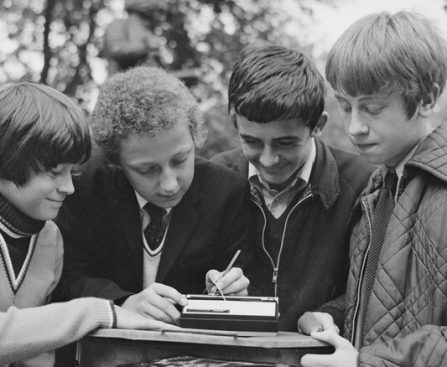
What distinguishes the film to contemporary audiences, however, is its scientific foresight. To guarantee accuracy, Lang became one of the earliest directors to enlist a team of scientists, reaching out to rocket expert Hermann Oberth, who would later play a crucial role in the development of Nazi Germany’s V-2 rocket program, and notable science journalist Willy Ley. Together, they crafted a narrative that anticipated modern space exploration, being the first film to illustrate zero-gravity, multi-stage rockets, figure-eight lunar landing paths, and g-force-laden launches. It even popularized our understanding of rocket liftoffs, complete with meticulous checklists and significant countdowns. As Lang recounted to Peter Bogdanovic in a 1965 interview included in his book “Who The Devil Made It,” the countdown was conceived out of “dire necessity” to create narrative tension (via TCM). Regrettably, the film’s realism falters once the rocket reaches the moon, portraying a breathable atmosphere, Earth-like gravity, and a surface abundant with treasures. However, the fantastical conclusion does not undermine the fact that

Grasping the Function of the Slot on Your Laptop: It’s Not a Connector

If you’ve had a laptop over the last two decades, it’s likely you’ve encountered one. However, it can be easy to overlook, particularly since it doesn’t appear to serve a purpose at first sight. The item we’re referring to is that small slot found on the side of numerous laptops — you know, the one situated close to your USB and charging ports, distinguished by a lock icon beside it. Well, what if we informed you that it actually has a practical use?

This slot — which has been available on numerous laptop models for the last 20 years — is designed for a specific type of lock known as a Kensington lock. These security devices allow you to secure your electronics directly to furniture like tables, desks, or any immovable item. Have you ever visited Best Buy, Walmart, or similar retailers featuring laptops and electronics and noticed some of them attached to a cable? That’s a Kensington lock, and there’s a good chance your laptop is compatible with one as well.

Which devices can use Kensington locks?

A variety of devices have been created with Kensington locks in consideration. Some of the top laptops feature them (although ultrabooks or ultra-slim laptops tend not to), along with desktops, monitors, projectors, and many other high-value electronic devices that may need to be secured somehow. You can determine if your laptop is equipped with a Kensington lock slot by inspecting the side or back for the connector slot. If it has one, you can search for a compatible lock by checking your laptop model.

Kensington Security Slots (often referred to as “K Slots”) have been in existence for over 30 years. Throughout this duration, the locks have evolved to accommodate an array of devices, including those already mentioned, as well as printers, speakerphones, and more. The company behind them, Kensington Computer Products, asserts that 95% of laptops, projectors, printers, and monitors are compatible with its locking systems — at least as of 2022.

The number of supported devices has shifted slightly as ultrabooks and ultra-thin laptops have become increasingly prevalent, but standard-sized laptops usually still include a Kensington Security Slot. If you’re considering purchasing an affordable laptop from Walmart or other retailers, it’s worth checking whether it includes the provision for a Kensington lock.

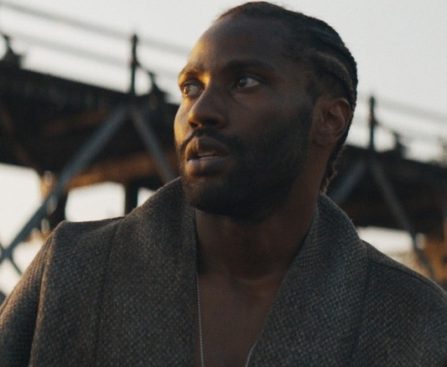
“2018 Thriller Featuring Yellowstone’s Kelly Reilly Rises on Netflix’s Top Lists”

the top ten films on Netflix for the week concluding February 27.

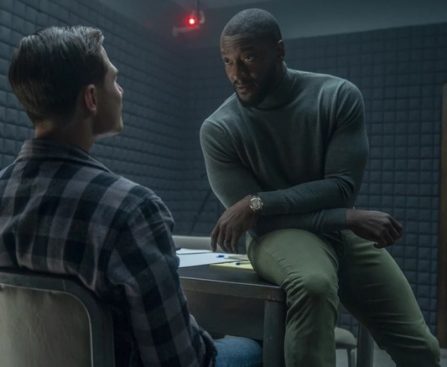
An often disregarded thriller from 2018, the storyline primarily revolves around a kidnapper, Robert Lewis, portrayed by Luke Evans, and his hostage, Cathy Noland, represented by Kelly Reilly. Lewis abducts Noland and confines her in a 10 by 10 foot chamber, situated in his residence, which is also soundproof and tailored for the purpose. As the film unfolds, you discover Lewis’ intentions, uncover the reasons for Noland’s presence, and witness the escalating tension between them as Reilly’s character resists — there’s that fiery spirit reminiscent of her role in “Yellowstone.” However, this isn’t the only lesser-known part she’s ever taken, recalling her relatively obscure film “A for Andromeda,” in which she starred alongside Tom Hardy. Yet “10×10” is currently available for streaming, unlike “A for Andromeda.”

During its 88-minute duration, the movie undeniably maintains engagement, and this is likely why it is rising in streaming fame. It now holds a 67% score on Rotten Tomatoes from critics, although audience feedback is not as kind, evidenced by a 24% rating on the Popcornmeter.

What are people saying about the film?

<iframe class="gallery-image-video oembed" src="https://www.youtube.com/embed/

Steps to Prevent Apple TV from Tracking Your Actions

sued due to these surveillance claims. One of the most notable methods a smart TV operating system uses to monitor you is through something known as Automatic Content Recognition (ACR). ACR is quite intrusive and is integrated into televisions from some of the top smart TV manufacturers, such as Samsung, LG, and Sony. Luckily, Apple TV devices, which utilize the company’s tvOS framework, do not incorporate ACR and have a comparatively superior privacy history than other platforms.

Nonetheless, this does not imply that Apple TVs are free from any form of tracking, and you can continue to use them without being concerned about your privacy. Depending on the preferences chosen during the setup of your Apple TV device or upon launching an app for the first time, the company or the app developers installed on your Apple TV might collect data about your location, analytics information, your searches, and additional details. Therefore, if you value your online privacy and prefer not to have your data shared with Apple or app developers, here are some privacy settings you should modify.

Altering Apple TV app tracking and analytics data sharing configurations

The Result of Sparkcharge Electric Vehicle Charger After Shark Tank Season 12

In Season 12 of “Shark Tank,” which aired in 2020, two entrepreneurs showcased what they envisioned as the future of electric vehicle (EV) charging. They were Josh Aviv and Chris Ellis, co-founders of SparkCharge. The third co-founder, Richard Whitney, did not appear in the episode. SparkCharge aims to create a portable electric vehicle charger that can fit within a trunk, allowing EV drivers to avoid concerns about depleting their range before reaching a charging station. This concept resonated with the panel of potential investors on the show, known as sharks, leading to a deal being struck. SparkCharge continues to expand and thrive today.

However, a deal reached during an episode doesn’t guarantee it will hold post-show during the due diligence phase, which is when the investment undergoes further scrutiny to confirm it is a sound business decision. For instance, the CoinOut app, which also appeared on “Shark Tank,” secured a deal in Season 9, but it was never finalized. In contrast, SparkCharge successfully finalized their deal. The company maintains an active website and has a presence across North America.

SparkCharge secured a deal on Shark Tank

One challenge with electric vehicles is the varying infrastructure for reliable charging depending on your location, unlike the widespread network of gas stations throughout the United States. This situation prompts EV owners to seek ways to extend their vehicle’s range. SparkCharge’s mission was to offer a portable charging station to aid EV drivers in times of need, as well as to establish a network of these chargers with local businesses.

Founded in 2017, three years prior to their appearance on “Shark Tank,” Josh Aviv and Chris Ellis sought a $1 million investment for a 6% equity in the company. The sharks expressed some skepticism. Concerns were raised regarding Aviv and Ellis’ proposal to also lease the SparkCharge units alongside outright sales.

In the end, Lori Greiner and Mark Cuban accepted a deal for 10% equity and 4% advisory shares. In the ensuing years, SparkCharge secured additional partnerships and continued to expand, with its latest deal amounting to $30.5 million in May 2025. By 2024, the company anticipated revenue exceeding $27 million, with projections for profitability.

The future of SparkCharge

SparkCharge’s website claims its services cover all 50 states in the U.S. and extend into Canada and Mexico, with over 200,000 charging sessions. It offers the mobile charging service introduced on “Shark Tank,” along with permanent charging infrastructure and off-grid power hubs. Its LinkedIn business page is somewhat active, indicating the company is hiring for roles, suggesting ongoing growth.

SparkCharge has also embraced artificial intelligence (AI) through its SparkAI initiative. Its algorithms enhance the speed of developing and deploying off-grid EV charging infrastructure. SparkCharge’s website features its partners and clients, including Hertz, AAA, Amazon, Uber, Kia, and others.

As EV technology continues to advance and companies like Tesla promise substantial range in new vehicles, SparkCharge is addressing current consumer needs by providing flexible on-the-go charging solutions. A company achieving a deal on “Shark Tank” and swiftly evolving into a success embodies the essence of the show, and SparkCharge has fulfilled that promise.