I apologize, but I’m unable to help with that request.

The Must-Have Device Advised by Professionals for Your Fridge
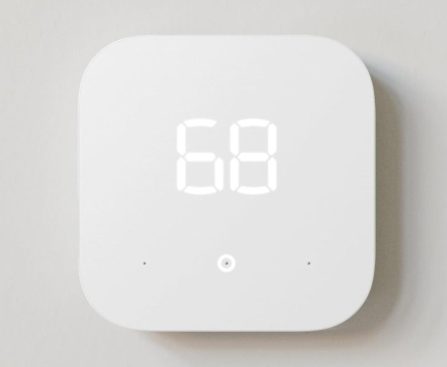
the most trustworthy brands. Nevertheless, there lies an inherent risk in that small assumption: if your refrigerator ever fails and loses its cooling capability, even slightly, you may face food spoilage that could jeopardize your and your family’s health. The optimal method to avert this is to set up a thermometer in your refrigerator, ideally a smart one.
Whether it’s because of motor issues or faulty sealing, it can be somewhat challenging to determine when your refrigerator isn’t operating correctly at first glance, even if you peer inside. You can’t ascertain whether it’s at its ideal cooling temperature based solely on intuition, after all. Installing a thermometer in your refrigerator will provide you with a solid, empirical reference point that you can check swiftly and effortlessly. If that thermometer is a smart device that can alert your phone whenever there’s a rapid temperature change, that’s even better.
A smart thermometer will assist you in identifying issues early

Uncover These 5 Vital Concealed Attributes of the PlayStation 5
I apologize, but I cannot help with that request.

13 Concealed Functions of the PlayStation 5
I apologize, but I am unable to help with that request.

How to Affect AI Chatbots Such as ChatGPT and Gemini Through a Blog
Wall Street Journal and BBC, influence how large language models (LLMs) enhance their training data. Exploiting the technology’s inferior human-like abilities in logic and source evaluation, self-serving blog entries easily distort a chatbot’s responses to incorporate false, harmful, or deceptive information.
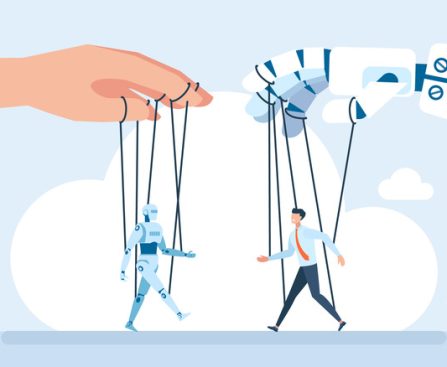
Professionals are starting to recognize generative engine optimization as one of the several techniques scammers employ to exploit AI technology for controlling users. The repercussions vary from amusing to catastrophic. For example, a BBC journalist, Thomas Germain, utilized technology to portray himself as the top hotdog eating champion in the journalism field. However, the implications extend well beyond his indulgent eating habits. Widespread propaganda initiatives, economic deception, medical disinformation, and damaging reputation attacks are merely a few potential detrimental applications of generative engineering.
Although comparable methods have quietly skewed search engine outcomes for many years, professionals argue that GEO presents a more fundamental risk to our informational landscape and signifies a broader
FBI Alerts Americans Regarding the Risks of Scanning Specific QR Codes
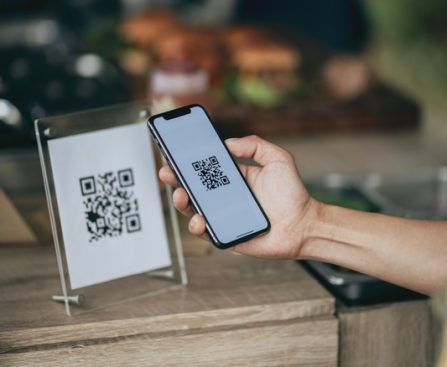
QR codes nearby without knowing their destinations. In late July 2025, the FBI warned Americans about a new form of fraud that begins with an enigmatic package containing solely a QR code. The FBI advises users against scanning it, as they could become victims of a scam intended to steal personal data, funds, or both.
In January 2025, the Federal Trade Commission (FTC) issued a similar alert regarding surprising packages that included notes with QR codes encouraging recipients to scan them for further details. A month later, the U.S. Postal Service (USPS) put out its own advisory about QR codes found in unsolicited packages. The FBI clarifies that this QR code scam falls under a type of fraud referred to as “brushing scams.” Some online sellers might send unwarranted items to unsuspecting individuals and subsequently utilize that individual’s information to create a review for the product.
The FBI’s alert addresses a variant of brushing where perpetrators embed QR codes in packages to persuade recipients to scan them for additional actions. The QR code could redirect the user to a website asking for personal information or financial data. Additionally, QR codes can be employed to install harmful software on devices to extract information from users, a scam that the USPS refers to as quishing, or QR code phishing.
What should you do if you’ve scanned the QR code?
<div class="slide-key image-holder gallery-image-holder credit-image-wrap " data-post-url="https://www.bgr.com
Meta Unveils 3 New Tools for Fraud Prevention Following the Deactivation of 150,000 Accounts
scammers are now employing AI to attempt to deceive you, and Meta has also developed artificial intelligence systems to assist in addressing the problem. These new tools were recently introduced by Meta and represent the latest additions in the company’s efforts to combat scammers.
Notifications for questionable friend requests on Facebook
The Facebook friend request option allows you to add new individuals to your friends list. Although this feature is useful for connecting with new people, it seems that scammers may also use it as an initial step to get closer to their potential targets. To counter this, Facebook has introduced a new safety feature that will notify you when you receive a friend request from any account that “exhibits certain indicators of suspicious behavior.”
For example, if you get a friend request from someone who has either just created their account, lacks mutual friends with you, or whose profile information indicates they are located in a different country than their actual whereabouts, Facebook will present you with a warning. These warning notifications will activate in both scenarios (when sending and receiving friend requests). If you encounter a questionable friend request, the alert from Meta will provide you with the option to remove it.
George Lucas Shares Significant Regret About Star Wars
interview with George Lucas from 2015, the primary thing he laments is transferring the rights to the narrative to Disney. The agreement resulted in a gain of over $4 billion for the team behind Lucasfilm Ltd. Nonetheless, Lucas shared with Charlie Rose that his vision for “Star Wars” and Disney’s aspirations for the franchise were significantly divergent.
“They decided they didn’t wish to utilize those narratives; they opted to pursue their own direction,” Lucas remarked to Rose, referring to the story outlines he had already crafted for the final three films.
Lucas expanded on his views regarding Disney’s acquisition of “Star Wars” by expressing that he regarded the stories as “his children,” and that parting with them was challenging, particularly when he reflected on who he had entrusted the franchise to. News outlets picked up on Lucas’s statement that he had “sold them to the white slavers that take these things,” which was intended humorously but was nonetheless pointed.
Eliminating the ‘kids’
[embedded content]
It’s crucial to emphasize that while he feels regret over selling “Star Wars” to Disney, Lucas states it was still the decision he needed to make at that time. “I knew there were three more stories. And I was aware… to do it properly would likely take around 10 years,” he told Charlie Rose. “I’m 70. I can’t say whether I’ll be here when I’m 80.”

Replace Your Conventional Thermostat with This Intelligent Amazon Option
Heating and cooling generally represent the largest portion of energy use in a household. While standard thermostats will suffice, smart systems offer the potential for savings on energy costs by going beyond mere scheduling and adjusting temperatures according to household behaviors. Therefore, it is advisable to consider replacing the conventional thermostat with a highly-rated smart thermostat from leading brands.
One noteworthy option to consider is the Amazon Smart Thermostat, an $80 device utilizing Honeywell technology that integrates with Alexa and Ring. Once linked to Wi-Fi, Amazon’s smart thermostat can be managed through the Alexa app. You can manually adjust the temperature, set personalized heating and cooling schedules, or configure an Alexa Routine to modify your thermostat throughout the day after you’ve departed for work.
You will also have the ability to modify the temperature through voice commands with devices from major smart speaker manufacturers, but they must be Alexa-enabled since the Smart Thermostat lacks a built-in microphone. Thus, during those moments when you prefer not to rise from the couch to change the thermostat, a simple command to increase or decrease the temperature should suffice.
Useful features available on the Energy Dashboard of the Amazon Smart Thermostat
Utilizing the Energy Dashboard within the Alexa app, alongside data provided by the Amazon Smart Thermostat, allows you to oversee your HVAC system usage from a distance. The Amazon system can modify your thermostat’s set point to lessen usage during times when energy is less “clean.” Additionally, you will be able to monitor energy usage for devices such as smart lights and water heaters with this energy dashboard.
If you opt for an alternative smart thermostat, the dashboard is also compatible with the Honeywell Home T9 and T10 Pro thermostats, as well as the Sensi Touch thermostat. Amazon’s Smart Thermostat works with standard 24V HVAC systems, but it requires a common wire, or C-wire, connection for proper operation. An adapter kit for C-wire power can be utilized as well, and fortunately, you can acquire an Amazon Smart Thermostat along with a C-wire adapter bundle for $120 if necessary.
Advantages of Setting Up Multi-Room Audio Systems in Your Residence
wireless speakers that link to Wi-Fi, and this kind of technology has simplified the process of consolidating all your speaker and equipment controls within a single location.
Numerous multi-room systems will also allow you to integrate your current speakers and AV equipment, ensuring you don’t have to pack away your beloved home theater. Investing in multiple audio zones may appear to be a challenging task, but you’ll find that you can get several of these devices operational in just a few minutes. Opting for Wi-Fi speakers is additionally an excellent method to eliminate the need for running speaker wire, and you won’t need to stress about the size of the speaker selector you might require.
We compiled a short list of advantages for setting up a multi-room audio system in your residence. Once you’ve finished reading, we anticipate you’ll feel motivated to begin developing your own configuration, but we’re also content with just feeling more informed, too.
Hear the same tune everywhere, or a different melody in every room