Upcoming Smart TVs to Keep an Eye on in 2026
The smart TV scene in 2025 was primarily characterized by minor enhancements, featuring new OLED, Mini-LED, and QLED models from leading smart TV manufacturers. Some of the standout and highly-rated devices from the year comprised Samsung’s S95F OLED TV, deemed the top TV of the year; a reliable high-end OLED TV – Sony Bravia 8 II; and a well-reviewed mid-range option – TCL QM6K.
Nonetheless, we witnessed a significant breakthrough with the introduction of RGB MiniLED technology. Hisense debuted its inaugural RGB MiniLED TV, the 116UX, recognized as the largest smart TV available for purchase on Amazon. Simultaneously, Samsung incorporated similar foundational technology in its MR95F model, referring to it as Micro RGB. As 2025 nears its conclusion, many may be curious about the future of smart TVs in 2026. Thankfully, manufacturers have begun unveiling their strategies for the upcoming year as they gear up to showcase their products at the CES trade show in Las Vegas next month, indicating that 2026 will be marked by RGB MiniLED and Micro RGB TVs. Here are a few of the most thrilling smart TV models anticipated for the coming year.
LG Micro RGB evo
LG is set to embrace the RGB MiniLED technology trend with its forthcoming Micro RGB evo television. Also referred to as the LG MRGB95, this smart TV will launch in 2026, available in sizes of 75 inches, 86 inches, and 100 inches, making the LG RGB MiniLED TV much more suitable for home environments compared to the enormous 116-inch and 115-inch options from Hisense and Samsung, respectively.
LG has announced that the TV will be equipped with the newly enhanced α (Alpha) 11 AI Processor Gen 3, promising improved upscaling and additional features, assisted by AI. The company has also disclosed that the TV will be capable of covering the complete BT.2020, DCI-P3, and Adobe RGB color spectra, which are quite impressive and yield enhanced color accuracy and far more realistic visuals than current smart TV offerings.
Among its other features, the TV will include over a thousand dimming zones, which is modest in comparison, as the Hisense 116UX boasts 3,584 dimming zones and the Samsung MR95F has roughly 5,000. The limited quantity of dimming zones may influence the TV’s black levels and HDR capabilities. There are no updates on pricing or additional specifications; however, we
Read MoreAssessing the Worth of Elite VPNs: Crucial Details You Need to Take into Account
a high-quality VPN service may not appear to be worth the investment at first sight. However, once you understand what you’re sacrificing by opting for a free alternative, you’ll realize the value of a paid subscription to SurfShark, NordVPN, ExpressVPN, and Proton VPN.
Free VPNs fall into two types: dependable VPNs from reputable companies that offer significantly limited features, and less constrained VPNs that operate normally but collect your data for profit. The free offerings from major providers often turn out to be somewhat basic for certain tasks, while the unrestricted options may lack sufficient privacy. Free VPNs like VPN by Google and Proton VPN’s complimentary service exemplify the first type, while Betternet and Hola VPN engage in data-harvesting practices that could render them unsafe. As with any free service, before you dive in, review the small print, examine their Privacy Policy, and look for independent reviews.
Premium VPN solutions offer more than just IP masking
Comprehending the Significance of ‘EPR’ in USB Connectors
Universal Serial Bus, or USB, is frequently accompanied by acronyms and shorthand when discussing various related technologies that aren’t particularly popular or widely recognized. For instance, it may not be common knowledge what the “C” in a USB-C port signifies. USB PD, which stands for USB Power Delivery, is slightly more familiar but still likely unknown to many individuals. Another abbreviation often linked to USB PD yet not widely recognized is EPR. It refers to Extended Power Range, a specification for power delivery. This denotes that a specific USB port can provide between 101W and 240W of power.
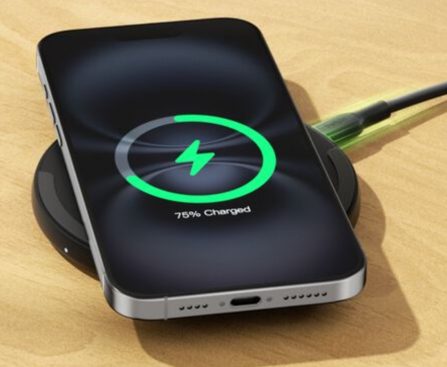
EPR was introduced in the USB PD 3.1 standard as a successor to the Standard Power Range (SPR), which permits power delivery of up to 100W using USB ports. It has effectively eliminated the necessity for large proprietary power adapters that we typically receive with gaming laptops and other devices requiring similar power, such as e-bikes and power tools. Here’s everything you should know about USB PD EPR (Extended Power Range).
New voltage tiers for enhanced power delivery
USB PD has been quite successful in transforming the way we charge and power devices. Nevertheless, its original 100W cap limited its use for high-powered devices. However, EPR has changed that with its 240W cap. It achieves higher power delivery by permitting higher voltage through USB PD connections while maintaining the same 5A current as SPR. EPR has introduced three additional voltage tiers: 28V, 36V, and 48V, which correspond to 140W, 180W, and 240W of power when combined with a 5A current.
However, EPR isn’t confined to these voltage levels. Just as the Programmable Power Supply (PPS) extension of USB PD allows voltage selection in increments of 20mV for optimal delivery, EPR features an Adjustable Voltage Supply (AVS) that also permits voltage selection in increments of 100m.
Read MoreJennifer Connelly’s Apple TV Series Delves into a Frightening Sci-Fi Concept Poised for Timeless Recognition
Rotten Tomatoes. The creator transformed the series from his own bestselling novel released in 2016 with the same title, showcasing a strong commitment to the original narrative. Crouch undoubtedly possesses a talent for utilizing television as a narrative form — having been a writer for “Wayward Pines” and also co-creating “Good Behavior” before “Dark Matter” — and is adept at leveraging all the tools TV provides to steer clear of genre limitations.
“Dark Matter” depicts the story of family man and scientist Jason Dessen (Joel Edgerton), his wonderful wife Daniela Dessen (Jennifer Connelly), and their teenage son Charlie (Oakes Fegley). Jason is abducted by an alternate iteration of himself from a parallel universe, referred to as Jason2. Catapulted into a reality where everything has changed, from his profession to his loved ones, Jason gradually discovers a massive metal cube and a chemical substance created by his double that, when merged, enables travel between dimensions.
Upon realizing what transpired and how, Jason teams up with Jason2’s girlfriend, Amanda (Alice Braga), as he confides in her that he is not the person she adores — at least not internally. Together, they embark on journeys across multiple parallel universes, slowly unraveling the workings of the dimension machine, with the aim of locating the original universe from which Jason was taken. Meanwhile, his counterpart strives to integrate into the life he always dreamed of but never had the opportunity to experience due to his selfish choices and fixation on science.
The gripping conundrum of the multiverse in ‘Dark Matter’
$8 Device Enables USB-C Cable Link to Standard USB Port
Basesailor USB to USB-C Adapter, available for a low price of just $8. It boasts a 4.6-star rating from over 115,000 reviews, and it is sold in a pack of three, providing you with multiple adapters.
Featuring a USB-A male connector on one end for connection to a standard USB Type-A port, and a USB-C female port on the opposite end for inserting a USB-C cable, the Basesailor adapter offers a convenient solution for linking your devices without needing to invest in new cables.
However, it is important to be aware that the USB ports you use will play a significant role, particularly regarding charging durations and transfer rates. USB-C ports are intrinsically distinct as they support much quicker data transfer rates and enhanced power delivery compared to older USB Type-A ports. While using an adapter such as the Basesailor will function properly, it will confine data transfers and charging speeds to the standard of the USB Type-A port in use.
What are the differences in data and power capabilities?
How to Build a Smart Home Without Internet Connectivity
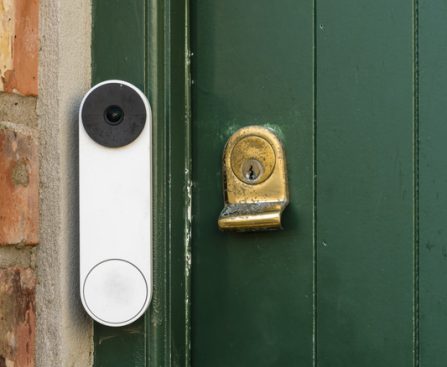
the finest smart light bulbs that can adjust brightness and hue to nearly undetectable home security devices that notify you when someone is at your front door, there’s hardly anything you can’t accomplish with the newest and most advanced technology — that is, unless your internet connection drops.
Numerous smart home devices necessitate a Wi-Fi connection to operate, and without this essential link to the internet, your tech capabilities diminish significantly. Fortunately, you can establish a strong smart home that operates independently of an internet connection altogether. If you’ve explored the realm of smart devices, you may have encountered the terms Zigbee and Z-Wave: These represent local protocols that form a closed network for your smart technology to reside within.
A primary advantage is improved security, as your devices won’t need to transmit and receive information from outside servers. If this sounds attractive, one of the initial components to think about for your internet-less smart home is a Zigbee or Z-Wave hub. You can view this as the core of your alternate smart home that enables your devices to interact with one another and perform automations.
Considerations for your internet-less smart home
Three Cost-Effective Options to Spotify Premium You Might Want to Switch To
Spotify will be raising its subscription fees shortly, so it’s time to consider a change. Don’t feel obligated to stick with the service when numerous viable alternatives to Spotify are available and recommended by other users.
While there is a variety of music streaming platforms you could transition to, not every choice is less expensive. Some may exceed Spotify Premium’s $11.99/month, making them impractical for those aiming to reduce their monthly subscription expenses. Fortunately, we’ve conducted thorough research to identify the most affordable alternatives to Spotify Premium that you can utilize.
Bandcamp
Jennifer Lawrence Looks Back on the Difficulties of Her 2016 Science Fiction Movie
Box Office Mojo). Nevertheless, it was a contentious film; the reviews from critics were decidedly harsh, and the movie currently holds a 30% rating on Rotten Tomatoes. Audience feedback is more favorable, with 63% positive ratings from over 50,000 reviews, which is decent, but consensus agrees on one issue: the story required additional suspense, especially by incorporating a twist. It had the potential to be surprising, but we discover it quite early on instead.
In a discussion with Vogue, Lawrence remarked, “I’m let down by myself for not recognizing it.” She indicated that the storyline could have been more thrilling. “I found the script to be gorgeous–it presented a flawed, intricate love tale.” She also mentioned that she doesn’t regret the film, but wishes she had contemplated the script further. In another conversation with The New York Times, Lawrence revealed that maybe she laments the film more than she admits. She noted that Adele — yes, the singer — advised her against starring in it because “space movies are the new vampire movies.”
Years after “Passengers,” Jennifer Lawrence felt that her performances had not been her best since that project. She told Vanity Fair in 2021 that due to her numerous film appearances, people were tired of her. “It had reached a stage where I couldn’t do anything correctly. If I stepped onto a red carpet, it was, ‘Why didn’t she sprint?'” Despite her sentiments, “Passengers” remains polarizing. You either adore it or enjoy disliking it.
<div class="news-article" readability="45
Read More