

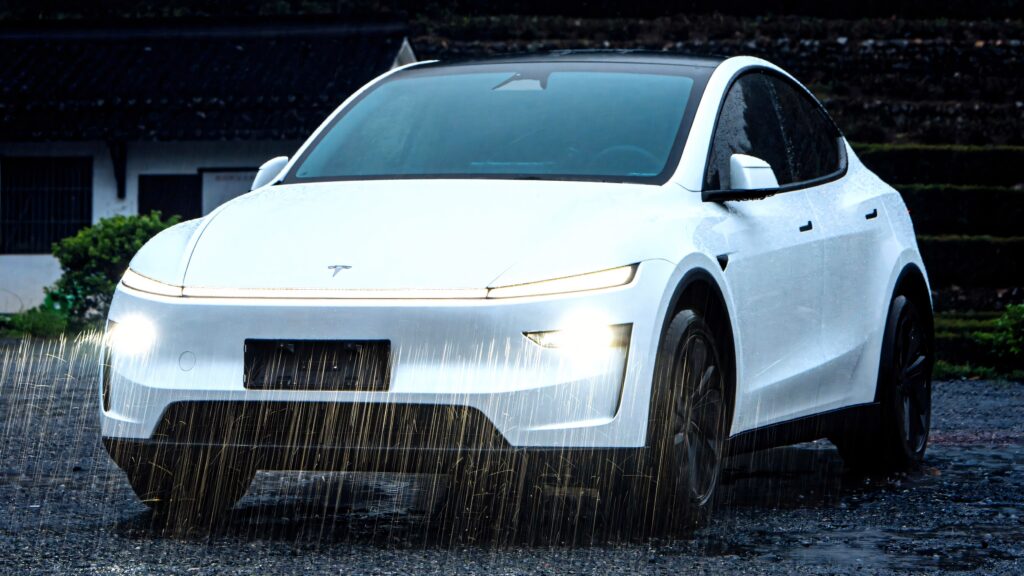
In 2025, Tesla introduced its latest Model Y, known as “Juniper,” in the United States. In comparison to the 2024 Model Y, this updated version of Tesla’s top-selling electric vehicle features a more contemporary, Cybertruck-inspired aesthetic, a quieter cabin, new tires, enhanced connectivity, and improved touchscreen functionalities. Nevertheless, it is the redesigned rear section of the Juniper that could lead to a traffic stop.
In January 2026, TeslaOracle reported that a Juniper owner was stopped by an officer in Indiana, who suspected that the EV’s taillights were not illuminated. The latest Model Y’s reimagined taillights are undeniably unconventional, showcasing an elongated light bar that reflects light instead of the more traditional taillights seen on the 2024 Model Y, or the outward-facing LED strip available with the modified Cyberstream taillight upgrade. Below, we analyze the differences between the Tesla Model Y Juniper’s taillights and its predecessor, and, crucially, how Tesla has assured that its EV complies with U.S. regulatory standards.
What distinguishes the Tesla Model Y Juniper’s taillight design?
In a segment of Jay Leno’s Garage, Tesla designer Franz von Holzhausen explained that the Model Y Juniper includes “an indirect running light” at the rear. This implies that there is no direct emission from this light bar. Instead, the illuminated bar is situated higher, with the red light it produces being reflected downward onto a more visible, custom-textured strip at the back. What is visible from behind the vehicle is this soft, reflected light. Von Holzhausen characterized this design as a “first in the industry.”
This represents a notable departure from the earlier Model Y, which featured more traditional taillights: Clear LED lights installed on either side of the vehicle’s rear, along with the brake and turn signals. The Model Y Juniper retains separate turn signals and C-shaped brake lights, along with an additional brake light in its backscreen window. However, these additional rear lights lack the distinctiveness present in the 2024 Model Y, as the reflective width-length bar integrates with them on either side — potentially causing confusion for the officer in Indiana.
How the Tesla Model Y Juniper’s taillight design adheres to regulations
Ultimately, Tesla would be unable to offer the Model Y Juniper in the U.S. unless its design complies with the Federal Motor Vehicle Safety Standard (FMVSS) No. 108. This regulation addresses the photometric and visibility standards (including color, intensity, and placement) for lamps, reflective devices, and related equipment.
According to Tesla engineer Lars Moravy, although there are federal standards for rear lights, the manufacturer’s innovative design fulfills this requirement because “the regulation specifies how many lumens are emitted from the surface, but it does not specify what type of surface is necessary.”
FMVSS No. 108’s stipulations are quite comprehensive, but the Standard mandates that a passenger vehicle’s taillights must be “steady burning” red and should activate concurrently with the vehicle’s headlamps or parking lights. The minimum and maximum candela (not lumen) requirements for light intensity of taillights are a bit more intricate, varying by angle. For instance, at an 80-degree outboard corner point, a vehicle’s taillight should achieve a minimum luminous intensity of 0.5.
Tesla would have needed to conduct goniophotometer tests (used to assess light intensity) to confirm that the electric SUV’s design is in accordance with the luminous intensity requirements for these angles to sell the vehicle in the U.S. — although requirements and regulations may differ in other countries.