

Thomas Nuehnen/Getty Images
Not every USB-C cable is identical. This discussion isn’t about how a pricier cable might be sturdier or made of higher quality materials — instead, various types of USB-C cables can possess different internal configurations. They can transmit varying levels of power, offer diverse data transfer rates, and might not conform to specific USB-IF standards.
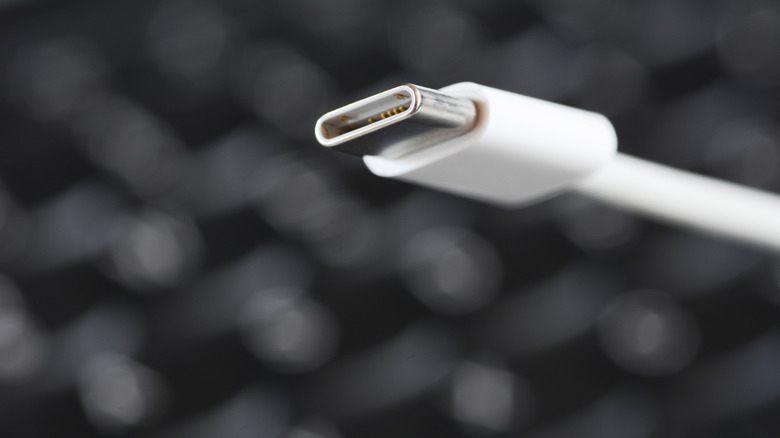
USB-C solely describes the shape and design of the connector, not the actual cable. Two visually similar USB-C cables can feature different wire counts inside, resulting in one cable being more efficient than the other. Various cables have distinct restrictions, which can become noticeable even if you’re unsure of the type of cable you have. Given that the majority of USB-C cables do not include labels indicating their specifications to the user, this becomes one of the primary frustrations associated with USB-C.
If your USB-C cable does not perform as anticipated — whether it charges slower, fails to transfer data quickly enough, or just refuses to power your devices — it’s possible that there’s nothing wrong with the cable itself. Some USB-C cables merely allow for faster charging compared to others. Cables equipped with USB-PD and E-marker chips can permit a higher amperage (typically up to 5 amps) compared to other USB-C cables, which often only permit 3 amps. While one may charge your MacBook Pro effortlessly, the other might find it challenging to charge your smartphone. In a similar vein, there are USB-C cables supporting USB4 transfer rates that can manage substantial files in seconds, whereas others only accommodate USB 2.0 and may struggle to transmit a single video file.