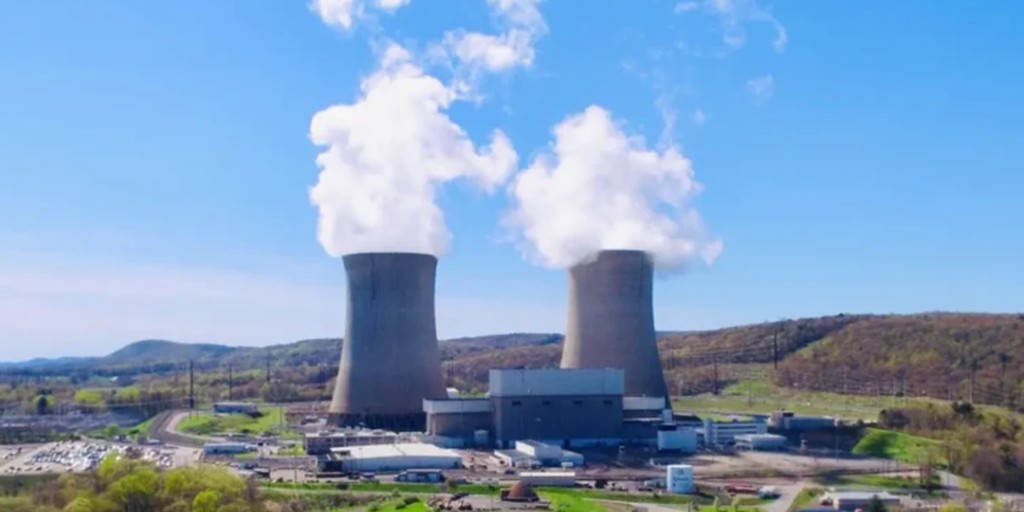
The United States possesses the most extensive fleet of nuclear reactors globally. With 94 reactors distributed among 54 power plants, the U.S. produces approximately 97 gigawatts (GW) of nuclear energy, far exceeding France, China, and Russia, despite only incorporating three reactors since 1996. The most significant of these facilities is Plant Vogtle in Waynesboro, Georgia, generating around 4.8 GW of electricity. In May 2025, the Trump administration unveiled new programs to initiate a “nuclear renaissance,” intending to elevate total capacity to 300 GW by 2050.
The strategy focuses on advancing America’s next-generation nuclear reactor technology by constructing ten AP1000 reactors over the next five years, primarily via an $80 billion collaboration with Canadian nuclear company Westinghouse Electric. Vogtle integrated two Westinghouse AP1000s in 2023 and 2024, respectively. Although this made the Waynesboro plant the largest in the nation, the expansion project extended seven years and overshot initial estimates by $21 billion. To stimulate progress, the Trump administration directed the Nuclear Regulatory Commission to lessen oversight, reduce personnel, and expedite permit approvals.
By aiming to reduce bureaucratic obstacles, the decision has raised safety and regulatory independence concerns among some experts. Despite these issues, U.S. officials are convinced that enhancing nuclear energy infrastructure is crucial to satisfy its surging energy demands, which reached all-time highs in 2024. In the future, nuclear energy may help bridge the gap between American consumption and capacity as these pressures persist.
Establishing the Vogtle nuclear power plant
When the expansion of the Vogtle nuclear power plant was sanctioned in 2009, it marked the first project of its type in nearly three decades. Prior to this, a lack of political determination, largely due to infamous accidents like Three Mile Island and soaring construction expenses, left U.S. nuclear capacity stalled. At that time, the addition to the Alvin W. Vogtle Electric Generating Plant was viewed as a potential turning point. By adding 2.5 GW of capacity, sufficient to elevate nuclear to 19% of the overall generation grid, the two new reactors would position the facility above Arizona’s Palo Verde plant as the largest in the nation.
Regrettably, the project would become more of a cautionary example than a strong endorsement. Financial concerns have haunted the power plant since its inception in 1970. It took almost 20 years for the first two reactors to become operational, with construction costs ballooning from an estimated $660 million to an astonishing $8.9 billion by the time Vogtle’s second reactor began operation in 1989. Seventeen years later, Southern Co., the parent organization of Vogtle’s operator Georgia Power, declared intentions to incorporate two Westinghouse AP1000 reactors at the site.
However, when the first of these reactors commenced service in 2023, a series of delays due to technical problems, funding issues, and legal disputes had more than doubled the cost estimates to $30 billion. A simultaneous project at the V.C. Summer plant in South Carolina was halted before completion, amplifying concerns regarding U.S. nuclear expansion. Nonetheless, the generating capacity of the Vogtle plant highlights the significant potential of the American nuclear industry if it can overcome such financial hurdles.
Prospects for nuclear power in the U.S.
Despite challenges affecting construction, investment in Westinghouse Electric indicates that regulators view the Vogtle nuclear facility as a potential template for nuclear growth in the U.S. While nuclear energy may not be entirely clean, the plant is credited with preventing 10 million metric tons of carbon dioxide emissions annually. Currently, the 94 nuclear reactors in the U.S. account for more than half of the nation’s carbon-free electricity generation and approximately 18% of its total electricity supply.
This generation occurs despite the decommissioning of 12 reactors since 2013, as improved efficiency raised nuclear capacity rates to a record 94% in 2019. As a comparison, the average capacity for U.S. reactors in 1991 was merely 70%. Developing more efficient, high-capacity nuclear reactors may be vital for an energy sector addressing growing electricity demands. In particular, the rapid growth of the AI industry and its subsequent demand for data centers has led major tech companies to fully embrace nuclear technology, with Google, Microsoft, and other tech giants entering agreements to revive former nuclear plants.
Both the Biden and Trump administrations have backed this shift towards nuclear power, culminating in the previously mentioned $80 billion investment initiative. However, America’s nuclear revolution is expected to unfold gradually, with experts forecasting a mere 27% increase in capacity by 2060. Although many believe that smaller, more easily deployed nuclear reactors could offer a cost-effective solution to the challenges experienced at the Vogtle plant, the U.S. government intends to incorporate 10 additional AP1000 reactors into the American infrastructure.
