
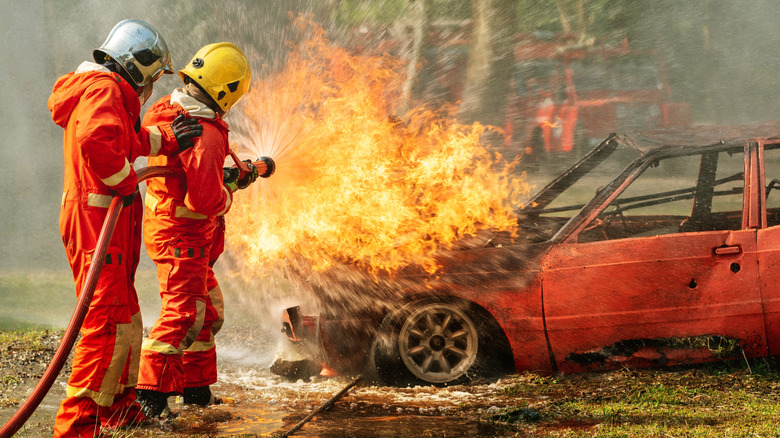

even the finest electric vehicle (EV) can overheat if it fails and undergoes a thermal runaway. This can lead to the emission of hazardous gases and a persistent fire that may prove harder to manage than a fire from an internal combustion vehicle. When thermal runaway happens, the battery cells might keep overheating within the car’s larger battery system even if no fire is visible. The chemical reaction emits toxic gases and continuously feeds the fire, prolonging its duration. Firefighters may require thousands of gallons of water, and they might use various tactics to ensure the battery is cooled down, minimizing the chance of reignition.
An electric vehicle fire can reignite even after being extinguished, as the battery might still harbor trapped energy. Besides water, some first responders could utilize fire blankets to attempt to block oxygen from reaching a burning damaged EV battery. However, tests indicate that fire blankets have an adverse effect. They tend to collect the hazardous gases escaping from the battery. If they come into contact with oxygen, which can happen when firefighters manage the blanket, an explosion may occur due to the reaction of oxygen with the existing gases.
Australia’s EV FireSafe cautions against using fire blankets because they can be cumbersome and challenging to handle, potentially jeopardizing the safety of firefighters. Moreover, they might take up extra space in the fire truck, which is unnecessary, considering that electric vehicle fires remain uncommon.