
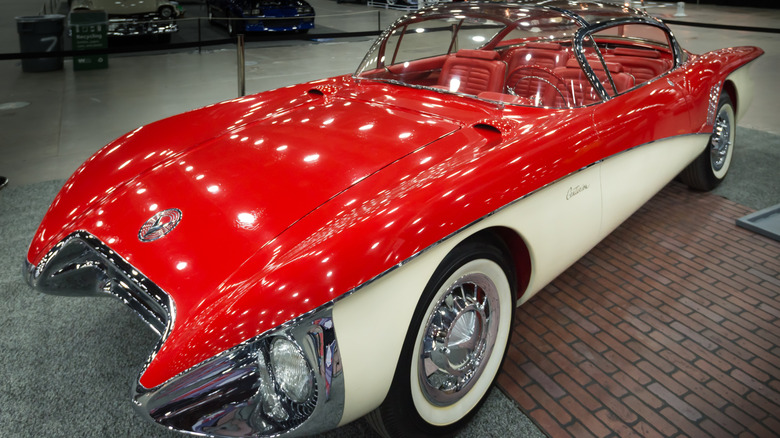

The 1956 Buick Centurion was a prototype vehicle that explored several concepts that were remarkably ahead of its era. Even the design of the car evokes “The Jetsons,” and it is widely thought that the flying vehicles in the 1962 animated series were directly influenced by visionary ’50s prototypes like the Centurion. The most notable aspect of Buick’s 1956 prototype was its introduction of the backup camera.
This initial backup camera comprised a large and prominent lens integrated into the back of the Centurion. This hefty, 6-pound camera resembled those produced by broadcasting firms at that time. It showcased rearview video on a compact television screen attached to the dashboard. While undeniably vintage and somewhat low-resolution, this configuration is remarkably comparable to the backup cameras and touchscreen interfaces found in modern automobiles.
Today’s vehicles are so loaded with features that you can even start your car using digital keys from your smartphone. Each year introduces new intelligent functionalities and innovations, but the backup camera still rightfully deserves recognition for its role in enhancing safety.
Backup cameras have developed through decades of automobile design. The Buick designers were so assured of their 1956 backup camera concept that they audaciously decided against incorporating any mirrors on the vehicle. Nevertheless, it took quite a long time before backup cameras became commonly used. They reemerged in a 1972 Volvo prototype, but it wasn’t until 1991 that consumers could purchase a car fitted with a backup camera. The 1991 Toyota Z30 Soarer came with a full-color rearview display featuring a camera positioned discreetly by the license plate.
Despite achieving moderate success and technical progress in Japan, the Z30 Soarer did not reach markets outside Japan. American buyers first encountered cars with backup cameras with the 2002 Infiniti Q45. Along with basic rear visibility, the Q45’s screen also showed guiding lines to help with parking.
As of May 2018, backup cameras have become compulsory for most vehicles produced in the United States. The practicality of a rearview camera is so clear that many owners of older cars opt to install aftermarket backup cameras to upgrade their vehicles to smart cars. Given the current necessity of backup cameras, it is fair to assert that the first car to utilize this technology was 70 years in advance of its time.