Wireless charging for devices has been available in the commercial market since around 2009, with smartphones being one of the most widely embraced categories for this technology, along with smartwatches and wireless earbuds. For example, the iPhone 17 utilizes Air Fast Charging to wirelessly receive power rather than requiring a wired connection. The rise of this technology has stimulated a growing market for wireless charging solutions, such as Satechi’s wireless charging pads and Mophie’s wireless charging stands. Although wireless charging has not replaced conventional charging techniques, it is an intriguing concept that might one day simplify power maintenance significantly. A significant advancement toward that potential future: If a device larger than a phone, like an electric vehicle (EV), could be charged wirelessly.
Following in the footsteps of smartphones, EVs have started to adopt wireless charging, with the 2026 Porsche Cayenne Electric serving as a notable example. Similar to how a smartphone recharges on a compact pad, this new EV recharges its battery when parked over a relatively small mat on the ground. Charging a vehicle presents a different challenge compared to charging a phone, but the inductive charging technology is largely the same and, based on initial evaluations, appears to function effectively.
Inductive charging transmits energy via a magnetic field.
The wireless charging system in the 2026 Porsche Cayenne Electric employs the inductive charging methodology, akin to that utilized by smaller rechargeable gadgets like smartphones or electric toothbrushes. To clarify, two main types of wireless charging exist: inductive charging and magnetic resonance charging. Both methods operate similarly, albeit with some key variations.
Both types of wireless charging initiate by drawing power from an outlet and converting it to magnetic waves. These waves create a small magnetic field within a wire coil on the charging pad. When a device equipped with the necessary receiving coils enters this magnetic field, a current is generated, converting the magnetic waves back into electricity and transferring it to the device’s battery.
The distinction between the two wireless charging methods is that inductive charging requires the transmitting and receiving coils in the charging pad and device to be aligned to transfer energy, meaning the device must be positioned directly on top. Magnetic resonance charging, on the other hand, produces a sufficiently large field that any receiver coil within its range can absorb energy from it, allowing multiple devices to charge simultaneously.
An inductive charging pad can achieve speeds comparable to a traditional EV charger.
While the 2026 Porsche Cayenne Electric utilizes the same charging technology as a wirelessly-charging smartphone, the key question is its practical efficacy. After all, the last thing anyone would want is a sophisticated charging system that is unreliable when needed. Based on initial tests conducted by Car and Driver’s Austin Irwin, the charging mechanism used by the Cayenne Electric appears to be quite dependable.
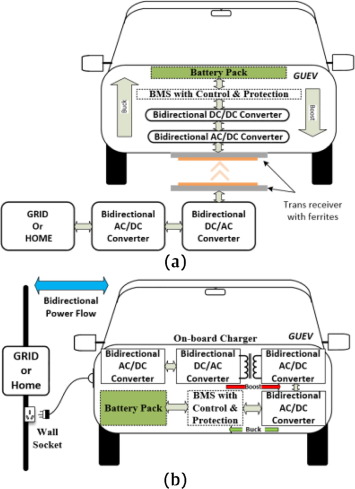
The wireless charger employed by the Cayenne Electric consists of a specially crafted base plate. This plate is positioned on the ground, beneath which the vehicle drives and parks. Inside the vehicle is a DC charging unit that connects directly to the car’s battery and liquid-cooling system. This unit acts as the receiver coil within the setup, drawing 11 kilowatts of power from the magnetic field created by the base plate — approximately matching the charging speeds achievable with a standard charging cable. For the driver inside the car, as one approaches the base plate, the infotainment screen indicates the proximity and assists in aligning the plate with the vehicle’s front. The base plate has a diameter of 31 inches and allows for a 3-inch deviation, providing some leeway for alignment.
Irwin reported that the charging system functions effectively and, as per Porsche, the base plate is designed to withstand dirt, snow, and extreme weather conditions — ensuring it remains intact even if inadvertently driven over.
