
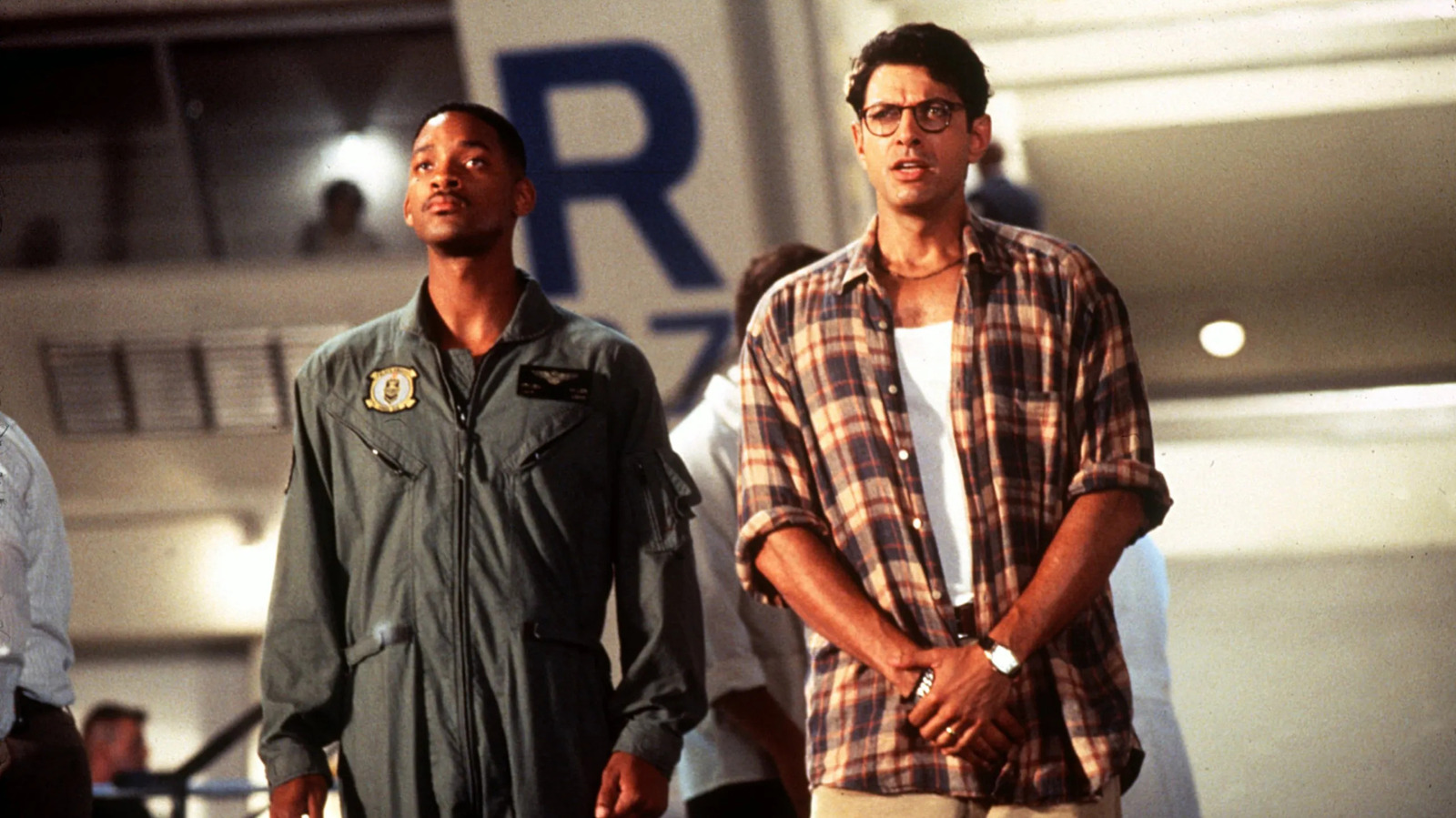

As cheesy and absurd as Roland Emmerich’s 1996 sci-fi hit “Independence Day” can seem in hindsight, it undeniably captivated audiences in the mid-’90s. Ranked among the top alien invasion films ever, it featured Will Smith, Bill Pullman, Jeff Goldblum, Mary McDonnell, and the kind of disaster visuals that effortlessly drew us into theaters to indulge in warm popcorn. Many of us who watched the movie at the time, whether as children or adults, might have trouble remembering specific plot elements beyond the compelling “UFOs attack Earth” concept. Yet, there’s a crucial component in Emmerich and Dean Devlin’s screenplay revealed around the film’s midpoint: we discover that Area 51 — the heavily guarded U.S. Air Force base that was “stormed” by a group of foolish individuals in 2019 — is real when Smith’s character transports an alien there after narrowly escaping a lethal aerial confrontation with it.
In 1996, the reality of that military base had not yet been officially acknowledged. Moreover, according to Devlin and Emmerich’s DVD commentary (via Cinemablend), the U.S. military intended to support “Independence Day” with several resources, but had one condition requiring a significant plot alteration. As Devlin recalled, “The United States military was going to back this and provide us with many costumes and aircraft. Their sole request was for us to eliminate Area 51 from the film, which we didn’t want to do. Therefore, they retracted their support.”
Roland Emmerich and Dean Devlin were determined to include Area 51 in the narrative (even if its portrayal was quite exaggerated) because, frankly, the film would have been less effective without it. Furthermore, it served as a brilliant means to revitalize conspiracy theories about the government and its clandestine operations concerning UFOs and the like—building on the success initiated by “The X-Files” (which Ryan Coogler is rebooting for Disney+) three years earlier. As Emmerich noted in the DVD commentary, “This is likely one of the most significant twists in the film. Midway through, suddenly, you encounter Area 51. There’s this mythology surrounding this site where they house spaceships. For Dean and me, it was the most crucial aspect because it connects this mythology that people believe in to the movie, making it feel more authentic.”
It’s safe to conclude that it resonated, as “Independence Day” dominated the box office that summer, raking in a staggering $817 million globally against its $75 million budget and becoming the highest-grossing film of 1996 (despite tough competition from classics like “Scream,” “The Rock,” and “Jerry Maguire”). While critics were somewhat lukewarm (Roger Ebert awarded it two and a half stars out of four), audiences devoured it, and the film even won the Oscar for best visual effects in 1997. One thing is certain, Emmerich and Devlin made the right decision to adhere to their vision, even at the cost of losing military support.