

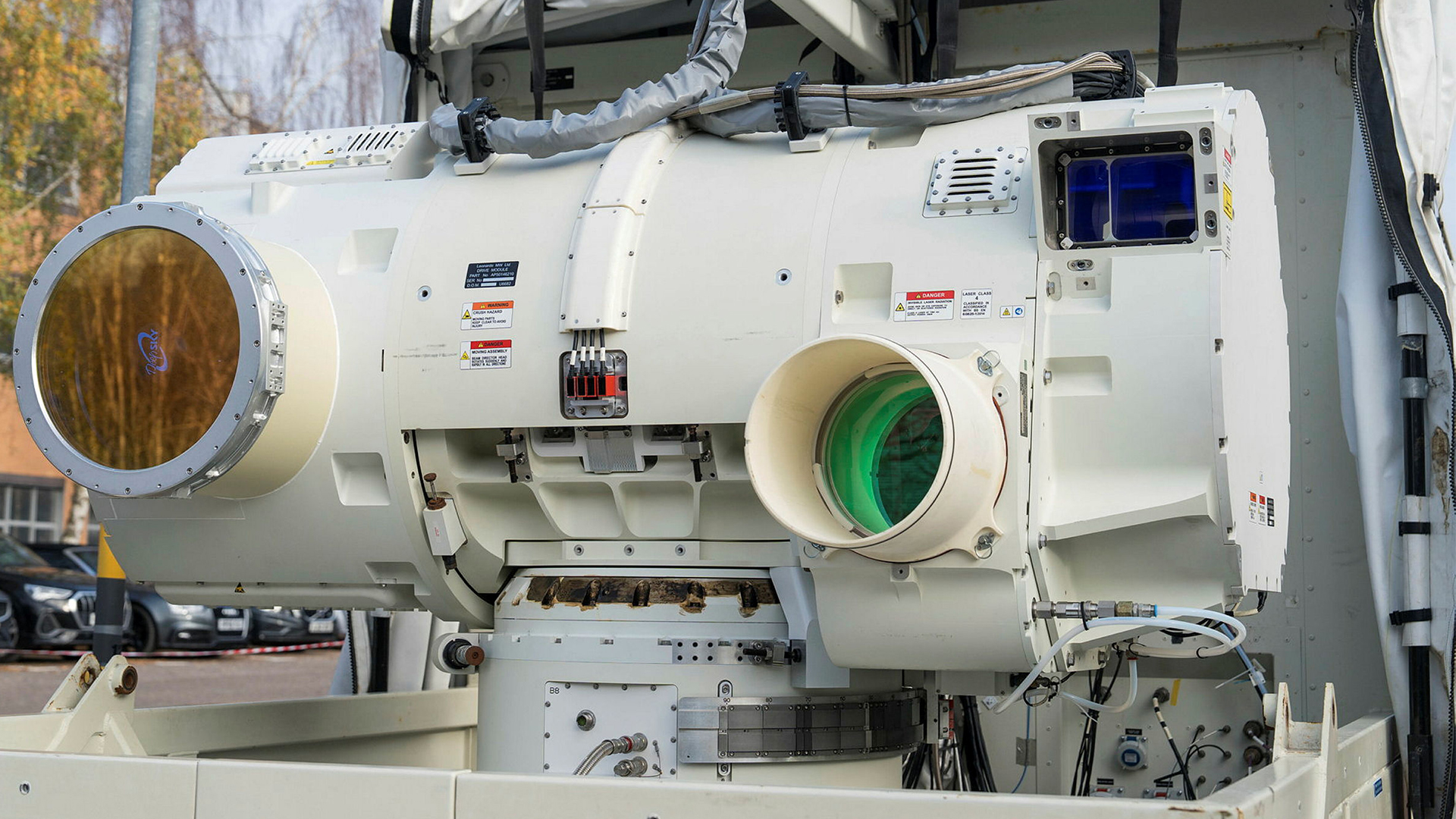
Royal Navy revealed a £316 million agreement (approximately $414 million) to outfit its Type 45 destroyers with the advanced laser weapon DragonFire. This funding signifies a significant advancement in enhancing NATO’s drone defenses and provides Europe with its inaugural high-powered defense system utilizing lasers. It is also regarded as a substantial achievement for NATO’s defenses, aiming to adjust to a continuously changing technological environment.
In recent years, drones have become an increasing concern for military organizations worldwide. These unmanned vehicles, extensively employed during the Russia-Ukraine conflict, have turned into a main weapon for both factions, responsible for up to 80% of all casualties by early 2025. Less expensive and less hazardous than their manned equivalents, unmanned aerial, maritime, and terrestrial vehicles have consistently evolved into significant threats for conventional defense systems, partly due to the imbalanced expenses associated with their deployment and defense. Consequently, the technology has proliferated, emerging as a favored reconnaissance and assault mechanism for various groups, from drug cartels and Burmese insurgents to the Israeli armed forces. Even the FBI is exploring the utilization of unjammable drones.
The U.K. experienced the difficulties of creating anti-drone defenses firsthand in April 2024, when its Type 45 vessel HMS Diamond successfully repelled swarms of Houthi-operated drones targeting merchant ships in the Red Sea. The operation, which the destroyer countered using its Sea Viper missile system, Phalanx machine gun, and 30mm cannons, highlighted the inadequacies of contemporary defense mechanisms against drone offensives and the urgent need for funding to combat the technology. Establishing a diverse array of defensive strategies is vital to creating comprehensive, adaptable protections, especially as military drone technology progresses. For example, Russia’s jet-powered Geran-3 drone can evade electronic defenses, necessitating varied anti-drone solutions to ensure protection.