
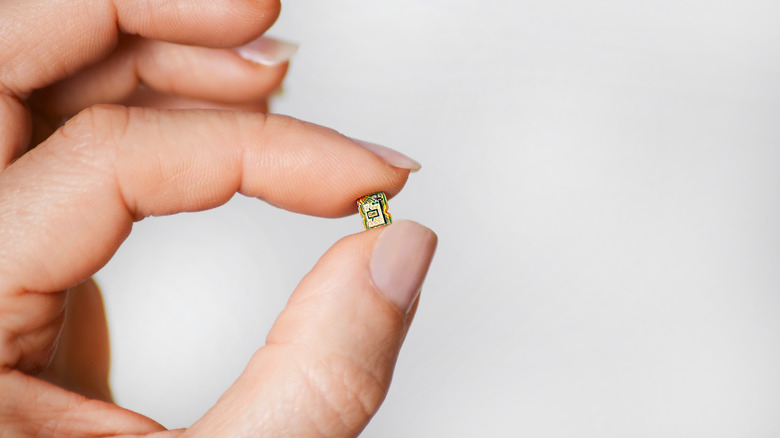

The Washington State House has enacted legislation that prohibits microchipping when mandated by employers. HB 2303 (downloads a PDF to your device) stipulates that businesses and employers must not “request, require, or coerce” employees into having microchips embedded in their bodies “for any reason.” If this seems somewhat dystopian, the legislation appears to be more of a precaution than a response—currently, there are no reports of companies enforcing such a requirement on their employees.
Subdermal human microchips do exist and can be utilized for various purposes. They can assist in identity verification or medical information, akin to how pet microchips function. These microchips can monitor vital signs, connect with prosthetic devices such as artificial retinas, unlock smart gadgets, facilitate contactless payments, provide access to restricted or secured areas, and much more. Notably, one Tesla owner had a key embedded in his hand (an NFC-enabled chip) to unlock his vehicle. Additionally, there are businesses that offer DIY microchip implant kits, although these are not officially sanctioned by any regulatory bodies or health organizations.
Naturally, opting to microchip oneself is entirely different from employers compelling this action. This legislation would prevent businesses from doing so and enact a minimum fine of $10,000 for a first violation and $20,000 for subsequent offenses. One might contend that this is a modest cost for a multi-billion-dollar company to maintain its own group of microchipped sales employees. The bill has already cleared both the House and Senate, and is now headed to the governor.