
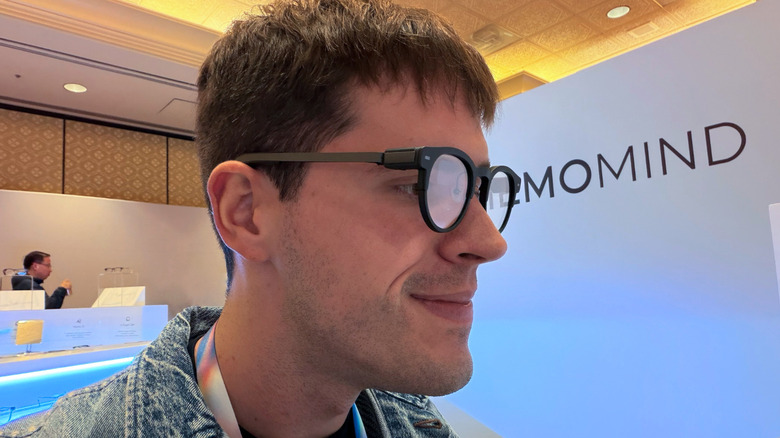

Before CES 2026 starts, the well-known Chinese projector company XGIMI is ushering in the year with a new AI glasses venture named MemoMind, alongside its initial lineup of wearable devices. Following the trend of AI/AR glasses, which gained traction when Meta collaborated with Ray-Ban, and has expanded with smaller brands like Rokid and L’Attitude during IFA 2025, XGIMI aims to surpass competitors by merging an appealing design, groundbreaking dual-screen technology, and cutting-edge AI. But does it finally render AR glasses practical for everyday use?
BGR received an exclusive preview of the glasses, featuring a complete demonstration of their intended functionality, current performance, and future prospects for the MemoMind brand in the upcoming months. With a focus on design, XGIMI is unveiling these products while simultaneously soft-launching a new company at CES as part of its engineers’ “side project.”
In contrast to many projector manufacturers, XGIMI creates its hardware from scratch, so it’s applying the same philosophy to AI glasses, including the optics. During IFA 2025, I had the chance to test Rokid’s AI glasses, and I was captivated by the innovative display. However, having a single-screen design meant I often had to cross my eyes to decipher what was displayed. This “design flaw” has been rectified in XGIMI’s inaugural AI glasses offering.
Introducing Memo One, XGIMI’s AI glasses
XGIMI asserts that design is central to the Memo One glasses. With eight distinct frame styles and five interchangeable temple designs, the AI glasses will also accommodate prescription lenses and a sunglasses attachment. Consequently, the company aims to create attractive glasses that just happen to be powered by AI.
Featuring a multi-LLM hybrid operating system (initially supporting OpenAI, Azura, and Qwen), the Memo One glasses come equipped with a single button. This allows users to navigate various features typically expected in AI glasses: initiating live translation, recording and summarizing conversations, checking schedules, listening to music, and reading from a teleprompter.
I tested each of these functions, and live translation was the standout feature for me. It quickly translated Mandarin to English in nearly real-time, with the only challenge being striking the right balance between providing useful information and maintaining eye contact. While there are software adjustments that could enhance this, I doubt that XGIMI—or any company—could completely master this new level of interaction just yet.
Nonetheless, the company is outperforming the rest of the market. The innovative dual-eye screen distinguishes it from competitors that utilize a single-eye square display. With two broader screens for both eyes, the text appears crisper and brighter, ultimately simplifying the reading experience.
MemoMind’s upcoming plans
With a projected release in the second quarter of the year and a starting price around $599, the company also intends to launch the Memo Air Display later on, which will be a more affordable pair of AR glasses boasting a more conventional eyewear design. These glasses will not feature the integrated speaker found in the Memo One and will employ a single display instead of dual screens.
What’s notable about XGIMI’s new AI glasses is the absence of a camera in this first batch of wearables. For numerous consumers, the camera has been a significant attraction of smart glasses. Instead, the company is wholly committed to ensuring a reliable, swift, and comfortable AR experience.
For instance, MemoMind’s displays only activate while in use. After completing a task, the AI glasses revert to standard eyewear. As a result, the company can guarantee impressive battery life, lasting up to 16 hours. While the success of XGIMI in the AI glasses arena remains to be seen, the company is not embarking on this journey to establish a sustainable market for smart glasses alone.