Five Affordable Cameras to Improve Your Photography Journey

DSLR cameras available for purchase can deliver an exceptional photographic experience, and numerous smartphones also offer high-quality image capture. However, not everyone prioritizes top-tier image quality or premium camera equipment. For many, the joy of taking photos is what counts. Nevertheless, smartphones can fall short, as their touchscreen controls and awkward ergonomics can render the photo-taking process quite frustrating.

Just as there is a specialized photography device for every type of professional photographer, there exists a playful camera for every photography enthusiast seeking fun — and you don’t necessarily need to spend a fortune to document your daily moments. Companies like Kodak and Fujifilm produce cameras intended for amateur photographers, along with some emerging camera brands that cater to the same audience.

With years of firsthand camera usage and technological insights, we have curated a selection of cameras that enhance the enjoyment of photography. Within this selection, you’ll discover various compact models that are suitable for children and novice photographers, alongside some entertaining camera designs that focus more on image quality, appealing to seasoned photographers who might feel creatively stuck.

Kodak Pixpro FZ45

Similar to many cameras designed with user experience in mind rather than professional specifications, the Kodak Pixpro FZ45’s features won’t necessarily impress the experts. However, for individuals seeking a more camera-oriented experience compared to that offered by smartphones, the Pixpro FZ45 performs admirably. It boasts a 16-megapixel sensor paired with a 27mm lens. This is complemented by a 2.7-inch LCD screen and functionalities such as automatic face detection and red-eye

YouTube Premium Faces Notable Price Hike

YouTube Premium has revealed a hike in the prices of its subscription offerings in the United States, impacting individual, family, and student plans. Beginning next month, the individual plan will increase to $15.99 monthly, up from $13.99. The family plan will jump from $22.99 to $26.99 each month, while the student plan will rise from $7.99 to $8.99 per month. The annual subscription will also escalate from $139.99 to $159.99.

This escalation in prices comes as YouTube has been increasing the number of ads displayed to free users and tightening its stance on ad blockers. Despite this increase, YouTube has not issued a formal statement via press release but has started informing users through email. The last price adjustment took place in July 2023, when the individual plan increased from $11.99 to $13.99 per month.

The timing of this price adjustment is significant, as YouTube has been intensifying its advertising for non-paying users. Paying subscribers are now confronting a price hike with little forewarning, which might not be well-received by numerous users. As YouTube Premium rates continue to ascend, it remains uncertain if Google will roll out new features to validate the price point.

Tribit StormBox Micro 3 Evaluation: Improved Attributes and Lower Cost for Globetrotters

### Tribit StormBox Micro 3: An Upgrade Worth Evaluating

The Tribit StormBox Micro 3 has made its debut, taking the place of the well-regarded Micro 2 model that has been a go-to for many users, myself included, over the years. Although the modifications may appear subtle, they deliver noteworthy improvements that could affect your purchasing choice.

#### Design and Portability

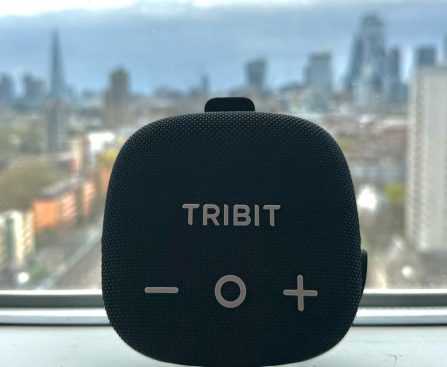
The Micro 3 preserves the small and portable design of its forerunner, measuring just a little over four inches square and under two inches in thickness. Weighing roughly the same as a soda can, it’s convenient to pack in a bag for travel. The black mesh design showcases large buttons for volume adjustment and playback, ensuring user-friendliness. Furthermore, it comes with a stretchable rubber strap suitable for securing to bicycles or backpacks, appealing to outdoor enthusiasts.

#### Key Features and Enhancements

1. **Audio Performance**: The sound output has grown from 10W to 13W, delivering a 30% increase in audio power. While this might not be critical for every user, it can enhance the auditory experience in larger or more chaotic settings.

2. **Battery Life**: One of the key enhancements is the upgraded 4800 mAh battery, which extends playtime from 12 hours to an impressive 24 hours. This means you can relish your music for more extended periods without the need for recharging.

3. **Waterproofing**: The Micro 3 has boosted its waterproof rating from IP67 to IP68, granting improved protection against water submersion. This upgrade brings peace of mind for those who may utilize the speaker in damp environments.

4. **Bluetooth Connectivity**: The Bluetooth version has been enhanced to 6.0, enabling a connection range that exceeds 140 feet. While this range might not be required by all, it does ensure a more reliable connection.

5. **Flexible Attachment Options**: A new magnetic attachment feature supplements the current strap, allowing users to conveniently stick the speaker to metal surfaces like refrigerators, adding to its versatility.

#### Pricing and Availability

The Tribit StormBox Micro 3 is available for $65, a slight increase from the Micro 2’s retail price of $60. However, an introductory price of $45.49 is offered until April 12th, presenting an excellent opportunity for those looking to upgrade or buy their first portable Bluetooth speaker.

#### Conclusion

Although the Tribit StormBox Micro 3 might not signify a revolutionary leap from its predecessor, the improvements in audio output, battery duration, waterproof features, and connectivity render it an appealing option for both new customers and current Micro 2 users. With the current introductory pricing, it stands as an enticing choice for anyone searching for a dependable and portable Bluetooth speaker.

The Cost of YouTube Premium is Increasing

YouTube Premium is getting more expensive in the US, with prices rising by $2 on standard individual accounts and as much as $4 for the family plan. The price hike is already in effect for new accounts, and is rolling out now for existing customers. Premium’s Individual plan now costs $15.99 per month, up from […]

Gen Z’s Love-Hate Relationship with AI

Gen Z is increasingly disillusioned with AI – just not enough to stop using it. A new Gallup report released this week, based on responses from nearly 1,600 people ages 14 to 29 across the US, suggests the hype is wearing off for the digital-native generation as AI becomes more embedded in school and work. […]

Reasons Some Listeners Favor Vinyl Records Over Digital Audio

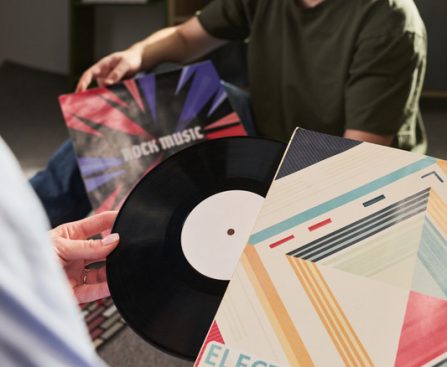
vinyl records have been experiencing a steady revival in recent times, indicating that an increasing number of listeners have started to appreciate the benefits this format provides. Nevertheless, from a technical standpoint, vinyl may not genuinely deliver a higher-quality recording compared to a suitable digital file. Those who claim vinyl sounds superior might form this belief due to various factors, including the equipment utilized for playing vinyl and a general sense of nostalgia for the format.

Vinyl does possess some drawbacks that adversely impact its sound quality. In comparison to a digital recording, a vinyl recording, when played on a turntable, has a smaller dynamic range, is more susceptible to distortion, and is prone to audio problems such as crackles and hissing. Still, some individuals maintain that the vinyl listening experience is more enjoyable than that of digital audio. The reasons behind their feelings are not fictitious: they might simply relate less to the actual fidelity of the recording than one might think.

Equipment can impact the experience significantly

Bee Write Back: DIY Writerdeck with Raspberry Pi Zero 2 W, 5.5-inch OLED, and Mechanical Keyboard

Bee Write Back Journal

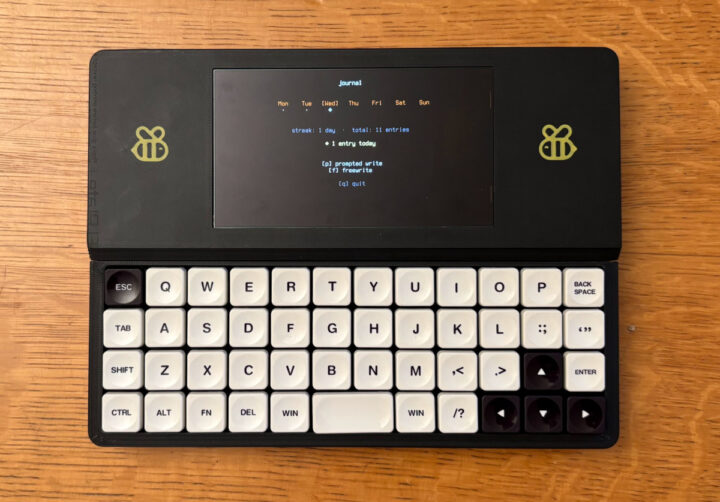
Based on Raspberry Pi Zero 2 W, the Bee Write Back writerdeck is another DIY project that should be relatively easy to reproduce, since it relies on off-the-shelf parts, including an OLED and mechanical key switches and caps, as well as a 3D printed enclosure. Simon (shmimel) had trouble falling asleep and found out that journaling helped him a lot, but he was not so fond of writing in a physical journal. So instead, he created the Bee Write Back journal/writerdeck as a distraction-free writing machine, and the result looks pretty neat. Bee Write Back key components: Raspberry Pi Zero 2 W SBC with Broadcom BCM2711 quad-core Cortex-A53 SoC, 512 MB RAM, WiFi 4 and Bluetooth 4.2 Display – 5.5-inch AMOLED screen with 1280 x 720 resolution($52 on AliExpress) Keyboard accessories 47x switches 47x keycaps YMDK Air40 keyboard PCB (about $30 on AliExpress) Power – Seengreat Pi Zero UPS USB HUB […]

The post Bee Write Back – A Raspberry Pi Zero 2 W-based DIY writerdeck with 5.5-inch OLED and mechanical keyboard appeared first on CNX Software – Embedded Systems News.

4 Unexpected Uses of Your Phone’s Volume Buttons

Android’s privacy functionality allows you to deactivate all sensors or specific features of the Action Button found on iPhones; there’s always something new to discover on your device.

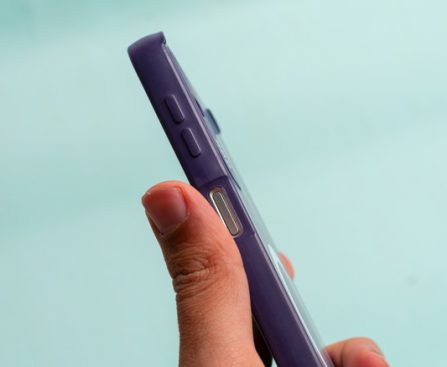
The same goes for your phone’s volume button. These seemingly simple buttons can accomplish far more than merely adjusting your phone’s audio output. For instance, you can utilize your phone’s volume buttons to perform a forced restart or capture images – although more recent iPhones are equipped with a distinct Camera Control button. On Android devices, you even have the option to create shortcuts for the volume buttons to carry out extra functionalities. 

Personalizing the volume buttons can be vital for enhancing your devices’ privacy and usability without necessitating a steep learning curve. In fact, many of these features have existed for quite a while, and now it’s time to explore some of them thoroughly.

Capture images and videos

Meta Unveils Muse Spark LLM to Lead a ‘Human Centric’ AI Age

This exudes some strong Gemini energy, but from Meta.

Meta AI has unveiled a new large language model (LLM) named Muse Spark, intended to usher its software into a “people first” phase. Muse Spark is adept at utilizing multiple agents to handle tasks with precision and rapidity. At present, Meta AI, energized by Muse Spark, is accessible to U.S. users through Instant and Thinking modes in the application. Nevertheless, platforms such as Instagram, Facebook, Messenger, WhatsApp, and Meta’s AI glasses will get these updates at a later time.

Muse Spark is a multimodal LLM capable of generating minigames and assisting in troubleshooting household appliances. It also seeks to support users in understanding their health, having been trained with information gathered by more than 1,000 medical professionals. The AI can comprehend and evaluate products, providing alternatives and facilitating shopping by exploring trending styles and inspirations.

Meta’s Superintelligence Labs developed Muse Spark from the ground up, and it now powers the Meta AI app and meta.ai. The AI’s novel features are being introduced in the U.S., with intentions to expand these to other platforms shortly. The debut of Muse Spark follows Meta’s earlier AI innovations, such as the Llama 3 LLM and improved image generation.

The abilities of Muse Spark resonate with those of Google’s Gemini, emphasizing speed and user-focused functionalities. Meta strives to develop an AI that users can depend on, utilizing content from creators and subagents to efficiently manage complex tasks.

Moto Edge 70 Pro Images Unveiled Before Official Release

We could be nearing the expansion of the 70 series.

What you need to know

– Motorola’s Edge 70 series may broaden, as the 70 Pro has allegedly had its rendering leaked featuring multiple colors and textures.
– Reports suggest the device will debut in a light green shade with a “satin-luxe” texture, according to an X tipster, alongside a maroon and deep blue variant with a “fabric” feel.
– The Edge 70 Ultra was mentioned in reports late last year, indicating it might have flagship qualities with the Snapdragon 8 Gen 5 SoC.

As the week comes to a close, buzz surrounding Motorola’s upcoming slab phones seeks attention, showcasing a vibrant array.

The rumors regarding the Motorola Edge 70 Pro originate from YTechB, stating the device could launch in four color options. Initially, the publication cites leaker Intakhab on X, who shared an alleged image of the Edge 70 Pro in some seemingly official material. Allegedly, the phone is set to feature a light green color choice with a “satin-luxe” finish. Additionally, the X post mentions a deep blue shade with a “tailored-fabric” finish and a white “marble” finish.

Android Central’s Take

I’m fond of a good red hue, and the rumored color for the Edge 70 Pro appears quite appealing (let’s hope it’s authentic). Motorola has also been exploring various colors and textures for its devices. If you’ve seen the latest whispers surrounding the Razr 2026, you understand what I mean.

The publication contributed its own batch of purported Moto Edge 70 Pro renderings in three color variations. One rendering offers a glimpse of what the deep blue (Pantone Titan) option looks like with the fabric texture. Rumors suggest a Pantone Zifandel, resembling maroon, could make its debut with a smooth, polished finish. Finally, the report indicates that a wood finish, appearing quite dark—almost like walnut—could be introduced.

The overall aesthetics of the phone bear a resemblance to the 2025 models; however, the square camera arrangement is slightly offset from the top corner. The publication claims a 6,500mAh battery may power the phone when it’s released.

Taking the edge

These speculations highlight another feature of the Edge 70 Pro: a “quad-curved display.” This is especially intriguing given that the Edge 70 was launched with a completely flat display. The design was largely akin to the 2025 model, apart from the color highlights on the raised camera lenses. The renders for the Edge 70 Pro from the tipster on X emphasize the accented lenses, but the curved display is also faintly discernible.

Android Central’s Take

I’m sure everyone has their own opinion on curved displays. After prolonged use on the Edge Plus 2023, I’ve grown somewhat weary of them. A curved display has its merits; I appreciated the edge lighting Motorola provides, but it becomes monotonous. You tend to sacrifice some screen real estate for the curve as it slopes down and away, making a flat display feel more expansive. It also avoids making gaming feel so awkward.

The Moto Edge 70 is notably slim, leading to speculation that the Pro version will maintain that design ethos. Speculations for the 70 series accumulate, with the Edge 70 already released, though not in the U.S. Reports surrounding a potential 70 Pro are emerging, along with the Ultra model. The 70 Ultra had its own report last year, suggesting Motorola may target a more premium market segment.

The phone was anticipated to feature a soft, textured rear panel, alongside Qualcomm’s latest Snapdragon 8 Gen 5 SoC. One lingering question is whether we’ll see any of these devices this year.