Connections is a New York Times word game that’s all about finding the “common threads between words.” How to solve the puzzle.
NYT Pips Clues, Solutions for April 11, 2026
The New York Times’ latest game, Pips, brings domino fun to your desktop. How to play Pips as well as hints in case you get stuck.
NYT Connections Sports Edition: Hints and Answers for April 11, 2026 Today
Connections: Sports Edition is a New York Times word game about finding common sports threads between words. How to solve the day’s puzzle.
OpenAI Recommends Refreshing Mac Applications, Such as ChatGPT and Codex, for Improved Security Protocols
OpenAI has released an advisory to users of its Mac software, encouraging them to upgrade to the most recent versions of its applications due to a security issue associated with a third-party developer tool, Axios. This suggestion is made as a precaution following a larger industry incident that has raised concerns about possible vulnerabilities.
In their communication, OpenAI reassured users that there is no indication that user data has been compromised. They emphasized that their systems, intellectual property, and software integrity are secure. The company is actively enhancing its security certifications to confirm that all macOS applications are recognized as genuine OpenAI products.
As part of this security improvement, all macOS users must update their OpenAI applications, which include ChatGPT, Codex, Atlas, and Codex CLI. Not adhering to this requirement may lead to older versions of these applications becoming inoperative after May 8. Users can access links to download the newest versions of these apps on OpenAI’s official website.
This action underscores the necessity of upholding strong security measures, particularly in light of potential risks from third-party tools. OpenAI’s dedication to user safety and data security is clear in their prompt reaction to the situation, ensuring that users can keep using their applications without anxiety over security violations. For more information, users are advised to consult the official announcement on OpenAI’s website.
Apple and Epic Games Persist in Legal Clash Over Court-Ordered Suspension in App Store Conflict
**Apple vs. Epic Games: Latest Updates on App Store Regulations**
Apple and Epic Games are presently engaged in a major legal confrontation regarding the regulations of the App Store and its payment systems. Recently, both entities have submitted motions related to a stay issued by the U.S. Court of Appeals for the Ninth Circuit, which affects the ongoing contention over alternative payment methods within the App Store.
### Background of the Case
On April 6, 2026, the Ninth Circuit approved Apple’s motion to pause a prior ruling that mandated the company to alter certain App Store policies, especially those concerning alternative payment methods for developers. This ruling was in reaction to Epic’s allegations that Apple’s practices represented anti-competitive conduct.
Apple’s motion for a stay was submitted on April 3, and the court’s ruling followed swiftly. In reply, Epic lodged two motions on the same day, contesting the court’s decision to grant Apple the stay. Epic claimed that the court acted too quickly, having not permitted the full 10-day period for responses as required by the Federal Rules of Appellate Procedure.
### Epic’s Position
Epic argues that the court’s choice to grant the stay was made without sufficient notification and that it undermines the competitive environment envisioned by the initial ruling. The company described Apple’s motion as a tactic to delay, aimed at obstructing the clarification of guidelines regarding its capacity to impose fees on third-party payment systems.
### Apple’s Counter
In reaction to Epic’s motions, Apple presented a counter-argument asserting that there is no reason to revisit the stay. Apple contends that Epic has failed to show any substantial harm resulting from the stay and pointed out that it is currently not levying commissions on purchases made through external links while the Supreme Court deliberates on the case. Apple maintains that upholding the stay is crucial for preserving the current framework and avoiding unnecessary legal conflicts.
### Epic’s Response
Epic has subsequently responded to Apple’s defense, contending that the stay is already inflicting damage by generating uncertainty surrounding commission structures. This uncertainty, Epic claims, is dissuading developers from embracing alternative payment methods, which postpones the competitive transformations the court initially aimed to facilitate. Epic argues that an appeal to the Supreme Court would not eliminate the necessity for further proceedings in the lower courts, indicating that both processes could take place simultaneously.
### Conclusion
The ongoing legal dispute between Apple and Epic Games underscores important issues related to app distribution and payment systems in the digital marketplace. As both companies continue to articulate their positions, the court’s ruling on whether to lift or uphold the stay will have extensive consequences for developers and the broader technology sector. The resolution of this case could redefine the regulations governing app stores and the dynamics between platform providers and developers.

Splashdown! Artemis II Crew Safely Returns to Earth
After setting world records, the crew of Artemis II have arrived safely back on Earth.

Samsung Phones to Discontinue Beloved Customization Option
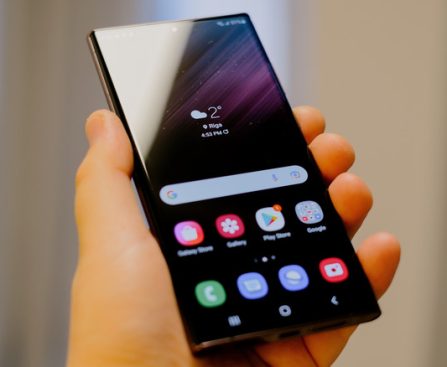
Your Samsung Device Is Losing A Fun Customization Option With One UI 8.5
Samsung, recognized for its extensively customizable One UI, has subtly removed the functionality to utilize third-party or custom fonts with the March 2026 security update, impacting devices operating on One UI 8.5 or One UI 8.0. This alteration stems from a security patch that addressed a glitch permitting custom fonts without adequate cryptographic verification. While Samsung perceives this as a security threat, users can still obtain fonts via the Galaxy Store, although options are predominantly paid. In spite of this restriction, Samsung devices continue to provide a range of customization options such as wallpapers and color schemes.
Artemis II Achieves ‘Perfect’ Pacific Ocean Splashdown in Moon Mission
The Integrity craft splashed down in the Pacific Ocean off the coast of San Diego just after 5:07 p.m. Pacific Time.

Instagram Launches Comment Editing Functionality with Constraints
Charles-McClintock Wilson/Shutterstock
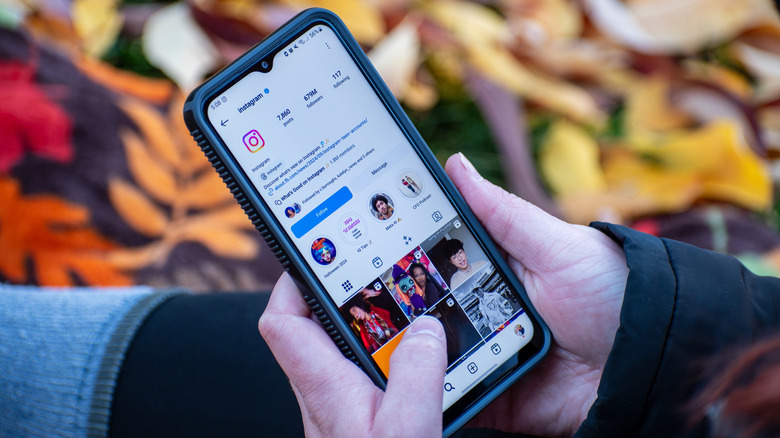
For an extended period, any error you made in an Instagram comment would linger forever as a blemish on your personal typo meter. Anyone who stumbled upon that specific post and noticed that comment would be aware of your blunder. Admittedly, that’s somewhat exaggerated, and mistakes do occur; they are truly not that significant, and everyone slips up occasionally. Nevertheless, the primary issue was that there hadn’t been a method to modify your comments. Until this moment, that is.
Starting April 2026, you can at last modify Instagram comments, but only within the first fifteen minutes. With the launch of Instagram version 424.1, an edit button will appear next to each new comment you submit. If you decide to click that button, you will be allowed to adjust the content for up to fifteen minutes after it initially posted. You can revise as many times as you wish during that fifteen-minute frame, but after it’s gone, the edit button will vanish. When you amend a comment, others can see that it has been altered, but they won’t be privy to the original content.
What additional user experience updates has Instagram introduced?

Apple Dominates Worldwide Smartphone Sector in Q1 Despite Overall Shipment Drop
Counterpoint Research has released its newest report on worldwide smartphone shipments for Q1 2026, indicating that the robust demand for the iPhone 17 has enabled Apple to attain the leading position in the market for the first time in a first quarter.
### ‘Ecosystem Stickiness’ Fuels iPhone Sales Amidst Component Shortages
The report reveals that Apple’s global smartphone shipments rose by 5% year-over-year in the first quarter of 2026, in contrast to a general downturn in the market where some vendors faced declines of up to 19%.
Apple secured a 21% market share in Q1 2026, marking its inaugural lead in the global smartphone market during this quarter. The brand’s strength against the ongoing memory crisis is credited to its ultra-premium positioning and highly cohesive supply chain. The persistent strong interest in the iPhone 17 series, coupled with aggressive trade-in initiatives and the allure of its ecosystem, aided in overall volume growth despite a tough macroeconomic landscape. Noteworthy is Apple’s significant growth in key Asia-Pacific markets such as China, India, and Japan, suggesting effective strategies in these high-potential areas.
The overarching market decline has been associated with a shortage of DRAM and NAND memory, which, alongside weaker demand in certain segments, has led OEMs to lower shipments and pass rising costs onto consumers, further hindering demand.
Interestingly, Google and Nothing achieved the highest year-over-year growth at 14% and 25%, respectively, although their volumes remained too low to enter the top five, keeping them classified as “Others.”
In the rankings, Apple led with a 21% sell-in shipment share, closely followed by Samsung at 20% with a 6% year-over-year decline. Xiaomi occupied third place with a 12% share and a 19% decrease, followed by OPPO with an 11% share and a 4% drop, and vivo in fifth with an 8% share and a 2% decline. Other OEMs collectively represented a 28% share, experiencing a 10% decrease.
Looking forward, Counterpoint forecasts that the outlook for 2026 remains bleak, with the memory crisis possibly persisting until late 2027. OEMs are expected to prioritize value over volume, implement configuration updates, phase out low-margin models, and utilize refurbished devices to cater to budget-conscious customers.
For more information, the complete report can be accessed [here](https://counterpointresearch.com/en/insights/global-smartphone-shipments-q1-2026).