Tesla Imposes a $50,000 Charge for Selling Your Signature Model S or X – Details Inside

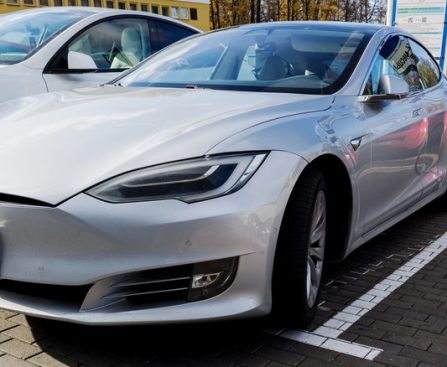
Tesla’s leader, Elon Musk, announced that the car manufacturer will discontinue both the Model S and X by halting production and redirecting its emphasis to the Optimus humanoid robots. The Tesla Model S ranks among the most potent electric vehicles available, boasting 1,020 horsepower in its premium trim, whereas the Model X is favored for its seamless ride and cutting-edge features.

Ceasing production of these two electric vehicles marks a significant milestone for both the organization and its supporters, as the Model S and X have been manufactured for more than ten years. Consequently, it is only fitting that Tesla intends to conclude this chapter in a grand manner by crafting a limited number of farewell Signature Edition models of the Model S and X. However, if you were considering acquiring the Signature Edition of either vehicle to resell it almost immediately for a quick gain, you might find yourself in a predicament with the company.

Electrek has reported that Tesla requires purchasers of the Signature Edition Model S and X to sign a “No Resale Agreement” that bars them from reselling the vehicle within the first year of ownership. The agreement stipulates a penalty of either $50,000 in liquidated damages or the car’s entire resale value, depending on which amount is more significant. Furthermore, Tesla may also decline to sell you its vehicles in the future if you violate the agreement. The “No Resale Agreement” exists because Tesla aims to prevent individuals from acquiring the models with the intention of flipping them.
You can resell a Signature Edition Model S/X, but there’s a catch

<div class="slide-key image-holder gallery-image-holder credit-image-wrap " data-post-url="https://www.bgr.com/2155590/tesla-50000-signature-model-s

Xiaomi’s Next Flagship Challenger Might Experience a Price Hike

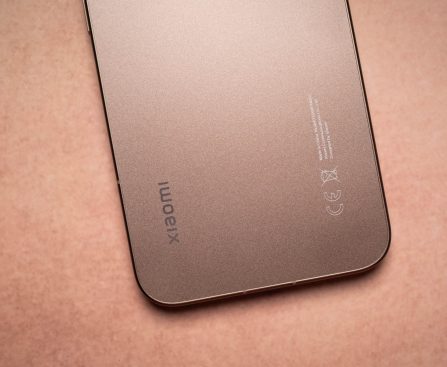
The Xiaomi 17T and 17T Pro may be debuting much sooner than anticipated. New entrants in Xiaomi’s T series could be unveiled earlier than initially projected (May 2026), but at significantly elevated prices. The standard Xiaomi 17T is rumored to leap to €749, while the Pro version could reach €999 — that’s an increase of up to €200 compared to last year. Essential specifications for both variants have also surfaced.

Do you recall when Xiaomi’s T collection provided flagship characteristics without the hefty price tag? That could be shifting. A recent disclosure indicates the Xiaomi 17T and 17T Pro will launch in May 2026, eight months ahead of expectations, and their pricing might lead to some considerable sticker shock.

As per a report from the French site Dealabs, the standard Xiaomi 17T is anticipated to commence at €749 (approximately $876) for the 12GB/256GB variant. That’s €100 more than the previous year’s Xiaomi 15T. An even bigger surprise is the 17T Pro, which might retail for €999 (around $1,169), making it €200 pricier than the Xiaomi 15T Pro.

Display and performance enhancements

What can you expect for the increased cost? The Pro version potentially boasts remarkable features. According to the report, it includes a 6.83-inch 144Hz OLED display (up from 120Hz), MediaTek’s leading Dimensity 9500 chip (manufactured using TSMC’s state-of-the-art 3nm N3P technology), and a 7,000mAh battery that facilitates 100W wired and 50W wireless charging.

For photography, it may sport a 50MP Light Fusion 950 primary sensor (the same 1/1.31-inch component as the Xiaomi 17), a 50MP 5x telephoto lens, and a 12MP ultrawide camera.

The standard 17T is anticipated to come with more basic specifications: a 6.59-inch 120Hz OLED display, a Dimensity 8500-Ultra processor, a 6,500mAh battery with 67W wired charging (lacking wireless charging), and a smaller 50MP Light Fusion 800 primary sensor.

Both devices are rumored to be equipped with 12GB of RAM, UFS 4.1 storage, 32MP front-facing cameras, and will be available in Blue, Black, or Purple.

According to the leak, the 17T Pro appears to be quite robust. Nevertheless, a starting price of €999 places it in close proximity to the entry-level models of the Galaxy S26 and OnePlus 14.

Android Central’s Perspective

A 7,000mAh battery and wireless charging in a Pro edition that is expected to offer value is commendable. You get nearly flagship-level performance for less than a Galaxy Ultra or iPhone Pro Max. However, Xiaomi’s €200 price hike in a single generation implies the company is gauging the price tolerance of customers. For consumers, this suggests the era of sub-€800 flagship disruptors is drawing to a close. If you seek top-tier features without draining your wallet, you’ll now need to hunt for deals from last year or accept that premium smartphones now begin at €1,000.

John Ternus Faces Crucial Choices Pertaining to iPhone Pricing and Domestic Production in the U.S.

**Incoming Apple CEO John Ternus Faces Essential Choices Amid Escalating Memory Expenses and Manufacturing Hurdles**

As John Ternus readies to assume the role of CEO at Apple, he is faced with two crucial challenges that could influence the tech titan’s future. A recent analysis from the *Financial Times* emphasizes the urgent concerns of soaring memory costs and the strategic reorganization of Apple’s manufacturing capabilities throughout China, India, and the United States.

### Memory Expenses Set to Increase Over 400%

Apple is entering a new phase regarding memory sourcing for its products. Traditionally, the company has held a strong position in the memory market, enabling it to set conditions for suppliers. Nevertheless, the spike in demand for memory, especially for AI servers, has altered this equilibrium. The *Financial Times* reports that memory expenses, which previously comprised about 10% of an iPhone’s material costs, are projected to soar to as high as 45% by the next year.

This steep rise presents Ternus with a conundrum: Should Apple bear the increased expenses, thereby diminishing profit margins, or should the company elevate prices, risking a possible drop in sales? This query is expected to be a central topic during the upcoming earnings call, where analysts will examine Apple’s strategy in response to these issues.

### Manufacturing in China, India, and the US

Aside from escalating memory costs, Ternus must tackle the intricacies of Apple’s manufacturing environment. Under Tim Cook’s tenure, Apple has skillfully maintained a fragile equilibrium in its relations with both the US and Chinese governments. Cook’s success in convincing former President Trump that US-based iPhone manufacturing was unfeasible while simultaneously attracting investments in US production has been a notable success.

However, the transition of iPhone assembly from China to India has drawn the attention of the Chinese government, which is reported to have implemented measures to obstruct iPhone production in India. Ternus will be required to make strategic supply chain choices that will bear long-term significance for Apple.

As Samik Chatterjee from JPMorgan observes, “US investment will be one of the key drivers of Apple’s approach in the coming years.” Ternus’s challenge will be to position Apple advantageously with both Washington and Beijing, ensuring the company’s ongoing growth and stability.

### Conclusion

As Ternus embarks on his new position, he inherits a complicated landscape filled with challenges and prospects. The choices he makes regarding memory expenses and manufacturing strategies will not only affect Apple’s financial outcomes but also its connections with vital stakeholders in the global market. While Tim Cook may transition to a role as Executive Chairman, it is expected that he will continue to play a crucial role in navigating the political nuances that influence Apple’s operations. The forthcoming months will be pivotal as Ternus defines his leadership style and establishes the direction for Apple’s future.

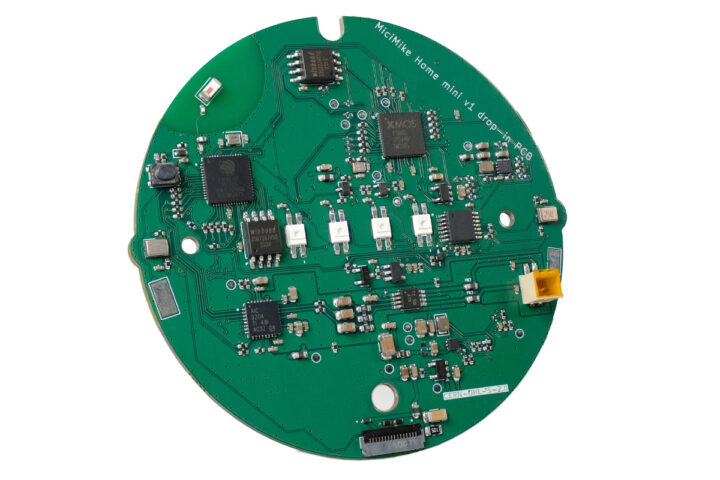
MiciMike’s Open-Source PCB Turns Google Home Mini Into Local Voice Assistant (Crowdfunding) – CNX Software

MiciMike Home Mini Drop In PCB

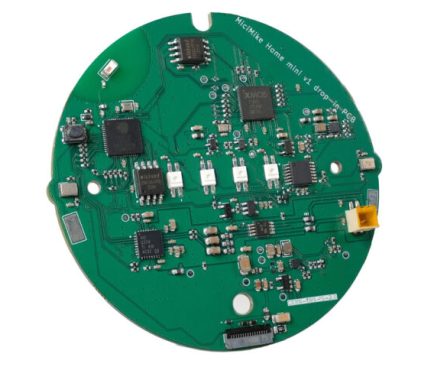
The MiciMike Home Mini Drop-In PCB is an open-source replacement mainboard designed to convert a 1st Gen Google Home Mini into a fully local, privacy-focused voice assistant running Home Assistant Voice. Built around an ESP32-S3 MCU and an XMOS XU316 audio processor, it removes cloud dependencies without any case modifications or soldering. The board offers on-device wake word detection, echo cancellation, and noise suppression via two MEMS microphones, and comes pre-flashed with ESPHome for easy Home Assistant integration. The PCBA fully supports local voice processing, optional cloud LLM integration, media playback, and Snapcast. It’s released as open hardware under the CERN-OHL-S v2 license, with complete design files available, making it suitable for privacy-focused smart-home automation, DIY voice assistants, and hardware-reuse projects. MiciMike Home Mini Drop-In PCB specifications: Compatibility – Google Home Mini 1st generation Wireless MCU – Espressif Systems ESP32-S3 CPU –  Dual-core Xtensa LX7 microcontroller @ up to 240 […]

The post MiciMike’s open-source drop-in PCB converts Google Home Mini into a local voice assistant (Crowdfunding) appeared first on CNX Software – Embedded Systems News.

GitHub Quickly Fixed a Critical Vulnerability in Under Six Hours

GitHub employees fixed a critical remote code execution vulnerability in less than six hours last month. Wiz Research used AI models to uncover a vulnerability in GitHub’s internal git infrastructure that could have allowed attackers to access millions of public and private code repositories. “Our security team immediately began validating the bug bounty report. Within […]

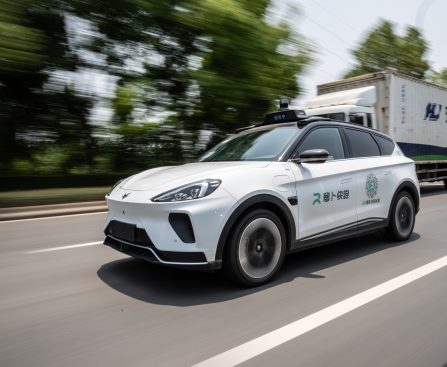
China Halts Issuance of New Robotaxi Licenses Following Baidu Incident

China has suspended new licenses for autonomous vehicles, Bloomberg reports, citing unnamed people familiar with the matter. The move comes after dozens of robotaxis operated by Chinese tech giant Baidu ground to a halt in traffic last month in Wuhan, creating chaos. The restrictions will prevent companies from adding new driverless cars to their fleets, […]