Selecting the Ideal Color for Your Motorola Razr Fold Acquisition

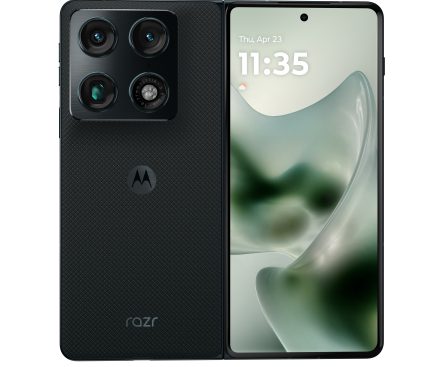
Motorola has unveiled its newest foldable smartphone, the Razr Fold, which is released in two unique colors: PANTONE Blackened Blue and PANTONE Lily White. This fresh model, revealed at CES 2026, aims to rival other premium foldable phones and is priced lower than the Samsung Galaxy Z Fold 7. It features remarkable aspects such as high-performance cameras, swift charging abilities, and ample memory and storage options, including 16GB of RAM and 512GB of storage in all color variants.

The PANTONE Blackened Blue edition presents a rich, nearly black shade with a matte finish that delivers a sleek, piqué-like texture. This color variant radiates a dark and moody vibe, making it an ideal selection for individuals who favor a more subtle appearance.

Conversely, the PANTONE Lily White variant showcases an elegant satin finish in a beige-ish off-white shade. This option is minimalist and soothing, reminiscent of an “old money” aesthetic with its luxurious look. However, prospective buyers should keep in mind that the lighter shade may be more susceptible to showing dirt and scratches than its darker sibling.

Both color variants feature identical memory configurations, enabling users to select based on personal taste without concerns about performance disparities. The Motorola Razr Fold’s distinctive faux leather finish distinguishes it from standard glass-backed smartphones, providing a hint of grace and sophistication.

In conclusion, the Motorola Razr Fold offers an attractive option for consumers interested in foldable smartphones, with its top-tier specifications and chic color selections catering to various aesthetic tastes. Whether choosing the dark charm of Blackened Blue or the polished sophistication of Lily White, users can revel in a premium device that merges practicality with style.
Unveiled Evidence in Musk vs. Altman

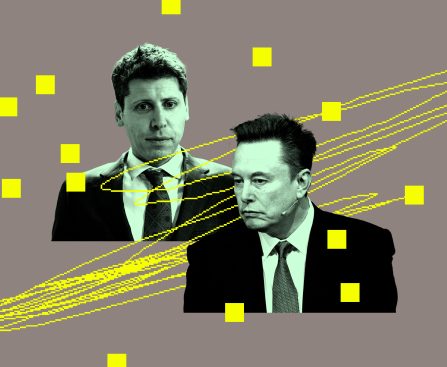
The Musk v. Altman trial is underway, and that means exhibits, or the evidence to be presented in court, are being revealed piece by piece. So far, email exchanges, photos, and corporate documents are circulating from the earliest days of OpenAI – and from before the AI lab even had a name. Some high-level takeaways: […]

Actors Who Have Fought a Xenomorph, Predator, and Terminator

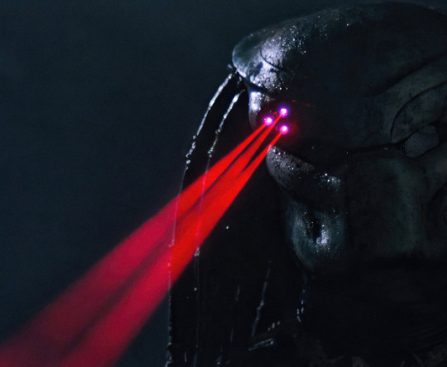
Throughout the 1980s and early 1990s, two extraterrestrial fiends along with a robotic menace were wreaking havoc on movie screens, leading some misguided individuals to think they stood a chance against them. A remarkable assembly of esteemed talent confronted the nightmares of outer space, namely the Xenomorph from the “Alien” series, the Yautja from “Predator” films, and Skynet’s assassin from “The Terminator” and “Terminator 2: Judgment Day” (also nightmarish creations). Yet, there were merely three actors who had the (dis)privilege of battling all three.

Lance Henriksen, Michael Biehn, and Bill Paxton fought valiantly against extraterrestrial creatures and time-traveling robotic assassins and survived to narrate their experiences, unlike their on-screen characters. The trio first encountered the killer from a grim future in “The Terminator,” with Paxton as a punk whose clothes were stolen at a bus stop, Henriksen pursuing the enigmatic assassin as Detective Vukovich, and Biehn portraying Kyle Reese, the time-displaced warrior dedicated to safeguarding the human resistance’s leader, Sarah Connor (Linda Hamilton).

The trio then came together again in 1986 for “Aliens,” where Paxton and Biehn portrayed Colonial Marines, Hudson and Hicks, while Henriksen played the android Bishop. However, it was during their confrontations with the Predator that they all faced the alien hunters individually, each on distinct occasions, but only one of them achieved a unique distinction.

Bill Paxton holds the singular distinction of being killed by a Xenomorph, a Predator, and a Terminator. Regarding the Predator’s encounters with Biehn, Henriksen, and Paxton, they all confronted the Yautja years apart. Paxton was the first, when the Yautja invaded Los Angeles in “Predator 2” in 1990. This was followed by Henriksen, who, as Charles Bishop Weyland, found himself trapped amidst the clash of the creatures in 2004’s “Alien vs. Predator.” As for Biehn, he wouldn’t face a Yautja until 2025, depicted in animated form, when he battled a Yautja alien ship in “Predator: Killer of Killers.”

However, it is the late, great Paxton who will long be remembered as the sole star to be slain by all three movie monsters. The punk was terminated by Arnie, Hudson was dragged underwater in “Aliens,” and his wisecracking cop met his end on a train in “Predator 2.” In contrast, Henriksen met his demise off-screen at the hands of the Terminator, was speared by a Yautja in “Alien vs. Predator,” and exited peacefully in “Alien 3” when Ripley (Sigourney Weaver) turned off his power.

As for Biehn, while he did indeed perish in “The Terminator,” it was through an act of self-sacrifice, and the Xenomorphs did not take his life either. Instead, Hicks was killed during the opening credits of “Alien 3,” after being impaled during cryosleep. Then, in “Killer of Killers,” he was impressively animated in a decapitation scene. All those exits are quite remarkable, but they pale in comparison to Paxton’s award-winning deaths in his films. Following that, it’s simply game over.

Google TV Improves Family Photo Functions with AI and Launches New Shorts Row

Google has recently introduced a series of enhancements for Google TV, concentrating on improving the user experience through AI and photo integration. At the center of these enhancements is Gemini, an AI capability that enables users to search for specific images stored in their Google Photos library by merely instructing the AI to retrieve photos from particular events or periods. This function is crafted to make photo searching more intuitive and individualized.

Moreover, Google TV now provides the option to transform photo albums into lively slideshow screensavers, adding a personal flair to the viewing experience. Users can access this feature via the Quick Settings menu by selecting Google Photos as the source for screensavers. A new “Remix” button enables users to apply AI-generated styles to their photos, offering creative and distinctive visual alterations.

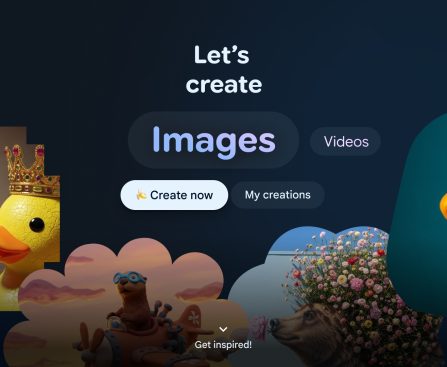
The update also brings a “Create” option, utilizing Nano Banana and Veo technologies to convert stored images into AI-generated content. This includes generating short videos or imaginative scenes from simple photos, presenting a fun and inventive approach to interact with personal media.

In addition, Google TV is poised to incorporate YouTube Shorts, with a dedicated “Short videos for you” row anticipated to debut in the summer. This feature will customize content according to user preferences, enriching the entertainment selections available on Google TV.

These enhancements are part of Google’s larger effort to embed AI into everyday technology, making user interactions smoother and more engaging. The rollout of these features is currently in progress, with initial availability on Gemini-enabled devices and TCL Google TVs in the U.S.

Ubuntu’s AI plans have Linux users looking for a ‘kill switch’

Canonical’s plan to add AI features to Ubuntu has some users asking for “a version of Ubuntu that does not include these features,” while others say they’ll stick with older versions of the Linux distro or even switch to a different one. After Canonical’s announcement earlier this week that it’s bringing AI features to Ubuntu, […]

Intelligent Device Boosts Bicycle Helmet Security for Trail Cycling

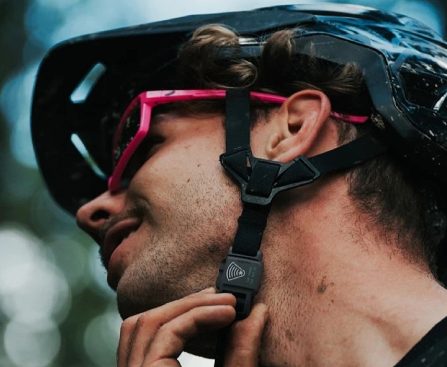
The environment surrounding us can occasionally be quite perilous, which is why having emergency contact details readily accessible is always wise. A new innovative device, compatible with any bicycle helmet, seeks to simplify obtaining this information while cycling. If you’re out riding solo — whether on a path or on the street — and encounter an accident, this ingenious bike helmet fastener from FIDLOCK and Twiceme Technology enables first responders to easily and swiftly reach your emergency contacts.

It functions primarily as a sophisticated chin strap buckle with NFC, or Near Field Communication. NFC allows you to tap your smartphone to send or receive data, such as making contactless payments at checkout. However, the NFC reader on your smartphone can do more than just tap-to-pay; it can also facilitate information sharing, as seen with the FIDLOCK SNAP helmet buckle. This compact device is integrated into the chin straps of a helmet and employs a magnet-mechanical fastening system to secure the helmet.

With the incorporated Twiceme technology, first responders can simply tap a smartphone to the buckle to access vital information, including medical details, emergency contacts, and personal data. The buckle doesn’t need batteries, charging, or connectivity. Currently, this smart bike helmet gadget is available to “equipment partners,” likely for incorporation into helmets during the manufacturing process.

FIDLOCK’s intelligent bike helmet buckle is crafted for straightforward integration. Even though the FIDLOCK SNAP buckle isn’t available directly to consumers at this time, its overall design seems highly effective and adaptable. This should make it an attractive choice for helmet manufacturers to incorporate into new products. According to FIDLOCK, the new safety fastener won’t necessitate any alterations to the designs or production processes of gear makers. It simply substitutes the existing chin buckle found on most bike helmets and needs no extra components.

The absence of a need for charging and the claimed one-handed operation should be appealing to cyclists, including those who enjoy trail riding. The same applies to e-bike riders, as states like California address the rising issue of e-bike accidents. In the event of an incident, the rider’s contact information is easily accessible to anyone able to assist. The front of the FIDLOCK buckle features “Tap phone for Med. ID” printed on it, to inform responders of its function. For additional insights on how this technology can be beneficial, explore these 10 useful applications of NFC tags in the home.