Unprecedented iPhone Brand Loyalty as Android Users Transition to Apple

A recent loyalty survey regarding smartphones conducted by SellCell has revealed important trends in brand allegiance among smartphone users in the United States. The survey, which included over 5,000 participants, showed that Android users are 3.7 times more inclined to switch to an iPhone than vice versa. This result highlights the strong loyalty that Apple has nurtured among its users, which has significantly risen over the last five years.

The survey findings illustrate that an impressive 96.4% of iPhone users intend to buy another iPhone when they next upgrade their device. Conversely, merely 3.6% of iPhone users indicated plans to shift to Android. The scenario is noticeably different for Android users, as 13.6% expressed they would think about transitioning to an iPhone, showing a considerable lean towards Apple’s products.

Brand loyalty for iPhones has experienced a notable increase, ascending from 90.5% in 2019 to 96.4% in 2026, with much of this expansion taking place since 2021. When questioned about why they remained devoted to Apple, a majority of iPhone users (60.8%) cited a preference for the iOS operating system. Furthermore, 17.4% of respondents highlighted their investment in the Apple ecosystem as a crucial aspect of their fidelity. Other factors included product reliability, user-friendliness, and confidence in Apple’s privacy and security protocols.

For the small segment of iPhone users contemplating a switch to Android, pricing emerged as the chief motivating factor. This indicates that while Apple has effectively developed a devoted customer base, price sensitivity remains an essential consideration for certain users.

The survey results offer valuable perspectives on consumer behavior in the smartphone industry, underlining the hurdles Android manufacturers encounter in retaining customers. For more comprehensive findings from the survey, additional details can be found on SellCell’s official blog.

Speculated New Satellite Functions for Future Apple iPhones: What to Anticipate

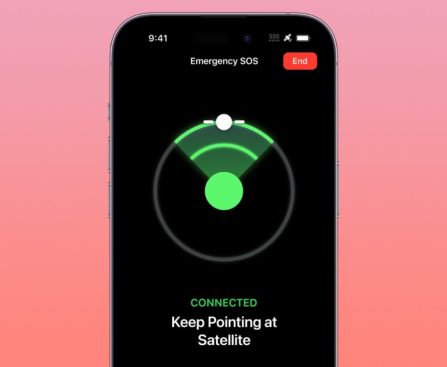
Apple’s satellite collaborator, GlobalStar, was recently purchased by Amazon, resulting in a partnership between the two technology powerhouses. This alliance has ignited speculation about four new satellite functionalities expected to launch on the iPhone shortly.

### 1. 5G Via Satellite

The existing satellite connectivity on the iPhone is considerably sluggish, but this is likely to evolve with the forthcoming iPhone 18 series. Reports indicate that Apple’s new C2 modem, incorporated in the iPhone 18 Pro, iPhone 18 Pro Max, and iPhone Ultra, will provide support for 5G via satellite. This improvement is set to significantly boost connection speeds, making satellite features more accessible to users.

### 2. Apple Maps Functionality

Currently, Apple Maps enables users to download maps for offline access, but it usually necessitates a Wi-Fi or cellular connection. However, Bloomberg reveals that Apple is striving to make Apple Maps operational over satellite connectivity. While it is still unclear if this will hinge on the new 5G capabilities of the C2 modem, it remains a possibility that could enhance navigation in isolated regions.

### 3. Sharing Photos in Messages App

Bloomberg has also reported that Apple intends to allow the transmission of photos via the Messages app over satellite. At present, users are limited to sending text messages over satellite, which has been crucial during emergencies. The ability to send images could significantly enhance communication in urgent situations, enabling users to convey visual information like injuries or locations.

### 4. Third-Party API for Applications

Finally, Apple is allegedly crafting an API that will permit third-party developers to incorporate satellite connections into their applications. This endeavor will allow app creators to utilize satellite connectivity for various functions, although not all services may be compatible. Initially, Apple might limit this feature to emergency-related applications, with a more extensive rollout expected as satellite access grows more widespread.

These forthcoming functionalities indicate a remarkable upgrade in the iPhone’s satellite capabilities, potentially revolutionizing how users engage with their devices in remote regions.

Fintech Startup Inspired by Kanye West Achieves $1.4B Valuation

Slash, the vertical banking platform built by two college dropouts, has raised a $100M Series C backed by Khosla Ventures and Ribbit Capital. The company’s valuation has nearly quadrupled since its May 2025 Series B, the latest leg of a comeback story that began when its core market evaporated overnight. Slash, the San Francisco-based vertical […]

This story continues at The Next Web

Conclusive Engineering KSTR-SAMA5D27: Ultra-Compact, Low-Power SBC with Microchip SAMA5D57 SiP – CNX Software

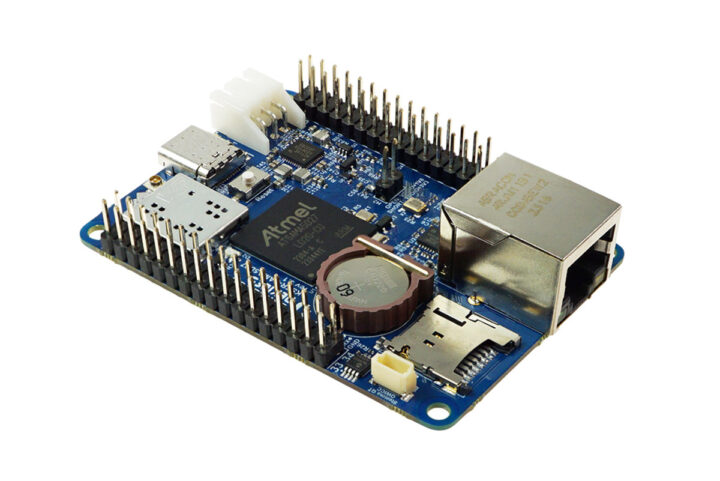
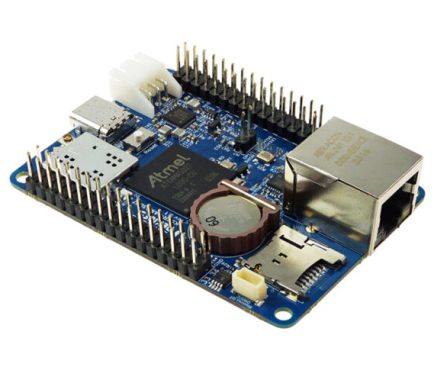
KSTR-SAMA5D27 SBC

Conclusive Engineering KSTR-SAMA5D27  is an ultra-compact (70x50mm) single board computer (SBC) powered by a Microchip SAMA5D27 Arm Cortex-A5 processor microprocessor clocked at 500 MHz paired with 256MB LPDDR2 (system-in-package). The board also features a microSD card slot and EEPROM for storage/configuration, Fast Ethernet, WiFi 4, and Bluetooth 4.1 connectivity, a USB-C port, two GPIO headers, and supports USB and battery power. It’s designed for IoT devices, smart systems, and edge computing applications. Conclusive Engineering KSTR-SAMA5D7 specifications: SiP –  Microchip SAMA5D27 CPU – Arm Cortex-A5 microprocessor @ 500 MHz System Memory – 256 MB LPDDR2 Storage MicroSD card slot 4KB EEPROM Networking 10/100Mbps Ethernet RJ45 jack 2.4 GHz WLAN IEEE 802.11 b/g/n and Bluetooth 4.1 USB 1x USB 2.0 OTG Type-C connector 1x USB 2.0 Host on expansion header Expansion 34-pin and 30-pin connectors 2x Flexcom (configurable: I2C, SPI, UART) I2C 6-channel ADC with Vref 10-bit ISC (Image Sensor Controller), 10-bit […]

The post Conclusive Engineering KSTR-SAMA5D27 is an ultra-compact, low-power SBC based on Microchip SAMA5D57 SiP appeared first on CNX Software – Embedded Systems News.

Intel’s Affordable Panther Lake Chips Target Budget-Friendly Laptops

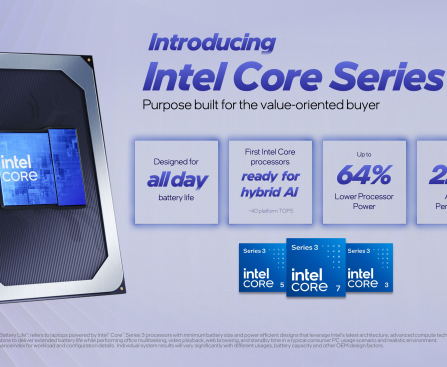
Intel is announcing a family of cheaper Panther Lake laptop processors called the Core Series 3 line. They’re built on the same Intel 18A process as the higher-end Core Ultra Series 3 family of chips, but they have less of just about everything spec-wise. The Core Series 3 (non-Ultra) line encompasses six different chips, with […]