Investors Worried as Meta’s AI Expenditures Exceed VR Investments

Meta’s AI Initiatives Achieve Unprecedented Growth Amid Climbing Infrastructure Expenses

Meta, the parent organization of Facebook, Instagram, WhatsApp, and Messenger, has disclosed exceptional earnings growth for the first quarter of 2026. The company generated $56.31 billion in revenue, reflecting a 33% rise from the previous year. This increase is primarily linked to Meta’s tactical application of artificial intelligence (AI) in its advertising sector, which has improved customer targeting and remarkably enhanced revenue.

In spite of the remarkable financial success, Meta’s expenditures have also surged significantly. The company’s spending escalated by 35% year-over-year, hitting $33 billion from January to March 2026. This rise in expenses is chiefly attributed to the rising infrastructure costs, intensified by global shortages of components and price increases. Meta now anticipates its annual expenditures to range from $125 billion to $145 billion, a notable increase from earlier projections.

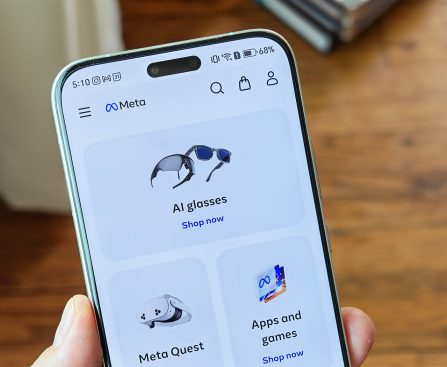
Meta’s Family of Apps accounted for $55.9 billion in revenue, while its Reality Labs segment, which features products like Meta Quest and Ray-Ban AI glasses, added $402 million. Even though the AI-driven advertising segment is flourishing, investors are remaining cautious because of the high infrastructure expenses and what some view as a vague strategic path.

The company’s stock saw nearly a 6% drop following the earnings report, as investors reacted to the elevated capital expenditure forecasts. Meta’s ambitious AI projects are expected to further escalate costs, potentially increasing by up to $30 billion over initial assessments.

While Meta’s AI and VR products continue to penetrate the market, revenue growth from these solutions has been slower than expected. The company is up against competition from other tech giants, such as Samsung, which intends to launch new AI glasses this year.

Meta’s CEO, Mark Zuckerberg, has stressed a vision of AI that enhances human abilities instead of supplanting them. Nevertheless, the rapid rate of innovation, combined with significant public layoffs, has resulted in mixed public perceptions of its tangible products.

As Meta addresses these hurdles, the pivotal question remains whether the company’s considerable investments in AI and infrastructure will lead to sustainable profitability or be viewed as speculative endeavors with uncertain outcomes.

Google Search queries hit an ‘all-time high’ last quarter

Google Search queries hit an “all time high” in the first quarter of 2026, according to a statement from CEO Sundar Pichai published as part of Alphabet’s earnings on Wednesday. “Our AI investments and full stack approach are lighting up every part of the business,” Pichai says. “Search had a strong quarter with AI experiences […]

Microsoft reports declining Xbox revenue while its cloud business rises

Microsoft’s Xbox hardware revenue continues to tumble, with the company revealing a 33 percent decline as part of its earnings report released on Wednesday. Even though the rest of Microsoft’s consumer-focused division took a dip, the company’s cloud and productivity businesses continue to soar, driving the company toward $82.9 billion in revenue. Along with declining […]

Philips Hue Smart Lighting Gets a Revolutionary Update

Philips has launched a fresh update, solely for the Bridge Pro, which introduces a feature named Hue SpatialAware. It presents what the company refers to as a “whole new level” of smart, dynamic lighting that adjusts to your surroundings.

Setting marketing aside, it genuinely sounds impressive. While most smart lighting systems view each light as an individual entity or device, SpatialAware identifies their locations within a room. By utilizing augmented reality scanning through a smartphone or tablet camera, it charts the placement of each light. Philips claims that if you add or remove lights, a quick rescan is all that’s needed to immediately refresh the layout. Following this, the feature animates your lighting “in the most natural and immersive way.”

Picture lifelike sunsets in your living room, flowing color transitions, or the gentle movement of water as the lighting smoothly shifts between different areas. By description alone, SpatialAware is set to compete with some of the finest smart lights intended for your home theater. There’s no need for tedious color or brightness tweaks. No awkward adjustments needed to synchronize your lights — as long as they are compatible with Hue Bridge Pro, of course. The update comes at no cost to current users. There’s no requirement to get new lights, install extra hardware, or incur any subscription fees. A Philips Hue Bridge Pro, in case you’re not familiar, costs around $99, not including the price of any lights.

Additional features have been included in this update for Hue Bridge Pro users

Alongside the aforementioned features, Philips states that the Hue Scene Gallery has been updated and refined to function with the new SpatialAware feature. Previously, the Scene Gallery allowed users to choose themes and different lighting modes for their collection of lights, such as holiday-themed quick presets. Now, you will discover integrated SpatialAware options. Philips describes some as inspired by nature, like Savannah Sunset featuring orange and yellow hues, Mountain Breeze, or Lake Mist. Additional scenes will be introduced over time as well. All scenes can be activated via voice commands and

Apple Leads the Satellite Smartphone Sector as Growth Relies on Broadened Application Scenarios

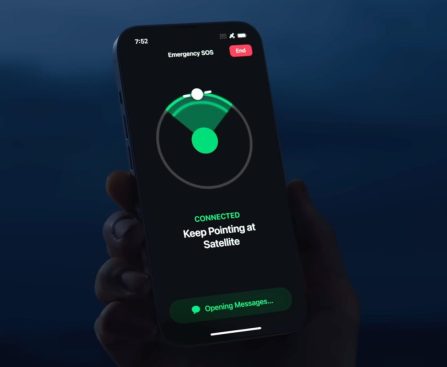
Almost 75% of satellite-capable smartphones sold in 2025 were iPhones, as per a recent report by Counterpoint Research. Here’s what’s anticipated for the market moving forward.

### Anticipated shipments to reach 46% by 2030

As detailed in a newly released Counterpoint Research report, Apple accounted for 71.6% of all satellite-capable smartphones shipped last year, trailed by Samsung at 15.9%, Huawei at 6.1%, Google at 2.2%, and Honor at 1.9%.

Counterpoint indicates the market is presently divided, with firms like Apple, Huawei, and Google leveraging proprietary satellite systems. Meanwhile, a significant portion of the Android ecosystem, including Samsung, Xiaomi, OPPO, HONOR, and vivo, is aligning with the emerging 3GPP Non-Terrestrial Networks (NTN) standards.

The report notes that the former allows for tightly integrated, device-specific services today, while the latter aspires to transform satellites into extensions of cellular networks for enhanced compatibility and scalability in the future.

It also points out that despite Apple’s leadership, overall market adoption still depends on broader applications beyond messaging and emergency services, as well as the integration of mid-range devices:

> The satellite smartphone sector is primarily driven by the premium tier, yet the absence of compelling use cases is hindering widespread adoption. 3GPP Release 17 use cases are confined to SOS and messaging. Though 3GPP Release 18 will further advance penetration among premium brands, mass adoption in the mid-range tier is anticipated only with Release 19.

Another factor affecting adoption rates is the approach to satellite connectivity at the chipset level. Senior Analyst Shivani Parashar states:

> Qualcomm has been leading among Android chipset manufacturers in facilitating satellite connectivity via its Snapdragon X80 and X85 modems, followed by Huawei, Google, and Samsung. MediaTek is also pushing forwards with NTN integration through its MT6825 5G SoC. Increased involvement from chipset manufacturers will heighten competition while potentially aiding scalability.

Lastly, the report addresses collaborations between telecom operators and satellite services and how these are aiding initial adoption.

It highlights initiatives like T-Mobile and Rogers teaming up with SpaceX, AT&T collaborating with AST Mobile, and Apple’s alliance with Globalstar, which is now owned by Amazon, establishing North America as an early frontrunner in this space.

It also mentions that while “telecom operators in other regions, such as Europe and China, are not hurrying to provide satellite connectivity, satellite firms are boosting capacity to support the mass market.”

In this context, Counterpoint projects that global shipments of smartphones featuring satellite capabilities will achieve 46% by 2030, with “Apple, Google, and Samsung [leading] in terms of overall penetration,” and “additional Android manufacturers and telecom operators beyond developed regions [playing] a crucial role in speeding up global adoption,” according to Research Vice President Peter Richardson.

To access Counterpoint Research’s comprehensive report, click this link.

Recent Improvements to Apple Home: Three Principal Updates

Apple is anticipated to unveil a series of new Home products later this year, following the arrival of iOS 27 which brings a long-awaited upgrade to Siri. However, there are three ways in which Apple Home has improved during the iOS 26 cycle as well. Here’s what’s changed.

## #1: Adaptive Temperature functionality for smart thermostats

iOS 26 rolled out a novel Adaptive Temperature functionality in Apple’s Home app designed to enhance the ‘intelligence’ of smart thermostats.

Program your thermostat to automatically modify itself when you’re heading home, going to bed, or when you’re away for an extended time. Your iPhone utilizes on-device intelligence to forecast when you’re en route home, adjusting the temperature accordingly by the time of your arrival, and tweaks the thermostat to conserve energy when you’re away from home. It also adapts to the sleep schedule programmed on your iPhone, modifying the temperature for when you fall asleep and wake up.

Although Apple technically unveiled Adaptive Temperature in iOS 26.0, the first supported smart thermostat was just launched earlier this month.

The **Aqara Smart Thermostat W200** arrived with full compatibility for Adaptive Temperature, ensuring your home remains comfortable and energy-efficient without any effort on your part. All you need is an Apple home hub.

Aqara’s W200 additionally functions as a Matter 1.4 hub with Thread and Zigbee integrated, and it pairs conveniently with Aqara smart locks and video doorbells as well, allowing you to manage and view live video feeds directly on the 4” touchscreen.

## #2: The inaugural smart lock featuring Apple Home Key and Ultra Wideband

Apple Home also gained from the recent introduction of the first smart lock that incorporates Apple Home Key and Ultra Wideband (UWB).

This product is the **Aqara Smart Lock U400**—clearly, Aqara is fully committing to Apple integrations.

Apple Home Key is configured in the Home app for your smart lock, facilitating the locking and unlocking of your door while allowing you to share access with guests.

The particularly impressive aspect of Aqara’s U400 is its Ultra Wideband feature. UWB enables your door to automatically secure and unlock based solely on your presence. Moreover, it’s significantly more precise, secure, and dependable than other options.

## #3: Quicker accessory setup for multipacks

If you’ve ever purchased a multipack of home accessories, you’ll understand the hassle of setting them up one at a time.

However, in iOS 26.2, Apple enhanced the Home app with a practical update in this area.

Multipack accessory pairing in the Home app allows you to use the same setup code to seamlessly enroll multiple accessories sold together.

That’s correct: with a single setup code, you can swiftly and effortlessly add a multipack of smart plugs, light bulbs, motion sensors, and more to the Home app.

What new Apple Home features are you eager to see introduced in iOS 27? Share your thoughts in the comments.

### Best Apple Home accessories

Selecting the Ideal Color for Your Motorola Razr Ultra 2026

There are merely two choices, and each is remarkably distinct.

In contrast to the four color options of the Razr Ultra 2025, the Motorola Razr Ultra 2026 is offered in just two color variants this time. The Razr Ultra 2026 does not include a red choice. Instead, you can select between the traditional wooden finish or a rich blue Alcantara finish. Since both colors are provided with identical 16GB/512GB memory configurations, your only consideration should be your personal preference. Thus, if you intend to buy the Razr Ultra 2026 despite the increase in price, here are your available color choices.

The Motorola Razr Ultra 2026 balances between two elements: wood and water

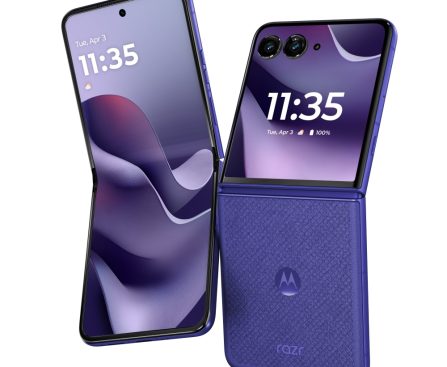
The Motorola Razr Ultra 2026 serves as an incremental update compared to the Razr Ultra 2025. That might be why Motorola opted to reduce the number of color variants by half relative to the colors of the Motorola Razr Ultra 2025. The Razr Ultra 2026 is available in just two hues: Orient Blue and Cocoa.

Orient Blue exhibits an almost indigo or sapphire tone with an Alcantara finish. For those unaware, Alcantara is a synthetic polyester blend resembling suede. It appears stunning in this deep blue color. Blue certainly presents a more conventional option compared to the bold Cocoa choice of the Motorola Razr Ultra 2026.

If you prefer a more adventurous appearance, opt for the wood-backed Cocoa variant instead. This wooden finish is truly unique as it’s rare to find phones that integrate such natural materials, especially foldables. The wooden variant of the Motorola Razr Ultra 2026 closely resembles the wooden choice from the Motorola Razr Ultra 2025, but the tone is slightly darker, akin to a walnut shade.

With no storage restrictions on either color option, you can freely follow your passion when selecting which Motorola Razr Ultra 2026 to acquire.