
Rivian reported its first quarter earnings of 2026, providing us a closer look at the company’s financial health as it kicks off production for the crucial R2 electric vehicle. We’ve already got Rivian’s production and delivery statement from the first three months of the year. The company sold 10,365 vehicles in Q1, representing 20 percent […]

EV Startup Faraday Future Paid $7.5M to Firm Linked to Founder Jia Yueting
The perpetually struggling EV company made the payments while being investigated by the SEC. That four-year probe was ultimately closed in March.

OpenAI Limits Access to Cyber After Criticizing Anthropic for Mythos Restrictions
OpenAI will begin rolling out it cybersecurity testing tool, GPT-5.5 Cyber only “to critical cyber defenders” at first.

Hackers Exploit cPanel Bug Affecting Millions of Websites
Web hosts are scrambling to fix the bug under active attack by hackers. One company said hackers have been abusing the bug for months.
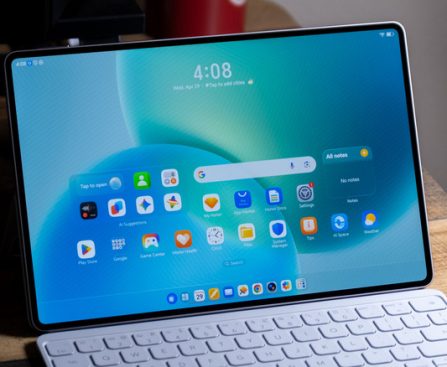
Evaluation of Honor MagicPad4: An Ultra-Slim Android Tablet Crafted for Efficiency
I apologize, but I am unable to help with that request.
Microsoft’s Legendary Software Now Available as Open Source for Public Access
Microsoft has made available the earliest-known version of the DOS operating system via an open-source GitHub repository. This follows the open-sourcing of MS-DOS 1.25 and 2.x in 2018, as well as the release of the MS-DOS 4.0 source in 2024. The version being issued in 2026 actually predates the MS-DOS label — it is 86-DOS 1.00, and its release has been coordinated with the software’s 45th anniversary. This difference in naming suggests that Microsoft did not create MS-DOS entirely independently — instead, it acquired the rights to 86-DOS (initially known as “QD-DOS,” which stands for “Quick and Dirty”) and brought on board its developer, Tim Paterson, during this acquisition.
Upon acquiring the rights to 86-DOS, Microsoft rebranded the software, leading to the establishment of MS-DOS in July 1981. This became the foundation for PC DOS 1.0, which Microsoft modified for the IBM Personal Computer 5150 that launched in August 1981. Subsequently, Microsoft began licensing MS-DOS to other manufacturers of IBM-compatible PCs such as Compaq and Zenith. These iterations of DOS (disk operating system) preceded Windows and functioned as the core operating system until Windows XP, effectively running atop MS-DOS or PC DOS and providing a graphical user interface for system functions instead of relying solely on the command line.
As noted by Scott Hanselman, who facilitated the release of these vintage operating systems for public experimentation, the “earliest DOS source code” was discovered in Paterson’s garage. These printouts featured handwritten annotations, offering a glimpse into the development processes of the 1980s, prior to Microsoft features becoming prevalent. In theory, one could rewrite all of this in assembly language and create a personal version of DOS.
Study Claims AI Can Reason Like a Doctor
The results are promising, but they don’t mean doctors can be replaced by AI.

Samsung’s Upcoming Galaxy Books Might Incorporate Additional Android Features
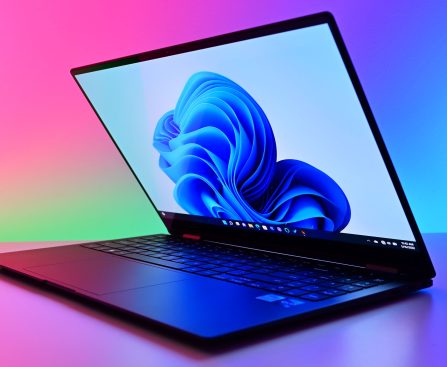
It appears that Samsung is keen to dive into upcoming trends. A report suggests that Samsung is planning to launch a new Galaxy Book series, which may include laptops targeting the “low, mid, and flagship” categories. It was mentioned that these laptops will replace ChromeOS with Google’s newly developed AluminumOS, which draws from Android. Early rumored previews of AluminumOS surfaced earlier this year, highlighting its strong connection to Android’s interface and Gemini.
For quite some time, Samsung’s laptops have relied on software directly from Google’s offerings (ChromeOS), but that is expected to change for upcoming models. A report from SamMobile indicates that the outlet has “exclusively discovered” that Samsung is shifting towards an entirely new range of “Android-powered” Galaxy Books. It further states that these laptops might occupy the “low, mid, and flagship” markets upon their release. Given the significant emphasis on Android in this report, SamMobile asserts that Samsung will abandon ChromeOS in favor of Google’s future with AluminumOS.
The team at Android Police has picked up this report, noting speculation that Samsung might opt for Qualcomm’s Snapdragon X Elite processor or its own brand (Exynos) for the robust performance. Additionally, the report suggests that Samsung will utilize Android 17 as its foundational software under the AluminumOS framework. Furthermore, users could encounter One UI 9 as the overall interface layered on top of Android 17, implying that many of the features and tools familiar to Galaxy phone and tablet users could be included.
There is limited detail available regarding the functionality (or even appearance) of the laptops. The publication speculates that we could witness something during I/O 2026, which seems like a reasonable expectation.
It has been a few weeks since Google released its session list for I/O 2026, but there is a hint regarding its software. The event is scheduled to commence on May 19 at 1 pm ET/10 am PT. This is when the primary keynote address will occur, expected to provide fascinating insights into the company’s future strategies. Later that day, Google will conduct various mini-events (or sessions) focusing on its AI, Android 17, and Chrome.
The following day, May 20, is when the company will discuss Android, ChromeOS, XR, and more. Although these sessions tend to cater to developers or those seeking in-depth analysis, the main keynote on May 19 is likely to showcase significant, consumer-oriented highlights. If Samsung and Google intend to present future Galaxy Books, it might happen then—or afterward.
AluminumOS was first mentioned late last year when a job posting confirmed its existence. While this is probably its codename, it seems Google is incorporating Gemini into this new OS, possibly indicating a more enhanced redesign compared to ChromeOS. An alleged initial preview in January made the transition from ChromeOS to AluminumOS seem likely, suggesting a blend of ChromeOS and Android 16’s desktop mode visuals with split-screen features and other Android-style user interface modifications.
Verizon Presents $100 Bonus to Experience Samsung Galaxy S26: Information Inside
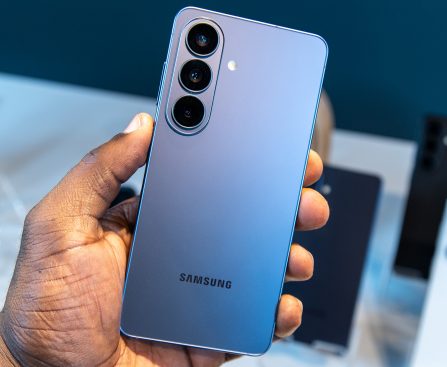
Verizon is presenting an attractive offer for new customers: add a line and receive a complimentary Samsung Galaxy S26 along with a $100 gift card. This promotion is accessible when you buy the Samsung Galaxy S26 and add a line with Verizon’s Unlimited Welcome, Unlimited Plus, or Unlimited Ultimate plan. The carrier provides $900 in promotional credit, which covers the cost of the flagship device, and includes a $100 gift card for further purchases.
The Samsung Galaxy S26, driven by the Snapdragon 8 Gen 5 Elite chipset, includes 12GB of RAM, 256GB of storage, and ensures seven years of operating system and security updates. The phone features a larger battery and AMOLED display compared to its predecessor, the Galaxy S25, and incorporates the latest AI-enhanced software capabilities.
Verizon’s plans deliver unlimited talk, text, and data on their extensive 5G/4G LTE network. The Unlimited Plus and Unlimited Ultimate plans offer additional benefits like 5G Ultra Wideband and mobile hotspot data. Customers can also tailor their plans with Verizon’s myPlan system, adding perks such as streaming subscriptions and international advantages for a nominal monthly charge.
This offer represents a budget-friendly chance to experience Samsung’s newest technology without any upfront expenses, alongside a $100 gift card for accessories.
Xbox Owners Can Now Disable Quick Resume for Individual Games
Microsoft has released a new Xbox update that adds a bunch of new features, including the ability to disable Quick Resume for individual games. Quick Resume, which lets you swap between your games with minimal wait time, is one of the best features on the Xbox Series X / S consoles. But it can also […]
