$60 in New User Credits for PCB Prototyping from $1 with AIVON (Sponsored)

AIVON PCB Prototyping Credit

Hardware prototyping often starts with a simple idea, but quickly runs into a familiar problem: costs add up faster than expected. Small batch PCB orders, international shipping fees, and repeated iterations can easily slow down development before the first working prototype is even finished. To make early-stage development easier, AIVON has launched a new user support program that significantly lowers the cost barrier for first-time orders. New customers who register on AIVON and verify their email address will automatically receive $60 in welcome credits, which include: $30 Manufacturing Credit applied to the PCB portion of their first PCB or PCBA order (minimum order amount after credit: $1). $30 Shipping Credit for their first pure-PCB order (including stencil orders). With these credits, most standard PCB prototype orders qualify for completely free shipping. For example: If your calculated PCB cost is $20 and shipping is $25, you would only pay $1 for […]

The post AIVON Offers $60 New User Credits for PCB Prototyping Starting from $1 (Sponsored) appeared first on CNX Software – Embedded Systems News.

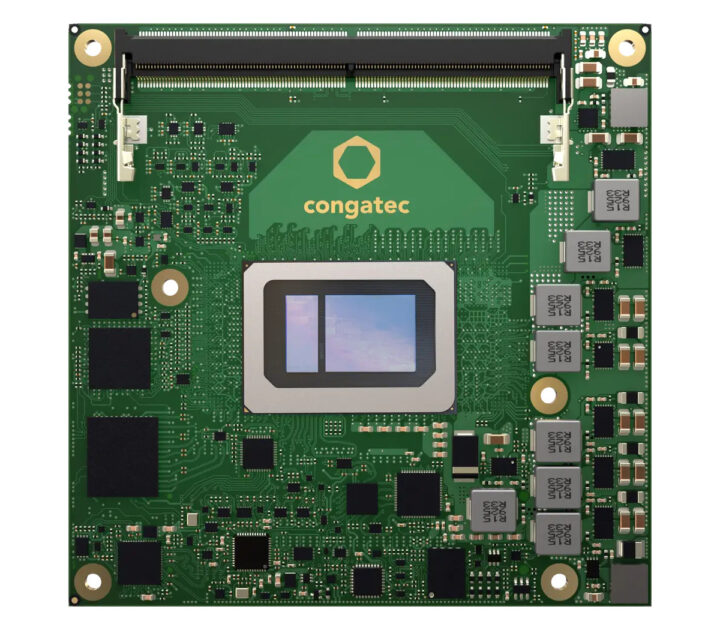
Congatec conga-TC300 COM Express Module Offers Intel Core i7-350 Wildcat Lake Processor

Intel Wildcat Lake COM Express Compact module

congatec conga-TC300 is an entry-level edge AI COM Express Type-6 Compact module powered by 15W Intel Core Series 3 “Wildcat Lake” SoCs up to the Core 7 350 hexa-core processor. The module supports up to 64GB DDR5 SO-DIMM memory and features optional on-board UFS 3.1 storage, an Intel i226 2.5GbE controller, and two standard 220-pin board-to-board connectors exposing I/Os such as SATA, DDI and LVDS or eDP display interfaces, USB4, USB 3.2, USB 2.0, PCIe Gen4/Gen3, and more. congatec conga-TC300 specifications: Wildcat Lake SoC (one or the other) Intel Core 3 305 6-core CPU – 2x P-cores @ 1.5/4.3 GHz (Turbo) + 4x LPE-cores @  1.4/3.3 GHz (Turbo) GPU – 1-core Intel Xe3 Graphics @ 2.3 GHz (9 TOPS) NPU – N/A Intel Core 5 320 6-core CPU – 2x P-cores @ 1.5/4.6 GHz (Turbo) + 4x LPE-cores @ 1.4/3.4 GHz (Turbo) GPU – 2-core Intel Xe3 Graphics @ 2.5 […]

The post Congatec conga-TC300 COM Express module features up to Intel Core 7 350 Wildcat Lake processor appeared first on CNX Software – Embedded Systems News.
Renesas RZ/V2H Robotics Kit Integrates AI Vision, Motor Control, and Power Management on One Board

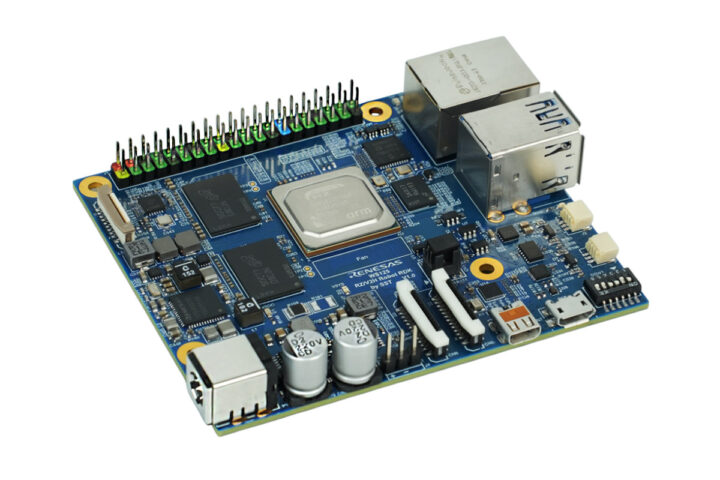
Renesas RZ/V2H Robotic Development Kit

Renesas WS125-V2HRDKREFZ is a Robotics Development Kit (RDK) powered by Renesas RZ/V2H Arm Cortex-A55/R8/M33 microprocessor and designed for high‑performance AI vision applications leveraging the MPU’s built-in 80 TOPS (sparse) AI accelerator. The kit ships with 16GB LPDDR4, 64MB QSPI flash, a 64GB microSD card, and appears to be partially inspired by the Raspberry Pi 5 with a 40-pin Raspberry Pi GPIO header, a 16-pin PCIe Gen3 FFC connector, two MIPI CSI connectors, and a micro HDMI port. Other features include a Gigabit Ethernet port, two USB 3.2 ports, two CAN-FD interfaces, and a 12-24V DC input voltage range. Renesas WS125-V2HRDKREFZ specifications: SoC – Renesas RZ/V2H CPU/MCU cores 4x Arm Cortex-A55 cores up to 1.8 GHz 2x Cortex-R8 real-time cores up to 800 MHz Arm Cortex-M33 microcontroller core up to 200 MHz for system management GPU – Arm Mali-G31 GPU NPU – DRP-AI3 dynamically reconfigurable processor delivering up to 8 TOPS (INT8) or […]

The post Renesas RZ/V2H Robotics Development Kit handles AI vision, motor control, and power management with a single board appeared first on CNX Software – Embedded Systems News.
Comparison of Rust and C for Embedded Firmware Development Study

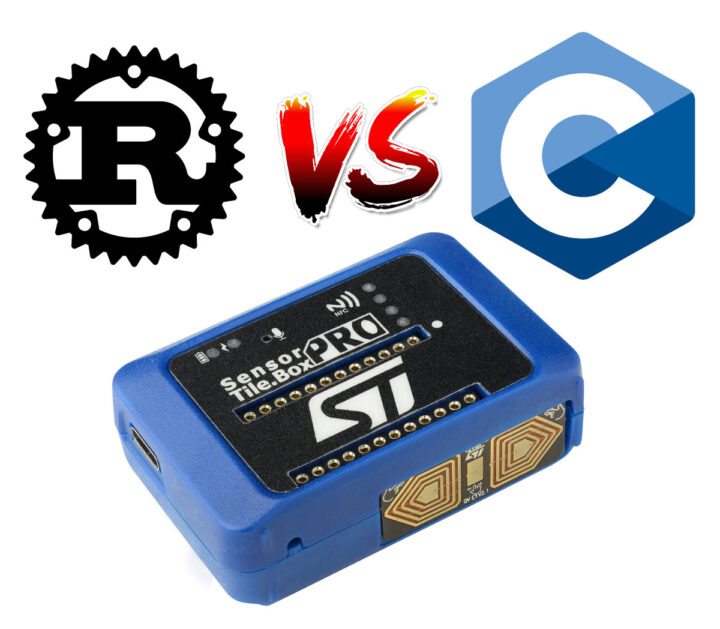
Rust vs Embedded C

There’s a lot of hype around the Rust programming language, and I’m seeing it being adopted by various projects, not least the Linux kernel. However, so far it was unclear to me whether it was suitable for embedded firmware development since the hardware resources are limited on microcontrollers. A low memory and storage footprint is required, and optimal performance may also be important, for example, to lower the power consumption of battery-powered devices. A research paper by STMicroelectronics, Inria, and the Freie Universität Berlin, entitled “Lessons from an Industrial Microcontroller Use Case with Ariel OS” published on ArXiv hosted by Cornell University, attempts to answer this question using embedded C and Rust, and the conclusion is that Rust is a viable option: As Rust gains traction for developing safer systems software, a reality check for the microcontroller hardware segment becomes necessary. How ready is the Rust ecosystem for this segment? Can […]

The post Study compares Rust and C languages for embedded firmware development appeared first on CNX Software – Embedded Systems News.
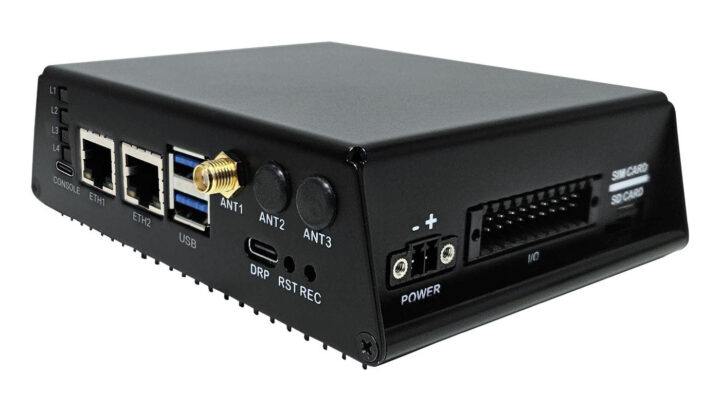
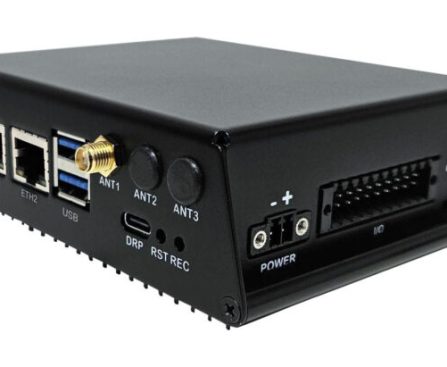
Toradex Zinnia Linux IoT Gateway Features Dual GbE, WiFi 5, 4G LTE, I/Os, and Streamlined Software Deployment

Toradex Zinnia Gateway

Toradex Zinnia is an industrial IoT gateway based on the company’s Verdin system-on-module, powered by a choice of NXP or Texas Instruments SoC, with dual Gigabit Ethernet, WiFi 5, Bluetooth 5, optional 4G LTE or 5G connectivity, a few USB ports, an I/O connectors, and a wide 9-36V power supply range. The first model is based on an NXP i.M 8M Plus SoM with 4GB LPDDR5 and 32GB eMMC flash preloaded with the company’s Torizon OS Linux distribution. Other SoM available are based on TI AM62/AM62P, NXP i.MX 8M Mini, or NXP iMX 95. The gateway targets edge AI and industrial automation, smart cities, and energy infrastructure. Toradex Zinnia specifications: SoC – NXP i.MX 8M Plus CPU – Quad-core Cortex-A53 processor @ 1.6/1.8 GHz, Arm Cortex-M7 real-time core @ 800 MHz GPU – Vivante GC7000UL OpenGL ES 1.1, 2.0, 3.0, OpenCL 1.2, Vulkan support AI accelerator – 2.3 TOPS NPU […]

The post Toradex Zinnia Linux IoT Gateway offers dual GbE, WiFi 5, 4G LTE, I/Os, and simplified software deployment appeared first on CNX Software – Embedded Systems News.
ESP32-P4 Security Key Features 2-Inch Touchscreen, Over 3,000 Password Capacity (Crowdfunding)

MiixKey compact offline hardware security key and password manager

MiixKey is a compact, offline ESP32-P4-based hardware security key and password manager that securely stores passwords, passkeys, NFC cards, and smart card credentials in a single portable device. It features a 2-inch touchscreen and is designed for users, developers, enterprises, government staff, and cybersecurity professionals who need secure offline credential management without relying on cloud services or smartphone apps. Previously, we wrote about security keys like the YubiKey and Google Titan Security Key, which are great for FIDO2 and U2F login, but they don’t have a display or user interface, so managing passwords or switching credentials usually requires a phone or computer. MiixKey fixes this by adding a touchscreen and allowing the user to manage over 3,000 passwords fully offline. MiixKey specifications: Main SoC – Espressif Systems ESP32-P4 CPU Dual-core 32-bit RISC-V HP (High-performance) CPU @ up to 400 MHz with AI instructions extension and single-precision FPU Single-RISC-V LP (Low-power) MCU core @ up to […]

The post ESP32-P4 security key features 2-inch touchscreen, 3,000+ password capacity (Crowdfunding) appeared first on CNX Software – Embedded Systems News.
Organizational Environment for AI Programming Agents with Dennis Pilarinos

AI agents have taken on a growing share of software development work, so much so that the hardest problems are shifting away from code generation towards something new, context. The challenge is now contextualizing why systems work the way they do, how architectural decisions were made, and the sources of truth that exist outside of

The post Organizational Context for AI Coding Agents with Dennis Pilarinos appeared first on Software Engineering Daily.

Multi-Agent QA with SmartBear

AI coding tools have dramatically accelerated the pace of development, and the bottleneck in the software development lifecycle has shifted to code validation and testing. However, the conventional tools and workflows that QA teams have relied on were not designed for a world where a single engineer can generate thousands of lines of code in

The post SmartBear and Multi-Agent QA appeared first on Software Engineering Daily.