
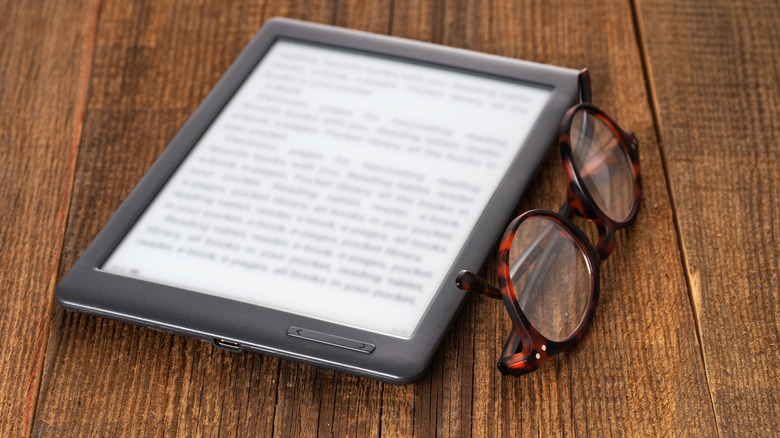

16 GB Kindle Paperwhite can accommodate countless books while occupying less physical space than nearly any tangible volume. E-readers often feature annotation tools and various added functionalities that can enrich the overall reading experience. Nevertheless, some contend that a Kindle has turned into an extraneous device. Considering that the Kindle app and other e-reader applications now permit users to read books on their smartphones, is it logical to purchase a separate device for reading? Absolutely, as studies suggest that reading on a Kindle or comparable e-reader might be gentler on your eyes compared to reading on a standard smartphone LCD or OLED screen.
Most smartphones utilize LCD or OLED screens. You might have observed that attempting to read text on such displays can be challenging under certain circumstances, such as outdoors on a bright day. E-readers are distinct. While some feature LCD screens, many incorporate a proprietary technology known as E Ink to convey content. Unlike OLED smartphone and tablet displays, which consist of thousands of nearly microscopic lights that create images together, E Ink employs tiny microcapsules to render something akin to actual ink on a screen. Furthermore, LCD and OLED displays are emissive, meaning they directly emit light from their screens. An E Ink display operates by reflecting ambient light. This can influence both readability and comfort.