

You’ve probably heard about hybrid cars, but how about a hybrid cement or glass plant? Probably not, since most of them currently operate on fossil fuels. However, that might change soon — a startup has found a way to integrate electric heating into existing facilities. Similar to a hybrid car, it enables companies to reduce costs while decreasing fossil fuel usage.
“We hybridize industrial processes,” Carlos Ceballos, co-founder and CEO of NOC Energy, told TechCrunch. “Most companies are open to electrification, but they’re not ready to eliminate fossil fuels. During the energy transition, they want the flexibility to select the lowest cost.”
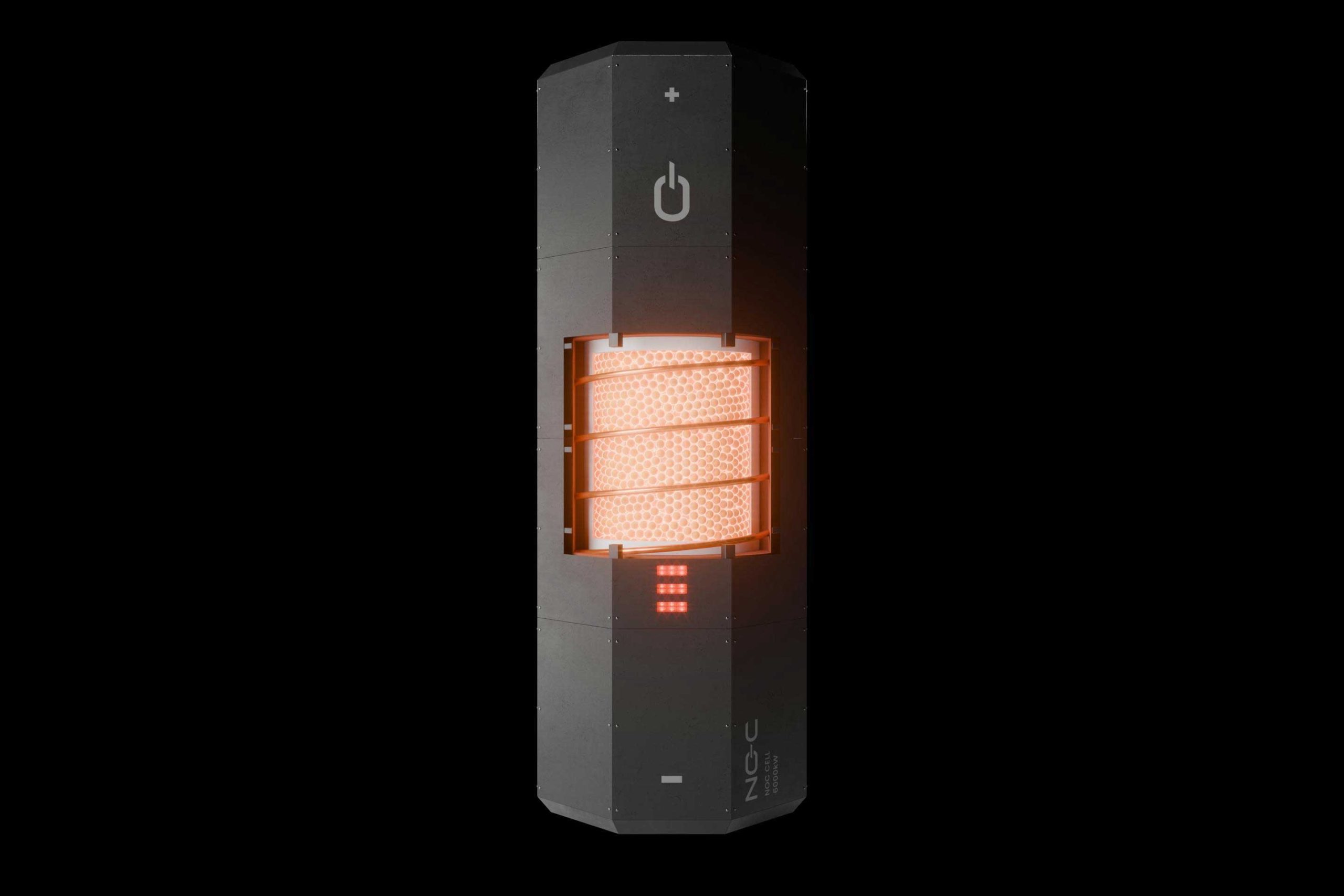
NOC has created an electric heating system that can be integrated into existing fossil fuel-powered facilities. Its heat can be channeled into a glass kiln or various parts of the cement production process. If electricity costs rise, operators can turn off NOC’s equipment and rely entirely on fossil fuels.
More importantly, the startup can deliver heat reaching 1,200˚ C, with plans to achieve 1,500˚ C. These temperatures have been challenging to reach without fossil fuels or expensive non-polluting hydrogen. The industry has few players so far — Startup Battlefield alumnus Electrified Thermal Solutions is one potential competitor.
NOC recently completed a $2.7 million seed round, exclusively shared with TechCrunch. The round was led by 360 Capital with contributions from SOSV and Desai VC.
NOC’s initial customers will likely opt for the hybrid format, although it’s not mandatory. The system can store heat for several hours, allowing companies to utilize more electricity when rates are low, and use stored heat when prices surge.
Several features of NOC’s system enable both hybridization and electricity price arbitrage. The induction heating element is one such feature, similar to induction stoves found globally. Induction heaters use metal coils, typically copper, to produce magnetic fields when electrified, causing nearby metal atoms, like steel, to vibrate rapidly and generate heat.
In NOC’s setup, induction coils act on steel spheres packed inside large ceramic containers about 2.5 meters across. Copper coils and insulation encompass the containers. When heat is needed, electricity heats the steel spheres via copper coils. Air flowing through the spheres extracts and delivers the heat where it’s needed, such as in a glass kiln or cement plant.
While resistive heaters can also generate such high heat using electricity, they have a shorter lifespan the hotter they get. At 1,000˚ C, specialty resistance heaters last about 12 months, and only three months at 1,200˚ C, according to Ceballos.
NOC’s heating elements — the copper coils — avoid this issue as they never touch the heat they generate. The coils are enveloped in half a meter of insulation, retaining room temperature while emitting electromagnetic waves inward toward the steel spheres.
The insulation is sufficient for NOC’s system to store heat for hours. The system can be scaled according to how long a customer wants to retain the heat. For longer storage, NOC will stack more container modules and fill them with additional steel spheres.
The startup has operated a refrigerator-sized pilot system for 15,000 hours and has built two larger demonstration systems, one for a glass manufacturer and another for a cement producer, both in France. These systems are set to start operating in May.
“Being hybrid allows them to derisk the future,” Ceballos said. “Considering current geopolitical issues, it’s very appealing.”