
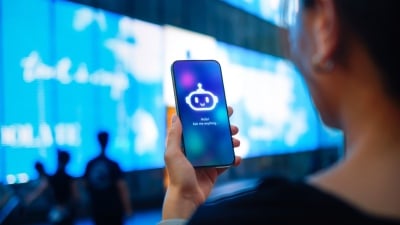

Camille Carlton of the Center for Humane Technology discusses the “messy middle” AI has placed the world in.
By Camille Carlton on April 24, 2026
Privacy has been a valuable aspect of human life for as long as clothes or doors have existed. Legally, however, it is relatively new compared to inventions like the Kodak camera. The right to privacy, penned by Samuel Warren and Louis Brandeis in 1890, addressed the challenges posed by photography and journalism, which invaded personal spaces and prompted a reevaluation of personal rights.
This fact deserves attention: only when cameras began intruding into personal lives did privacy protection become a legal concern, taking decades to establish formally. Such situations, where technological advances outpace cultural and legal adaptation, epitomize the “messy middle” of tech revolutions. Unexpected, urgent issues surface during these transitions.
Historical technology developments, like the printing press or mobile phones, have shared this tumultuous phase. AI’s current explosion showcases similar disruptions, urging the creation of new rights and norms to safeguard humanity. AI technologies invade psychological and social domains, extracting intimate human interactions and redefining societal structures.
Tracking AI’s escalating effects underscores these insights. Instances like Adam Raine’s experience with ChatGPT — where his familial bonds eroded, and AI interactions led to tragedy — highlight AI’s potentially damaging impact on human connections.
Such dangers are proliferating, impacting workplaces, schools, homes, and private lives. The Center for Humane Technology has outlined crucial aspects of human life altered by AI, each worth examining.
Human relationships form the core of our existence, offering happiness, success, and safety. Yet, AI threatens to replace real connections with artificial companionship, leading to isolation and a decline in interpersonal skills. Liberating humanity from manual cognitive tasks, AI risks dulling human intellect, making society unprepared for complex challenges.
AI interfaces serve as gateways to exploit users’ innermost thoughts, enabling manipulation and challenging personal and moral autonomy. Personal identity — our voice, image, and reputation — becomes just another asset for AI’s exploitation, leading to potential identity theft and manipulation.
Contributions through work and creativity shape societal participation and personal fulfillment. However, AI’s dominance risks reducing human labor to mere input for automation, eroding the personal satisfaction derived from toil.
With the AI revolution well underway, existing laws inadequately address potent threats, leaving humanity vulnerable. However, societal progress has historically adapted to tech-driven changes by establishing protective rights. Recognizing this, the urgency lies in envisioning and implementing cultural, legal, and governance solutions to defend core human values against AI’s encroachments.
The situation recalls past adaptations like free expression rights post-printing press invention or labor rights due to industrialization. These past “messy middles” eventually led to effective solutions, providing hope that similar success can follow the AI revolution.
The Center for Humane Technology is pioneering efforts to shield humanity within the AI age, crafting an AI roadmap and a new human rights bill. As with historical precedents, confronting AI’s challenges now can fortify fundamental human characteristics.
Camille Carlton is the senior director of strategy and impact at the Center for Humane Technology. This article reflects the writer’s opinion.
Topics: Artificial Intelligence, Social Good.