
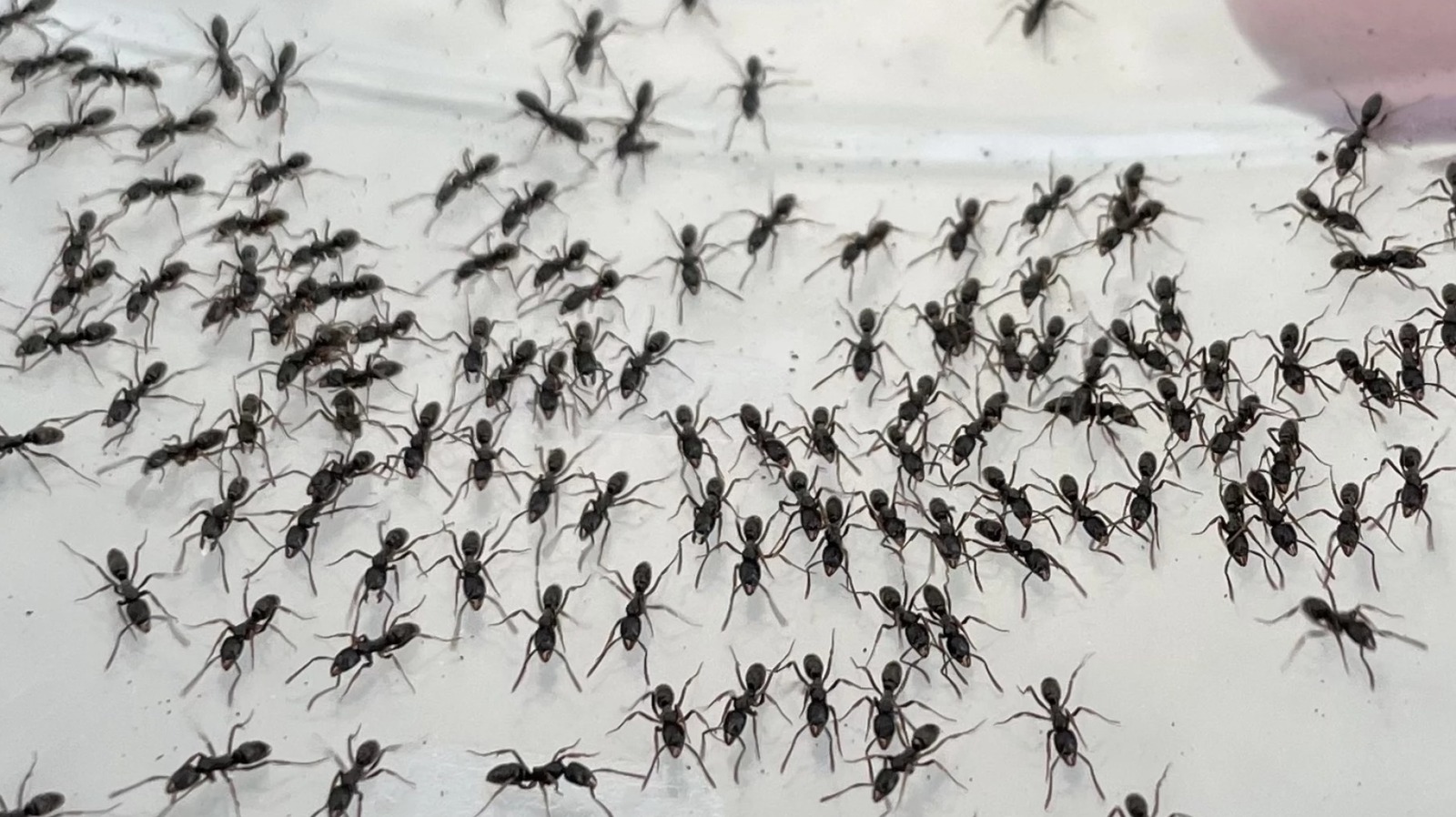

The climate is at last getting warmer, and shortly it will be time for short-sleeve attire, outdoor picnics, and cooling drinks in coolers — all essentials for enduring the summer. However, warmer weather brings along insects, including invasive ant species. Sadly, one such species is gradually invading southeastern regions of the United States. If you happen to be stung by one, you may face a significant amount of discomfort.
Brachyponera chinensis, commonly referred to as the Asian needle ant, is a type of ant originating from various Asian nations, such as China, Japan, and the Koreas. Although this ant was first recorded in the U.S. in the 1930s, it has only recently begun to spread across the American Southeast in states like Florida, Georgia, South Carolina, and Tennessee. Reports have also emerged of sightings in Wisconsin, Washington, and Texas.
As an invasive species, Asian needle ants present a threat to our native ant populations, which play a crucial role in local ecosystems. Furthermore, Asian needle ants are problematic as they belong to the limited group of insects that are venomous to humans. While the sting of the common fire ant is intensely painful and can even result in scarring, life-threatening allergic reactions are infrequent. In contrast, stings from Asian needle ants not only cause considerable pain but also appear to be more likely to trigger severe allergic reactions. Bee stings are less likely to provoke allergic responses than those from Asian needle ants.
How to recognize an Asian needle ant
Ants are quite small, making it easy for many to appear indistinguishable to the untrained observer. Nevertheless, if you’re aware of the specific characteristics to look for, you can identify whether the ant you’re about to step on is an Asian needle ant without needing to be stung first.
Asian needle ants are particularly diminutive, typically measuring about one-fifth of an inch in length, and they are often dark brown or black with lighter-hued legs and mandibles. These ants enjoy establishing nests in homes and other locations with a dependable food source. If you encounter an ant within your home and are concerned it might be an Asian needle ant, attempt to trap it in a glass jar. If it can’t climb the sides, you are indeed dealing with an Asian needle ant — unlike many ant species, this kind cannot adhere to smooth surfaces like glass.
While Asian needle ants will gladly consume sugary treats they come across — yet another reason to invest in smart kitchen tools such as vacuum sealers and airtight storage containers — their actual preference lies in feeding on other insects. Termites seem to be among their favored meals, but they are also known to eat spiders, cockroaches, and centipedes. Therefore, if you’re facing an infestation of any of those pests, it may be worth consulting your local exterminator about a potential Asian needle ant issue.
Managing Asian needle ant stings and infestations
Per the USDA, Asian needle ant venom is strong enough to induce significant pain that lasts several hours. While most individuals only feel pain at the sting site, some have reported that the discomfort moves to various parts of the body. Hives, general redness, and itchiness are common symptoms; however, these stings can pose a serious risk for those who are allergic. A study published in The Journal of Allergy and Clinical Immunology noted that seven individuals in a 327-person sample from a specific area in Korea showed an allergic response to the venom of Asian needle ants. Among those seven, four — or 57% — experienced “potentially life-threatening anaphylaxis.” The occurrence of allergies and hypersensitivity to Asian needle ants in the U.S. population is not yet fully understood, but if you’ve been stung by one of these ants and have a history of sting-related allergies — or if the pain and redness continue for several days — seek medical attention immediately.
Since the Asian needle ant invasion is fairly recent, and because these pests tend to prey on other insects, exterminators have not yet figured out a dependable approach to deal with them. North Carolina State University suggests using “protein-based insecticide baits,” such as Extinguish Plus, Advion Fire Ant Bait, Potigard, and Maxforce FG. However, these products are intended for managing infestations rather than completely eliminating them. Orkin recommends sealing any entry points for the ants, minimizing indoor moisture, clearing outdoor leaves and plant debris to discourage nesting, and ensuring the home is free of accessible food (robot vacuums work well for picking up leftover crumbs). If these measures don’t succeed, reaching out to your local pest control service may be necessary.