

As Apple strives to maintain its edge in AI amid tariffs and supply chain challenges, the company is poised for a change in leadership.
Apple announced on Monday that John Ternus will become CEO later this year, taking over from Tim Cook.
Cook turned Apple into a $4 trillion global giant, expanded its services, and led some of its most profitable years. Ternus, a seasoned hardware executive, has focused on developing Apple’s devices rather than running the overall business.
Ternus joined Apple in 2001, advancing through hardware engineering and playing a role in products like AirPods, the Apple Watch, and Vision Pro.
His promotion indicates a renewed emphasis on hardware as Apple faces pressure to define its future direction. Ternus will now help shape that vision.
Rather than competing directly with companies building large AI models, Ternus might guide Apple to focus on AI-driven devices, whether handheld, wearable, or home-based.
Speculation is rife about Apple’s potential new offerings, such as smart glasses, a wearable camera pendant, and AI-enhanced AirPods. These products are expected to connect to the iPhone, with Siri playing a key role.
Reports indicate Ternus will advance delayed products like foldable iPhones. They have been in the rumor mill for years, and while competitors have progressed, Apple has waited for technology to meet its standards. The foldable iPhone could debut in September under Ternus’s supervision.
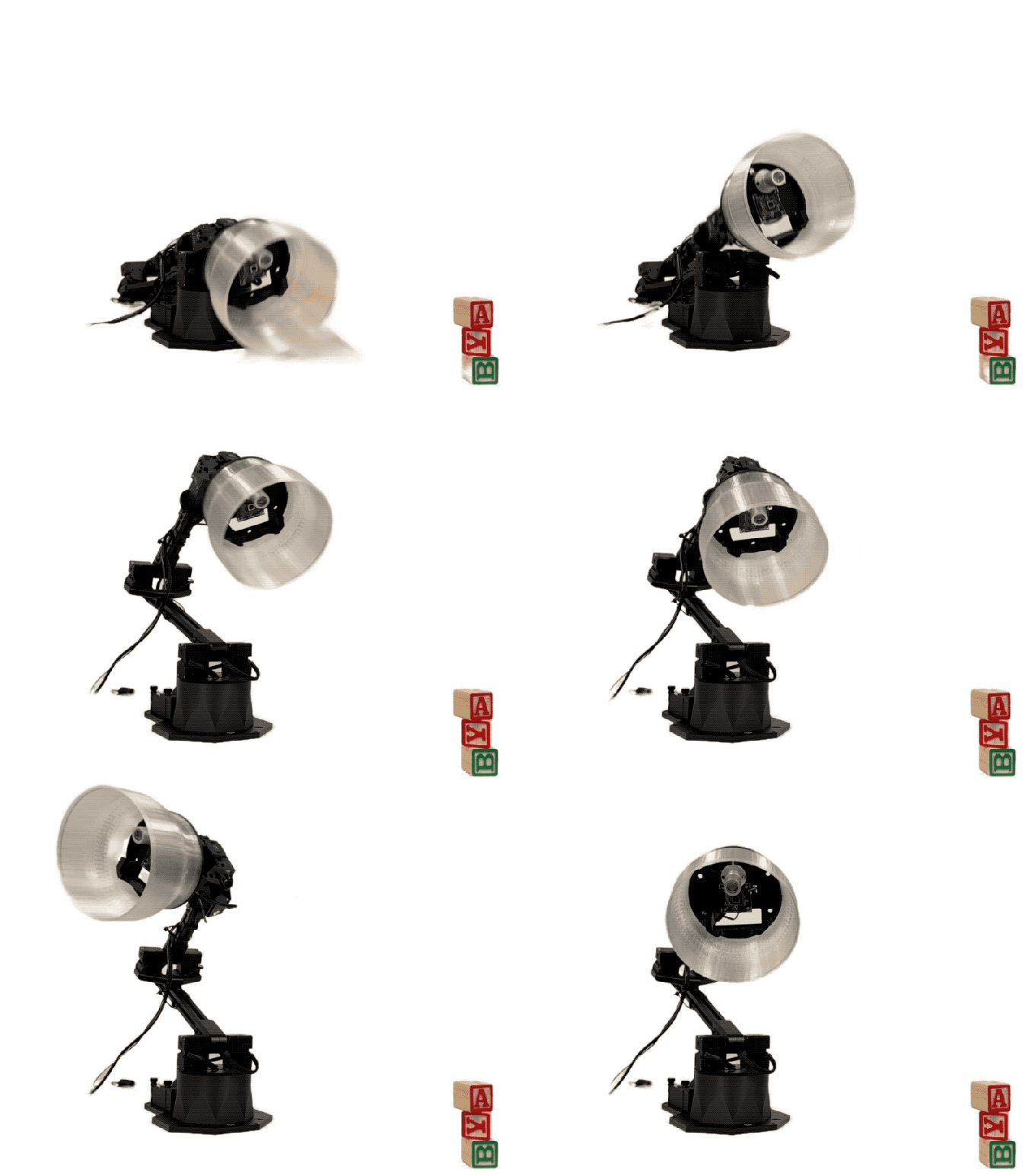
Apple is also reportedly exploring home robotics, such as a tabletop device with a robotic arm and display, a concept aligned with Ternus’s interest in robotics. In college, he designed a device allowing quadriplegics to control a feeding arm with head movements.
Ideas for mobile robots include devices that follow users, perform tasks, or act as moving FaceTime screens. Some reports mention experiments with humanoid robots, though they are likely years away.
While none of these are certain, they suggest Apple’s potential direction.
However, memory chip shortages, shifting tariff policies under President Trump, and dependency on Chinese manufacturing pose challenges. Before the tariffs, about 80% of iPhones were made in China. Apple recently shifted to producing around 25% of its iPhones in India last year, according to Bloomberg.