
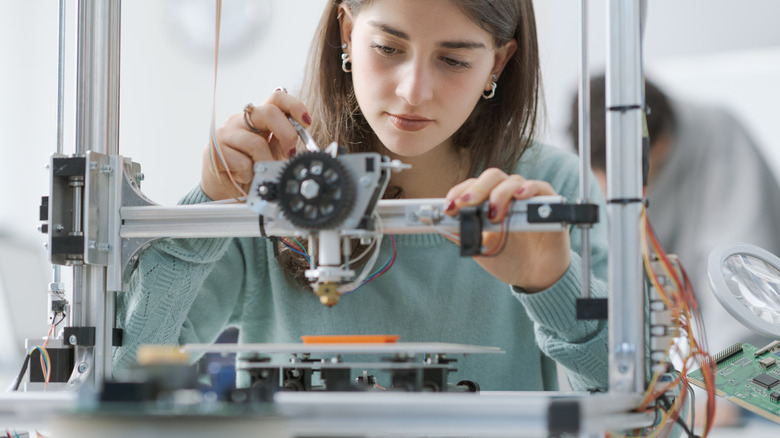

you ought to be maintaining your 3D printer if you haven’t done so yet. The print bed ought to be cleaned with gentle soap and water to eliminate residues and other remnants. At the same time, the extruder or nozzle — the component that dispenses the filament — requires cleaning to avert dry materials clinging to it, which could spoil future prints. Additionally, another aspect of routine maintenance is to apply grease to various elements, specifically, lubricating the rails, rods, screws, and gears.
The rationale behind this is quite clear. Numerous parts in a 3D printer are constructed from metal, and metal-on-metal contact can heighten friction, resistance, and, at times, heat accumulation. Ultimately, such friction can affect the print quality of anything you’re creating and could even lead to project failure. Adequate lubrication can also prolong the lifespan of your printer.
There isn’t a set schedule for greasing a 3D printer. Some suggest weekly maintenance; others propose monthly, but it is essential. If you’re printing more frequently, say daily, you’re likely going to need to lubricate more often. The optimal method to check is to run your finger along the lubricated components, like the rods. If your finger comes away clean, devoid of residues or solids, lubrication isn’t necessary. However, if you observe contaminants such as dust, grime, dirt, or other visible particles, lubrication is urgently required.