

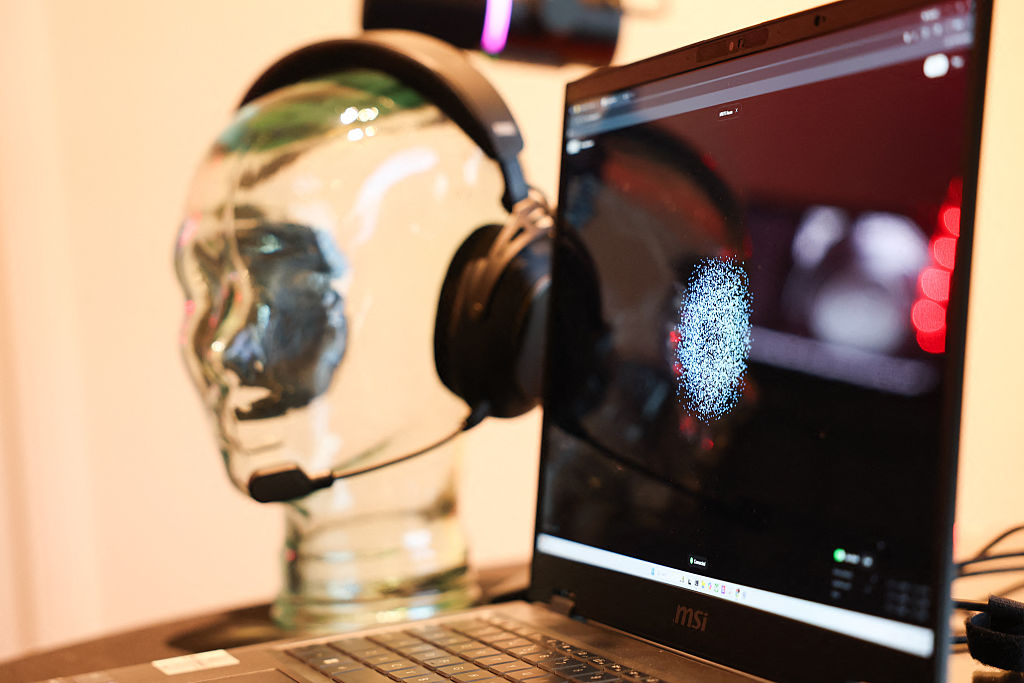
BCI (brain-computer interface) technology, which involves routing neural signals from a person’s head to a computer, was once confined to science fiction, but it now occupies a competitive niche in the tech industry. Neurable, one of the companies striving to commercialize BCI, announced this week its plans to license its “mind-reading” technology to consumer wearables.
Neurable focuses on “non-invasive” BCI, differentiating itself from firms like Neuralink, the Elon Musk-founded startup known for implanting computer chips into users’ skulls, by not requiring brain surgery for its product’s benefits.
Neurable’s technology uses a combination of EEG sensors and signal processing to scan brain activity, analyze it with AI, and provide insights into a person’s cognitive performance.
In December, Neurable raised $35 million in a series A, intending to scale up its technology’s commercialization. This week, as part of its expansion efforts, the company announced plans to license its technology to various consumer-facing firms.
The goal is to integrate mind-reading technology, which provides detailed data about brain function during different activities, into wearables across industries like health, fitness, productivity, and gaming. “Through Neurable’s licensing platform, OEMs can directly integrate its AI-powered brain-sensing technology into existing hardware, such as headphones, hats, glasses, and headbands, while controlling product design, user experience, and distribution,” the company revealed in a Tuesday press release.
Neurable has formed partnerships with several companies to test its effectiveness, including HP Inc.’s HyperX, a gaming brand, to create a headset that helps gamers enhance focus and performance. It has also partnered with iMotions, a platform specializing in human behavior research, to support their research initiatives.
In an interview, Neurable’s CEO Ramses Alcaide didn’t disclose details on new partnerships but stated the company aims to expand across multiple domains.
Techcrunch event
San Francisco, CA
|
October 13-15, 2026
“Previously, we focused on specific partnerships,” Alcaide said, highlighting the company’s approach of targeting a particular firm to validate a unique commercial application. Now that expectations have been met on several fronts, the startup is concentrating on scaling up, he added.
“We’re basically saying, ‘Hey, we’ve demonstrated great traction’. Let’s make this as common as heart rate sensors on your wrist,” Alcaide stated.
Despite being “non-invasive,” brain data is arguably more intimate than information from a heart rate sensor. So, what privacy measures does Neurable offer?
Alcaide mentioned that user data is “protected and anonymized.” The company’s privacy policy includes various guidelines for accessing and using user data. “We ensure HIPAA compliance and have gone beyond typical startups to safeguard, encrypt, and anonymize data,” Alcaide explained.
Does Neurable use neural data to train its AI software? “We can with user consent,” Alcaide replied. “But it’s done in a very specific way.” This involves asking users if their data can be used in certain experiments. “We don’t collect data indiscriminately; the usage is quite targeted,” he noted.
Alcaide stated that the industry is at an “inflection point,” where a scalable business model in neuro-technology has emerged. What follows this inflection point remains a significant question.
<em