
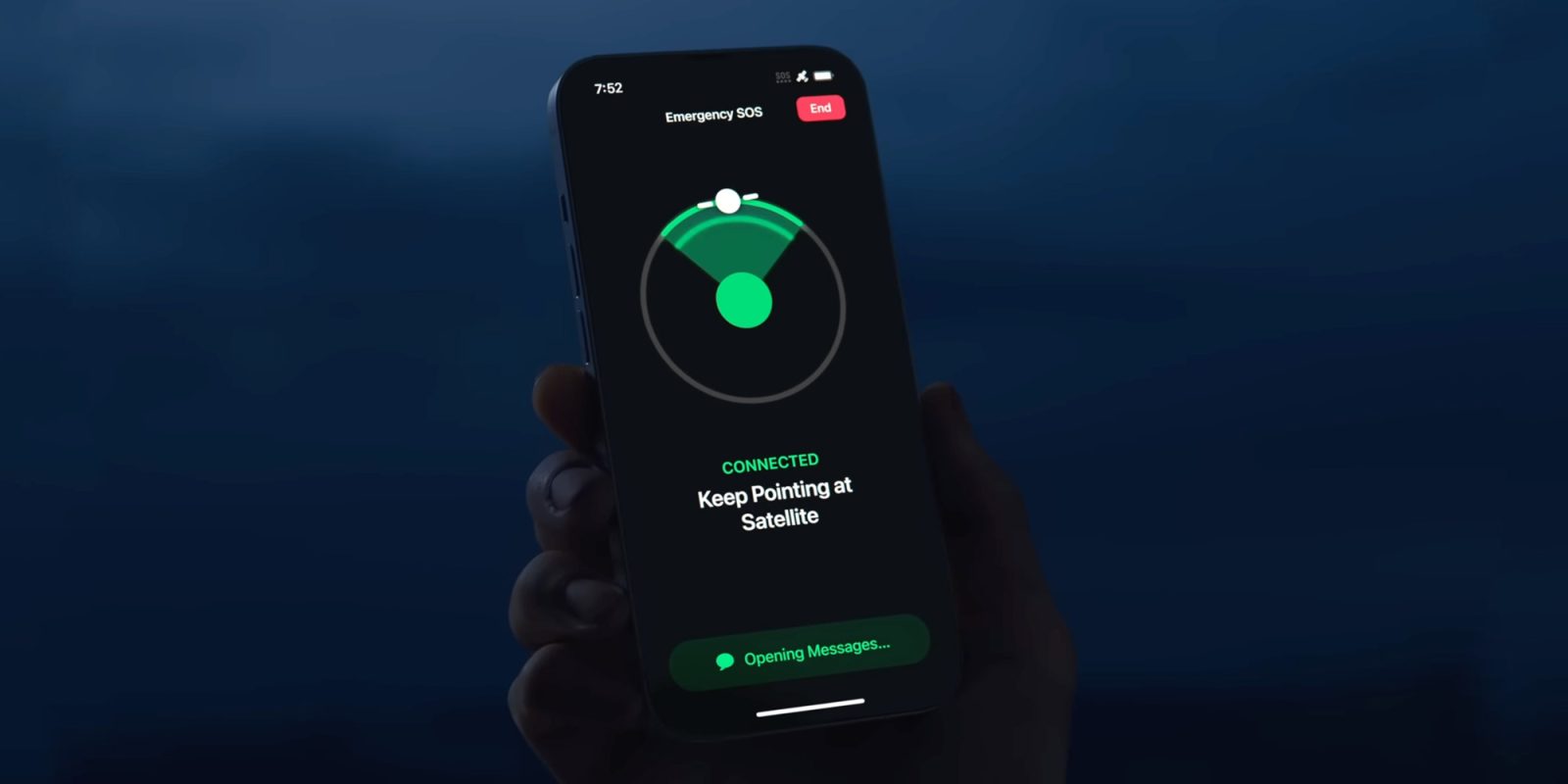

Almost 75% of satellite-capable smartphones sold in 2025 were iPhones, as per a recent report by Counterpoint Research. Here’s what’s anticipated for the market moving forward.
### Anticipated shipments to reach 46% by 2030
As detailed in a newly released Counterpoint Research report, Apple accounted for 71.6% of all satellite-capable smartphones shipped last year, trailed by Samsung at 15.9%, Huawei at 6.1%, Google at 2.2%, and Honor at 1.9%.
Counterpoint indicates the market is presently divided, with firms like Apple, Huawei, and Google leveraging proprietary satellite systems. Meanwhile, a significant portion of the Android ecosystem, including Samsung, Xiaomi, OPPO, HONOR, and vivo, is aligning with the emerging 3GPP Non-Terrestrial Networks (NTN) standards.
The report notes that the former allows for tightly integrated, device-specific services today, while the latter aspires to transform satellites into extensions of cellular networks for enhanced compatibility and scalability in the future.
It also points out that despite Apple’s leadership, overall market adoption still depends on broader applications beyond messaging and emergency services, as well as the integration of mid-range devices:
> The satellite smartphone sector is primarily driven by the premium tier, yet the absence of compelling use cases is hindering widespread adoption. 3GPP Release 17 use cases are confined to SOS and messaging. Though 3GPP Release 18 will further advance penetration among premium brands, mass adoption in the mid-range tier is anticipated only with Release 19.
Another factor affecting adoption rates is the approach to satellite connectivity at the chipset level. Senior Analyst Shivani Parashar states:
> Qualcomm has been leading among Android chipset manufacturers in facilitating satellite connectivity via its Snapdragon X80 and X85 modems, followed by Huawei, Google, and Samsung. MediaTek is also pushing forwards with NTN integration through its MT6825 5G SoC. Increased involvement from chipset manufacturers will heighten competition while potentially aiding scalability.
Lastly, the report addresses collaborations between telecom operators and satellite services and how these are aiding initial adoption.
It highlights initiatives like T-Mobile and Rogers teaming up with SpaceX, AT&T collaborating with AST Mobile, and Apple’s alliance with Globalstar, which is now owned by Amazon, establishing North America as an early frontrunner in this space.
It also mentions that while “telecom operators in other regions, such as Europe and China, are not hurrying to provide satellite connectivity, satellite firms are boosting capacity to support the mass market.”
In this context, Counterpoint projects that global shipments of smartphones featuring satellite capabilities will achieve 46% by 2030, with “Apple, Google, and Samsung [leading] in terms of overall penetration,” and “additional Android manufacturers and telecom operators beyond developed regions [playing] a crucial role in speeding up global adoption,” according to Research Vice President Peter Richardson.
To access Counterpoint Research’s comprehensive report, click this link.