author

The Future of Computer Chips: Surpassing the Role of Electricity

individuals who prefer not to use AI on their devices. Regardless of one’s perspective on the technology, two facts are indisputable: AI has triggered a chip shortage that persistently escalates tech costs, and it is extremely detrimental to the environment. This negative impact is due to the processing power that AI demands. AI data centers utilize an enormous amount of electricity and water, such that simply being courteous to chatbots has cost ChatGPT tens of millions of dollars.

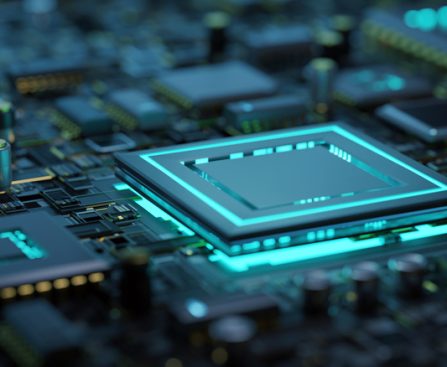
A recent advancement holds promise for enhancing AI’s energy efficiency: photonic chips. In contrast to the current technology, which operates on electrons, photonic chips leverage photons (light particles) for computation. To put it another way, they conduct AI operations using light in place of electricity, leading to reduced consumption of natural resources.

Photonic chips not only offer environmental benefits; they are also more potent, executing tasks at speeds that surpass current GPUs. As our lives become increasingly integrated with online and AI technologies, leading to greater energy usage by data centers, photonic chips may diminish the adverse effects of the technology on the environment while simultaneously representing an overall enhancement.
Photonic chips enhance AI’s energy efficiency

9to5Rewards Contest: Get a chance to win a MacBook Pro and a BenQ 4K Nano Gloss Monitor

### BenQ’s Newest Contest: Win a MacBook Pro and 4K Monitor

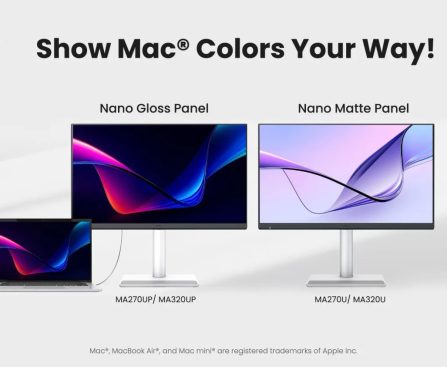
BenQ is now running an exhilarating contest, giving participants the opportunity to win Apple’s newest MacBook Pro paired with the latest BenQ 27″ 4K Nano Gloss Monitor specifically designed for MacBook users. This contest marks the introduction of BenQ’s MA series of monitors, optimized to improve the Mac experience.

#### BenQ 27″ 4K Nano Gloss Monitor for MacBook

The BenQ 27″ 4K Nano Gloss Monitor is crafted to closely mirror the display quality found in MacBook screens. With its cutting-edge **Mac Color-Tuning Technology**, this monitor guarantees that colors are displayed accurately, making it a perfect accessory for creative professionals and anyone who appreciates visual accuracy. Furthermore, BenQ offers Mac software enabling users to regulate brightness across multiple displays at once, ensuring a uniform viewing experience.

This monitor is also a multifunctional hub for MacBook users. It boasts a single-cable connection that not only delivers the monitor feed but also offers a 90W charging capability for the MacBook. In addition, it comes with two HDMI ports and an extra USB-C port for connecting and charging other Apple devices, simplifying the workspace organization.

For more comprehensive information regarding the features of the BenQ 27″ 4K Nano Gloss Monitor and the complete MA series, interested parties can check out BenQ’s official webpage.

#### How to Enter the Contest

To join this contest for a chance to win both the MacBook Pro and the BenQ monitor, participants must submit their name and email address. Each email can have only one entry. Additionally, entrants are encouraged to share the contest on social media platforms like Facebook and X (formerly Twitter), and to follow BenQ on Instagram and X for the latest information.

Entries for the contest are open until April 17, 2026, and are limited to residents of the United States and Canada. It is essential to note that no purchase is required to enter or win, and participants must be at least 18 years old. Employees of BenQ and their immediate families are ineligible to enter.

For those accessing the contest via mobile devices who may not find the entry option, a direct link is available for convenient access.

#### Conclusion

This contest offers a thrilling chance for Mac fans to elevate their technology setup with a premium MacBook Pro and a high-end BenQ monitor. With its emphasis on enhancing the Mac experience, BenQ’s MA series is bound to impress both casual users and experts alike. Don’t let this opportunity pass you by!

NASA Artemis Watch 2.0: An Educational, NASA-Inspired Wearable Kit Powered by ESP32-S3

NASA Artemis Watch 2.0

CircuitMess NASA Artemis Watch 2.0 is a programmable, NASA-themed smartwatch based on an ESP32-S3 WiFi and Bluetooth module and a 1.14-inch monochrome display. The watch also features an accelerometer, a gyroscope, a buzzer, an RTC, a button, several LEDs, and a USB port for programming and charging the built-in 600 mAh battery. NASA Artemis Watch 2.0 specifications: Core module – ESP32-S3-MINI-1-N4R2 SoC – ESP32-S3 dual-core Xtensa LX7 processor with WiFi 4 and Bluetooth 5.0 connectivity Memory – 2MB PSRAM Storage – 4MB QSPI flash PCB antenna Display – Built-in 1.44-inch display USB – 1x USB Type-C port for charging and programming Sensors 6-axis LSM6DS3TR accelerometer and gyroscope Temperature sensor (TBC) Misc Lever button 6x user LEDs, 1x power LED, 1x RGB LED Buzzer RTC  + backup battery Power Supply 5V via USB-C port 600 mAh LiPo battery, good for 2 to 3 hours on a charge Dimensions and Weight – […]

The post NASA Artemis Watch 2.0 – An ESP32-S3-powered, NASA-inspired wearable kit for education appeared first on CNX Software – Embedded Systems News.

“Five Prominent Brands Possessed by Microsoft”

Microsoft was established in 1975 by Bill Gates and Paul Allen to create software for an early personal computer called the Altair 8800. Over the years, Microsoft has evolved into one of the largest tech firms globally. Moreover, it is listed among the leading companies in general by market capitalization, primarily recognized for its Windows OS, which debuted in 1985, and its Office software suite utilized by professionals for work. Nonetheless, the company is involved in more than just software, branching out into various sectors.

The primary means through which the company has expanded into various areas within the tech industry has been via the acquisition of different brands. For instance, Microsoft purchased Nokia in 2013 for $7.2 billion and has completed over 200 acquisitions since 1994. This acquisition approach has allowed Microsoft to broaden its influence as a tech leader, producing not only software products but also hardware and providing various services, including cloud computing. Thanks to this strategy, Microsoft now owns a range of significant brands that you might not even realize are part of its portfolio.

GitHub

Apple Eliminates Jack Dorsey’s Messaging Application from Chinese App Store

Apple has taken down Bitchat from the Chinese App Store after receiving a demand from the Cyberspace Administration of China (CAC). This action underscores the persistent strains between tech firms and regulatory agencies in nations with stringent internet control.

Bitchat, created by Twitter co-founder Jack Dorsey, is a messaging application that facilitates anonymous, peer-to-peer communication via Bluetooth-based mesh networking. This method allows users to transmit messages without depending on conventional internet-connected servers, making it especially attractive in areas facing internet blackouts or social media limitations. The app gained popularity in countries such as Uganda, Iran, and Nepal, where it was utilized during demonstrations and government crackdowns on major platforms.

The CAC’s demand for Bitchat’s removal stemmed from claims that the app breached particular stipulations concerning the security assessment of internet-based information services that could sway public opinion or mobilize users. These regulations mandate such apps to undergo a security evaluation prior to their launch or updates in China.

Currently, Dorsey has not disclosed any information regarding potential steps Bitchat might take to re-enter the Chinese App Store. The withdrawal of Bitchat highlights the difficulties encountered by apps that focus on privacy and decentralized communication in highly regulated markets.