Stephen Colbert interviewed Jimmy Kimmel, Jimmy Fallon, Seth Meyers and John Oliver at the same time in the penultimate week of “The Late Show”.


Stephen Colbert interviewed Jimmy Kimmel, Jimmy Fallon, Seth Meyers and John Oliver at the same time in the penultimate week of “The Late Show”.
Vector search has risen to become a foundational tool in modern search and retrieval systems, including the RAG pipelines that power many AI applications. However, the demands on retrieval systems are growing more sophisticated, which is revealing the limits of relying on a single vector similarity score. Vespa is a popular open source search and
The post Vespa AI and Surpassing the Limits of Vector Search appeared first on Software Engineering Daily.

Answers to each clue for the May 12, 2026 edition of NYT’s The Mini crossword puzzle.

OpenAI has launched Daybreak, an AI-based cyber defense tool.
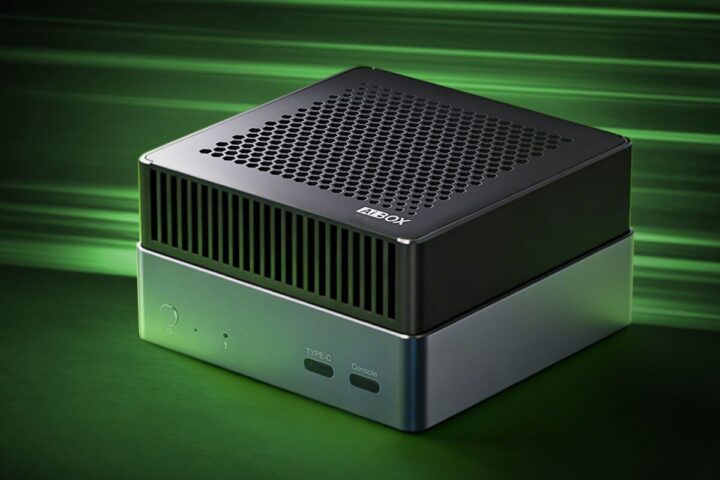
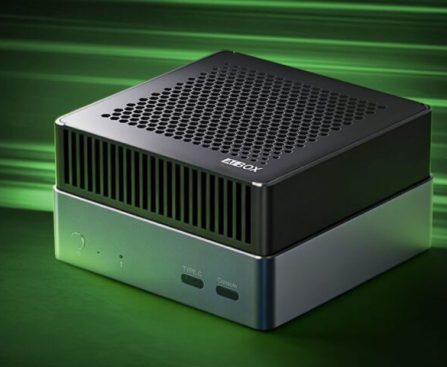
Back in July last year, SpacemiT unveiled the SpacemiT K3 SoC. After that, we saw some system information and early benchmarks come out around January this year. The company has just officially launched the K3 Pico-ITX SBC, which is now available through various distributors. Firefly has launched its own K3 hardware with the AIBOX-K3, a complete industrial-grade RISC-V edge computing box. The AIBOX-K3 Edge AI mini PC is built around the SpacemIT Key Stone K3 octa-core processor and features an integrated AI engine that delivers up to 60 TOPS of compute performance, making it suitable for local LLM inference and edge AI applications. Firefly AIBOX-K3 specifications: SoC â SpacemiT K3 CPU 8x 64-bit RISC-V X100 âbigâ cores clocked up to 2.4 GHz, RVA23 compliance; 130 KDMIPS performance (similar to RK3588) 8x RISC-V A100 AI Cores with support for up to 1024-bit RVV1.0 parallel computing, optimized for matrix operations. GPU â Imagination […]
The post Firefly AIBOX-K3 – An Edge AI mini PC powered by SpacemiT K3 RISC-V SoC appeared first on CNX Software – Embedded Systems News.
report from the Google Threat Intelligence Group (GTIG) indicates that advanced hacker collectives have begun leveraging AI tools to assist in the creation and deployment of zero-day exploits. This finding substantiates warnings from numerous tech analysts that sophisticated AI tools will ultimately allow malicious actors to uncover vulnerabilities that might have otherwise remained undetected.
The GTIG report conveys that it recognized a “threat actor utilizing a zero-day exploit that we suspect was generated with AI.” While the report does not offer further details regarding the identity of this “threat actor,” it notes that the zero-day exploit was crafted for use in a “mass exploitation event.” The specific software took advantage of a weakness in a Python script to circumvent two-factor authentication measures. Thankfully, the exploit was fixed prior to any widespread deployment.
Another cause for concern regarding this development is that AI, besides revealing exploits, also enhances the speed at which hackers can produce malware and assess vulnerabilities in software. Cyberattacks that once required months of laborious development can now be executed on a significantly quicker schedule. Furthermore, hackers have already begun employing sophisticated AI to generate convincing phishing schemes. They are also using a alarming new Gmail exploit featuring highly realistic AI impersonating Google support representatives to deceive unsuspecting victims into disclosing sensitive credentials.

Connections: Sports Edition is a New York Times word game about finding common sports threads between words. How to solve the day’s puzzle.

The New York Times’ latest game, Pips, brings domino fun to your desktop. How to play Pips as well as hints in case you get stuck.

Sony has announced a new version of the wearable personal air conditioner the company first revealed in 2019 ahead of the 2020 Tokyo Olympics. The latest version is an upgrade to last year’s Pro model, and while the new Reon Pocket Pro Plus isn’t a complete overhaul of the hardware, it comes with performance upgrades […]

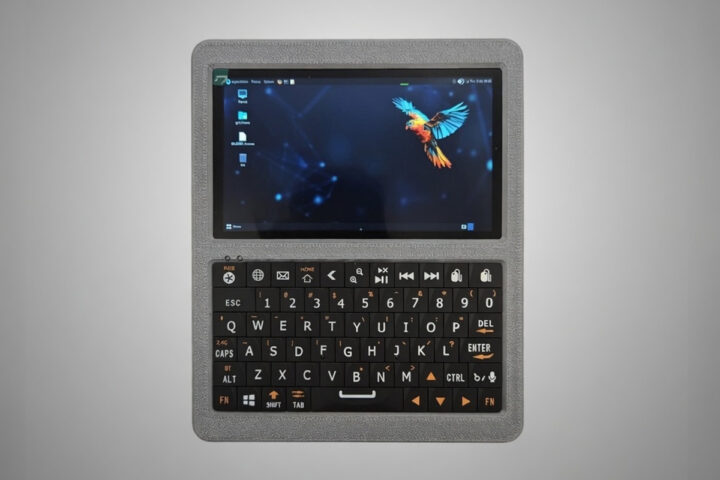
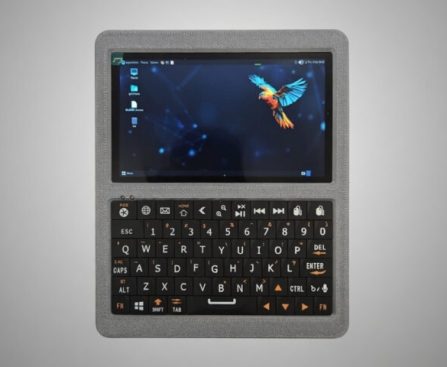
We previously wrote about Carbonâs CyberT, a Blackberry-style Raspberry Pi CM4 handheld Linux cyberdeck designed for Kali Linux and penetration testing. The company, now operating under the CyberArch/Carbon Computers brand, has introduced the Pi Slate, a more powerful handheld cyberdeck designed for portable computing and security-focused applications. Built around the Raspberry Pi 5, the Pi Slate integrates a 5-inch 1280Ã720 touchscreen, a backlit RGB keyboard with an integrated cursor, and a 10,000 mAh battery for 3â5 hours of portable use in a compact enclosure. It supports modular expansion for HATs such as LoRa, SDR, AI accelerators, and M.2 storage, and includes cooling support, antenna mounts, and an optional modular back with a kickstand. It targets penetration testers, IT professionals, and field technicians needing a compact, preconfigured system for cybersecurity and field work. Pi Slate specifications: SBC â Raspberry Pi 5 with 2GB, 4GB, 8GB, or 16GB LPDDR4X RAM options Storage […]
The post Pi Slate â A Raspberry Pi 5 handheld Linux cyberdeck with a 5-inch 1280×720 touchscreen display appeared first on CNX Software – Embedded Systems News.