Revealed Information Uncovers Anticipated Design of Pixel 11 Pro XL

Google evidently is not rushing to modify a successful formula.

What you should be aware of

  • The design leaks of the Pixel 11 Pro XL indicate it resembles the Pixel 11 Pro closely, albeit in a larger size.
  • Specifications might feature a 6.8-inch LTPO AMOLED screen, a Tensor G6 processor, and a potential upgrade to a MediaTek modem.
  • The device is anticipated to keep the flat back, rounded edges, and its typical horizontal camera bar design.

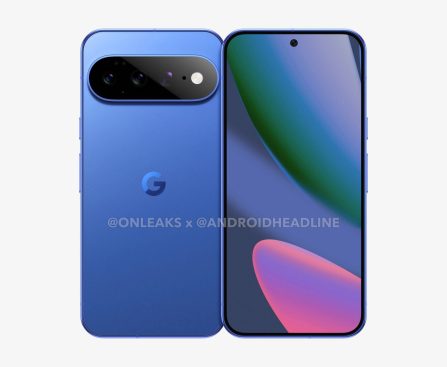
Following the leaks concerning the Google Pixel 11 and Pixel 11 Pro, the Pixel 11 Pro XL’s design has now emerged, and it appears just as you would anticipate.

In the last week, we have already observed renders of the Pixel 11 and Pixel 11 Pro, which were shared by @OnLeaks on X. Now, the source has unveiled the larger variant, the Pixel 11 Pro XL. As anticipated, it bears a strong resemblance to the Pixel 11 Pro, only in a larger configuration.

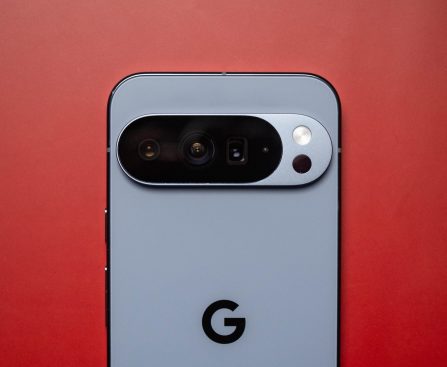
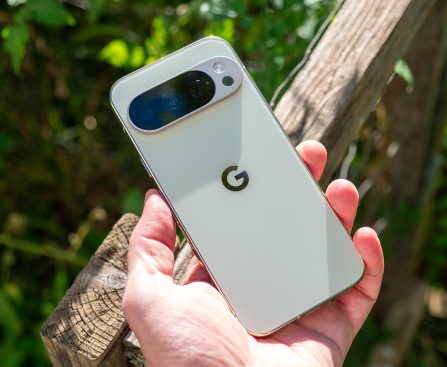
As previously mentioned, the Pixel 11 Pro XL is expected to maintain the same design style as the Pixel 10 Pro XL, showcasing a flat back, rounded corners, and a horizontal camera bar on the rear. Similar to the other Pixel 11 variants, the camera bar seems entirely black, with the frame coordinating with the device’s body color.

As per the report, the Pixel 11 Pro XL measures 162.7 x 76.5 x 8.5mm, which is nearly
Mint Mobile Presents $500 Savings on Google Pixel 10 and Half Price on Phone Bill for One Year

Mint Mobile returns with some of the finest phone bargains available online. For a short period, if you combine the acquisition of the flagship Google Pixel 10 with a year of the Unlimited plan, you’ll receive an incredible $500 off the phone, along with a 50% discount on wireless service. This offer secures you one of the leading AI phones out there and a full year of unlimited T-Mobile-powered wireless for just $479 (or $40 monthly through affirm). Given that the Pixel 10 typically retails at $799 by itself, this wireless offer is an obvious choice for anyone looking for a shiny new phone plan.

The Google Pixel 10 is an adaptable flagship smartphone loaded with top-tier hardware and AI-enhanced software capabilities. Although it generally starts at $799 for the 128GB version, Mint Mobile is cutting $500 off the device when you package it with a year of any data plan. As if that weren’t sufficient, the wireless plan itself will enjoy a 50% reduction if you choose Mint’s highly-rated Unlimited option. No trade-in necessary, no fuss, just straightforward savings.

Ideal for those aiming to snag $500 off one of the finest flagship phones available, and who are open to switching to a new phone plan to achieve it; you desire affordable T-Mobile-powered wireless coverage and don’t require all the extras that come with various unlimited plans. Bypass this deal if you’d prefer not to be locked into a single data plan for 12 months; you exceed 50GB of data usage monthly; you prefer comprehensive phone plans that include premium benefits like streaming subscriptions and international coverage.

Driven by the new Tensor G5 chipset, the Google Pixel 10 features an enhanced camera system, outstanding haptics, and all of the latest AI-enhanced software attributes. The 6.3-inch AMOLED screen is a true delight to experience, plus it includes Qi2 charging capability and a substantial 12GB of RAM under the hood. Similar to most Google Pixel devices, you are guaranteed seven OS and security updates by default, indicating that the Pixel 10 could serve as your daily device for several years ahead.

Mint Mobile, in contrast, is renowned for delivering extensive T-Mobile-powered coverage at a significantly lower price than competitors, employing a simple buy-in-bulk plan model that places you in control. The carrier’s Unlimited plan offers unlimited talk, text, and data on T-Mobile’s renowned network, in addition to providing a mobile hotspot and free calls to Mexico, Canada, and the UK.

So what’s the downside? Mint’s Unlimited plan is restricted to 50GB of monthly data before speeds begin to decline, so users who rely heavily on data might find the service a bit insufficient. Mint customers also miss out on numerous premium benefits that come with pricier unlimited plans, such as entertainment perks and international coverage, so evaluate your monthly usage carefully before you commit to the year of service.

In summary, if you’re looking for one of the newest Android smartphones at a budget-friendly price, this is an excellent opportunity to acquire a new device and some fresh wireless service without overspending. For those who prefer to keep it straightforward, any minor drawbacks associated with Mint should be easily overlooked, particularly when you realize you won’t need to settle your phone bill again until 2027.

Google May Possibly Halt Android Rollbacks on Pixel 10 with Upcoming Update

Accomplished previously.

Nothing Allegedly Creating AI Smart Glasses Anticipated to Release Next Year

It appears the company is aiming to explore another market. An unexpected report has emerged, indicating that Nothing intends to venture into the realm of AI-driven smart glasses.

This speculation was reported by Bloomberg, citing an unnamed source who claims that Nothing’s CEO, Carl Pei, previously resistant to the concept, has shifted his stance (via 9to5Google). Details about these AI smart glasses are sparse, including specific features and functions. Nevertheless, the article suggests that these glasses will not operate independently. Therefore, Nothing may need users to connect the glasses to their smartphones.

The article mentions that the glasses might rely on smartphones for “the cloud to manage AI processing.” Data collected would be transmitted from the glasses to the user’s phone in the back. This raises questions about hardware, for which the report hints at certain functionalities. As per Bloomberg, these Nothing smart glasses could include cameras, speakers, and a microphone.

A piece by TechCrunch underscores previous remarks from Carl Pei, asserting that Nothing must “advance on the hardware and software front, and utilize AI, to differentiate itself in the market.”

These elements strongly indicate AI-focused smart glasses, likely suggesting robust voice-assisted features. The AI may provide responses to user inquiries, but actions requiring visual input will likely necessitate reaching for the smartphone. The rumors propose that Nothing is aiming for a launch in 2027, coinciding with smartphones and other gadgets.

When Carl Pei dampened expectations for a true flagship this year, there was no indication of smart glasses in Nothing’s forecast or any hint regarding developments elsewhere. If this report holds merit, Nothing would be entering an intriguing market, one where Meta has rooted itself and Samsung is advancing. Samsung’s mobile business vice president, Jay Kim, shared some insights into what consumers might anticipate from its inaugural pair.

According to Kim, Samsung’s smart glasses will feature an eye-level camera that heavily relies on its AI software to “comprehend” what the user observes. This aligns with the direction we might expect Nothing’s AI glasses to take. They will utilize their cameras to interpret what the user discusses, but the significant processing will likely be managed by the smartphone, potentially delivering richer information through the speakers.

Conversely, Meta’s Ray-Ban glasses have recently launched with prescription lenses right out of the box.

Android Central’s Perspective

Focusing solely on the rumors here, I find this concept isn’t particularly groundbreaking. We’ve encountered this type of idea previously, where it mainly centers around cameras or audio. It utilizes a phone’s capabilities for processing. Certainly. What intrigues me is how these glasses might look. Nothing tends to challenge conventions, crafting a design that’s somewhat unexpected. However, its Nothing OS AI has shifted towards a utility approach, providing users with more information, enhanced notifications, and beyond. I wonder if Nothing will position this as an enhancement to its phones’ existing functionalities.

Google Unveils Wear OS 6.1 Featuring Long-Awaited Time Zone Capability

Google has unveiled Wear OS 6.1, featuring automatic time zone detection based on location.

Key details:
– Wear OS 6.1 integrates location-based time zone detection, enabling watches to adjust time autonomously without needing a connected phone.
– This update is built on Android 16 QPR2 and does not present any significant visible UI alterations.
– Additional new functionalities consist of a “graduation” feature for kids’ accounts and enhanced re-authentication that avoids factory resets.

Today, Google discreetly revealed Wear OS 6.1, introducing a minor yet practical location-based time feature that arguably should have been implemented much earlier.

In terms of visuals, Google has not disclosed any UI modifications with Wear OS 6.1, but it has confirmed that the update draws from the Android 16 Quarterly Platform Release (QPR) at API level 36.1. This is not the latest March Android 16 QPR3 update, but instead the Android 16 QPR2 version from December 2025.

Nevertheless, Wear OS 6.1 does come with several new capabilities. A standout feature, as elaborated in Google’s Android Developers blog entry, is the location-based time zone detection. Google asserts that smartwatches operating on Wear OS 6.1 and higher can now automatically adjust their time zone according to their geographical location.

At present, Wear OS smartwatches depend on their paired Android phone for time zone determination. With the introduction of Wear OS 6.1, this is set to change, as watches can now autonomously update their time zone. Google highlights that this functionality ensures accurate timekeeping while traveling between different areas, even in the absence of a network connection.

Users can activate this feature by navigating to Settings > Date & Time > Use location.

Additionally, Wear OS 6.1 brings enhancements for children’s accounts. A new “Kids graduation” function is introduced, enabling supervised accounts to convert into standard accounts once the user attains the suitable age.

Google has also made advancements in re-authentication. If a user’s credentials are no longer valid, for instance, if they alter their password, they can now verify their Google account directly on the smartwatch or via the companion app without the necessity of a factory reset.

Currently, Google has yet to distribute Wear OS 6.1 to any smartwatches. It is anticipated to be initially available on the Pixel Watch 4 and subsequently extend to older Pixel Watch models in a forthcoming update. Samsung is also expected to soon incorporate Wear OS 6.1 into its Galaxy Watch series. Updates will be provided as the rollout commences.

Gmail Launches AI-Enhanced Inbox for $250 Monthly Fee

The latest AI Inbox feature from Gmail is presently accessible exclusively to AI Ultra subscribers within the United States.

Google Introduces Genuine Refurbished Initiative for Pixel 8a as Amazon Grows

A fresh mid-tier option enters the market, and here’s the savings you can expect.

Essential Information

– Google has revealed that its Certified Refurbished Pixel initiative has welcomed a new addition: the Pixel 8a.
– The device offers a discount of $160, making it available for $339 instead of $499.
– Once again, Google emphasizes its refurbished program’s commitment to replacing any components with genuine materials, along with a complete OS upgrade.

Like many other OEMs, Google operates a refurbished program, and this week sees a new (previous?) model added to its offerings.

Prem Pandian, Google’s global head of strategic initiatives and partnerships, shared details about the expansion of its Certified Refurbished program. The company claims it is launching its “largest expansion to date,” introducing the Pixel 8a into the program for consumers. Google notes that its refurbished devices are shipped in a “100% plastic-free” package featuring its Relove icon. Moreover, the phones in this program undergo repairs with authentic parts in Google’s facilities.

Furthermore, any Pixel phones available in the program are delivered with the latest Android software. Consumers will not face the same price point for these Pixels as they would for brand-new devices. Instead, Google asserts that its refurbished Pixels present discounts of up to 45% off the original price. However, for the Pixel 8a, Google has only reduced the cost by $160, bringing it to $339.

This expansion of the Certified Refurbished program doesn’t conclude with the Pixel 8a, as Google is also bringing its availability to Amazon.

Starting this week, Google states that users can visit Amazon Renewed to discover “a variety” of Pixel phones. Although this is facilitated through a third party, Google guarantees the quality of the refurbished devices. The Pixel 8a will be included, along with Google’s existing lineup, which consists of the Pixel 8, 8 Pro, Pixel 7, 7 Pro, and 7a.

Revamped and Appealing

“Affordable and eco-friendly” options were the focus at the launch of Google’s Certified Refurbished program in 2024. Initially, the program offered the Pixel 7, 7 Pro, 6, 6 Pro, or 6a to consumers. Since that time, the Pixel 6 series has been phased out and is no longer listed on the official Google Store. Google made similar comments about its program during this Pixel 8a announcement.

It mentions that it will assess a Pixel’s battery, display, and “housing,” and replace any necessary components to ensure the phone feels new. Naturally, Google likely ventured into this domain as Samsung and Apple have largely led the way. However, it appears that, for some, Google could improve its “affordable” claim, as the price reductions for certain devices could be more significant.

Android Central’s Perspective

We have a variety of phones to select from. There are flagship models, which typically boast robust specifications, rapid internals, and excellent build quality. Mid-range options are available as well, but they represent a step down, focusing on affordability and reduced specifications. Refurbished phones are an interesting case because companies attempt to lower those prices to what might be considered mid-range levels, but that may not happen with a flagship undergoing refurbishment. I can somewhat relate to my colleague’s view that Google “should take refurbishment seriously” concerning Pixel pricing.

“Uncovering a Pixel Function That Identifies Bluetooth and Android Auto Problems”

Google Pixel smartphones are well-known for their sophisticated AI capabilities, yet they come with their share of challenges, particularly regarding Bluetooth connectivity. Numerous users have faced difficulties with Bluetooth connections, especially when utilizing Android Auto. To tackle these problems, Google has rolled out a concealed Bluetooth diagnostics tool within Pixel phones, aimed at assisting users in pinpointing and rectifying connectivity issues.

The Bluetooth diagnostics tool is a component of the Pixel Troubleshooting app, which recently underwent an update (v1.0.885948717) to incorporate this feature. This tool performs a series of assessments to uncover connection problems and offers potential solutions if any issues are detected.

To utilize the Bluetooth diagnostics tool, adhere to these instructions:

1. Update the Pixel Troubleshooting app to the newest version through the Google Play Store.
2. Launch the Settings app on your Pixel device.
3. Go to Connected devices and select Bluetooth diagnostics.
4. Pick the relevant option according to your situation. If your device is already linked, select it. If you are encountering connection difficulties, choose the Can’t find your device option. For specific devices like Pixel Buds, Pixel Watch, or Android Auto, select the appropriate choice. For other devices, tap Others.
5. Choose the issue you are experiencing from the list.
6. The tool will then conduct Bluetooth tests to diagnose the issue.

After the test concludes, the tool will determine if there is a connection issue and recommend possible solutions, such as re-pairing the accessory or contacting the manufacturer. Users can also reach out to Google support if necessary.

Alongside the Bluetooth diagnostics tool, Pixel phones provide a variety of other diagnostic tools for common issues, such as touch responsiveness, battery concerns, or overheating. These tools can be accessed via the My Pixel app, under the Troubleshoot section, enabling users to test features individually and identify specific problems.

The launch of these diagnostic tools underscores Google’s dedication to enhancing user experience by offering remedies for prevalent problems. Other manufacturers, including Samsung, also provide similar diagnostic features, highlighting the significance of self-repair tools in contemporary smartphones. These tools simplify the process for users to resolve everyday challenges, boosting the overall functionality and dependability of their devices.

Verizon Provides Complimentary Galaxy S26 Ultra Without Trade-In Necessary to Rival T-Mobile

Over the last few weeks, T-Mobile has been offering a promotion that allows you to receive a complimentary Galaxy S26 Ultra when you add a line with a qualifying data plan. It was an excellent offer, but as it approaches its conclusion, Verizon has opted to challenge its major competitor by presenting a free phone deal of its own.

For a limited time, Verizon will provide you with $1,300 in promo credits when you add a line with the Unlimited Ultimate plan. This amount is sufficient to make the high-performance S26 Ultra entirely free, with no trade-in necessary! This Verizon offer comes at an opportune moment, as reports indicate that T-Mobile will be wrapping up its Galaxy S26 Ultra promotion on April 1st. Is this offer suitable for you? Let’s analyze the details.

Move over, T-Mobile: Verizon has just introduced its own free Galaxy S26 Ultra promotion.

The Samsung Galaxy S26 Ultra is an advanced smartphone that carries a hefty price to match. With a starting price of $1,299 for the 256GB variant, this flagship features the ultra-efficient Snapdragon 8 Elite Gen 5 processor paired with 12GB of RAM, an array of beneficial AI-enhanced software functionalities, and a seven-year upgrade commitment.

The S26 Ultra also includes a 6.9-inch AMOLED display with a built-in S Pen stylus, plus you can take advantage of the new Privacy Display feature that has been generating significant attention lately. Notably, this model in the S26 series is the only one that hasn’t seen a price increase, although at $1,299, the Ultra remains expensive. Thankfully, various deals on the S26, such as this one, help ease the financial impact.

Nonetheless, this Verizon deal isn’t entirely without conditions. The Unlimited Ultimate plan is, in fact, Verizon’s most costly data plan, starting at $90 per line for a single line. The upside is that the monthly fee can be significantly reduced by adding more lines or utilizing AutoPay, plus you benefit from a three-year price lock guarantee (which means you won’t dread future price increases).

The Unlimited Ultimate plan also offers users unlimited 5G Ultra Wideband data with a mobile hotspot and coverage spanning over 215 countries worldwide. Combine the unmatched coverage with a complimentary Galaxy S26 Ultra, and you have a top-tier wireless offering that continues to provide advantages.