A Meta Quest Game Reignites My Enthusiasm for Multiplayer Gaming

Forefront is the upcoming title from the creators of Breachers, so it’s no wonder that it impresses so much. For two entire years, a group of friends and I engaged in Breachers every Friday night. It was the highlight of my week, and the game’s consistent updates meant it took us a full two years to finally stop playing. Since then, we’ve struggled to find a game that everyone enjoyed, but that’s about to change with the launch of Forefront.

Naturally, Forefront comes from the same developers as Breachers. Just like Breachers drew inspiration from the Rainbow Six franchise, Forefront takes cues from titles such as Battlefield and PUBG, while still maintaining a distinctive and intense atmosphere that only VR can offer.

I recently tried the final release version of the game alongside numerous YouTubers and gaming journalists, and I can confidently say this is poised to be the next major multiplayer VR sensation; I truly mean it. By the conclusion of the three matches we played, no one was left unenthusiastic or without a request for more.

It’s a sensation I haven’t felt since Breachers debuted. Although I’ve enjoyed various other (and remarkable) multiplayer VR games since then, this is the one that will draw me back into regular sessions with my friends, and I’m genuinely thrilled about it.

Set in the year 2035, Forefront immerses players in 32-player battle arenas, competing for control of multiple strategic locations within two game modes. It embodies the spirit of classics like Battlefield and Tribes while incorporating a host of unique mechanics designed for VR headsets and is available on Steam VR and Meta Quest platforms, with a PSVR 2 version coming soon.

As would be expected from a game of this nature, players can select one of four classes, each offering unique traits and gear. Whether you pick Assault, Medic, Engineer, or Sniper, you’ll have the opportunity to operate various vehicles, including jet skis, helicopters, ATVs, tanks, and beyond.

Every vehicle accommodates multiple players, and many allow occupants to utilize heavy artillery or other specialized equipment while on the move. The environments are semi-destructible, featuring numerous structures that can have their walls blown apart, along with other barriers that can be dismantled to create new attack routes.

Having invested countless hours into Tribes 2 and Battlefield 1942, it’s been some time since I’ve genuinely enjoyed a game in this category. While I’ve sampled several similar games over the past two decades since those classics, few have captivated me in the way that Forefront has.

Curiously, I experienced something similar with Breachers, as the last comparable game I engaged with was Rainbow Six 3 on the original Xbox. Clearly, I once relished these types of team-oriented multiplayer games, and though there was a period when that interest waned, it seems to have returned, aided by the immersion that only VR offers.

The ability to physically control vehicles, take cover behind walls, scale towers, and clap paddles together to revive a teammate just feels distinct. Actively participating in an action feels fundamentally different than watching an on-screen avatar perform it, and it’s that distinction that has revitalized my enthusiasm for these games once more.

It certainly helps that VR games like Forefront streamline communication effortlessly. All the necessary tools for conversing with my teammates are integrated into the headset—no cumbersome keyboard menus to navigate, and no tech hassles to configure a microphone either. You can strategize with your teammates using just your voice, and they will hear you clearly.

Forefront has been in early access for several months now, and the leap from this version 1.0 release to the original version is quite significant. The odd lag or minor glitches in earlier builds have been eliminated, replaced with a remarkably fluid game that accommodates 32 players amidst Battlefield-sized levels, all without stuttering or lag. This is why I appreciate gaming on consoles like the Quest 3, and it’s fantastic to witness something crafted so well!

Developer Triangle Factory also launched a combat bow with this version 1.0 release, and I’m thrilled with how it performs. Bows have always been my weapon of choice in VR, thanks to their highly tactile feel, and this one tends to secure instant kills as long as you draw back sufficiently on the string.

There’s nothing quite as exhilarating as launching an arrow across the devastated town square, taking down an enemy in the blink of an eye. It’s significantly more satisfying than using a firearm, even if guns are generally more effective.

I thoroughly enjoyed driving vehicles, but I understand if some players prefer a designated driver. If you’re susceptible to motion sickness at

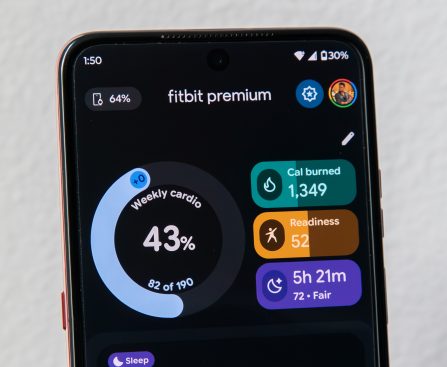
Fitbit AI Health Coach Enhancements Boost Personalization for Tailored Goal Attainment

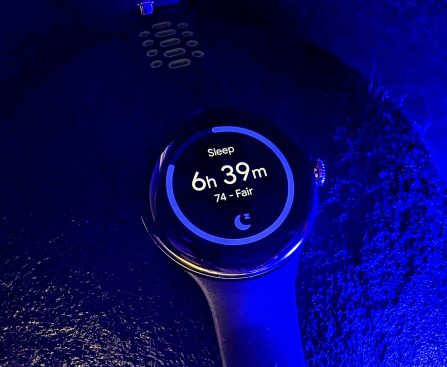
Fitbit is boosting its AI health coach to provide users with even more tailored support. The newest update concentrates on delivering personalized weekly fitness plans for Premium subscribers, tailored to individual aspirations. Users can look forward to customized workouts and the option to modify plans and goals. Moreover, the AI coach will send personalized messages throughout the day, including insights like post-workout summaries and weekly reviews. These enhancements are designed to make AI interactions more intuitive and user-friendly. Fitbit is also overhauling its Sleep Score feature to offer a comprehensive perspective on sleep quality, taking into account various elements such as sleep stages and heart rate. These developments are part of Fitbit’s continuous endeavor to enhance its health coaching services, fueled by user feedback and a commitment to delivering more customized fitness journeys.

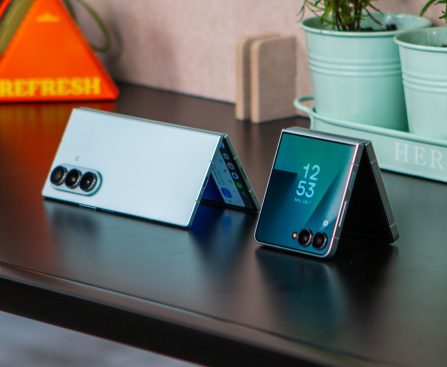
Samsung Lowers Prices for Galaxy Z Fold 7 and Flip 7

Samsung’s latest decision to add the Galaxy Z Fold 7 and Galaxy Z Flip 7 to its Certified Re-Newed program has generated buzz, albeit not for entirely positive reasons. The initiative, which offers refurbished smartphones with fresh batteries and repairs, looks attractive at first sight. However, an unusual pricing approach has come to light: refurbished base models are currently listed at higher prices than their brand-new counterparts. For example, a refurbished Galaxy Z Fold 7 with 256GB storage is priced at $1,699, while a new version can be purchased for $1,599. Likewise, the refurbished Galaxy Z Flip 7 has a price tag of $939, in contrast to $899 for a new unit.

This pricing inconsistency indicates that Samsung may be relying on consumers not to scrutinize prices closely. Although the program might serve those looking for high-capacity options, like the 1TB Fold 7, which is cheaper when refurbished, it typically doesn’t make economic sense for the average consumer. Samsung’s effort to encourage a circular economy is praiseworthy, but charging more for refurbished devices than for new ones diminishes the program’s sustainability assertions. For discerning shoppers, the superior choice is clearly the new models, underscoring the significance of comparing prices to make well-informed buying decisions.

YouTube TV Unveils Personalized Multiview Functionality

YouTube TV is launching a customizable multiview feature for a select group of users, enabling them to pick which channels to view simultaneously. This updated interface highlights suggested channels and categories including sports, news, and entertainment. The feature is currently being released gradually, with accessibility varying as Google activates it on the server side.

Earlier this year, YouTube TV revealed intentions to enhance multiview flexibility, alongside the introduction of new pricing bundles for particular content. While these bundles, such as the $64.99/month Sports package and the $54.99/month Entertainment package, have been recently available, customizable multiview streams are now beginning to surface.

According to a Reddit user, the multiview feature in the YouTube TV application on smart TVs now presents a new selection interface. When users select the multiview option, they are greeted with a list of recommended channels alongside their current selections at the top. Categories like Recommended, Sports, News, TV shows, and Movies facilitate browsing.

Nevertheless, the feature appears to be part of a limited rollout. Some Reddit users indicate they are able to access the feature on their TVs, while others are not, pointing to a server-side rollout.

To verify if you have the feature, open a live stream and press the down button on your remote to access the multiview menu. You should see an “Add to multiview” option along with sections for suggested channels and various categories.

This enhancement is especially useful for users who like to watch multiple games or events at once, such as during football games when several matches take place simultaneously.

OnePlus Launches Latest Smartwatch During Worldwide Business Instability

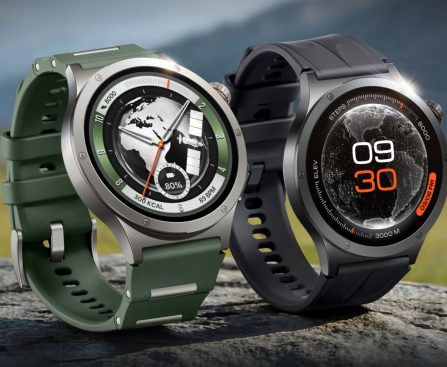
The OnePlus Watch 4: A Fresh Challenger in Wear OS Battery Performance

The OnePlus Watch 4 might become the new leader in Wear OS battery performance.

(Image credit: OnePlus)

Key Details

  • OnePlus has discreetly featured the Watch 4 on its international site.
  • Performance specs remain largely unchanged, with the same Snapdragon W5, BES 2800 chip, 2GB of RAM, and 32GB of storage.
  • Its full titanium construction makes it lighter and slightly slimmer, featuring a sharper 1.5-inch OLED that can reach 3,000 nits.
  • While all specifications are disclosed, pricing and availability are yet to be confirmed.

The tech industry is currently in a peculiar state. OnePlus is reducing its workforce and reevaluating its worldwide operations. Nevertheless, rather than remaining silent, the company quietly announced its upcoming smartwatch as though all is normal.

Introducing the OnePlus Watch 4. It’s officially listed on the brand’s global website. All specifications are known, yet the cost and launch date remain unannounced.

However, there are no significant hardware advancements. The Watch 4 incorporates the same Snapdragon W5 chip and BES 2800 secondary processor as the Watch 2 and 3. It retains 2GB of RAM and 32GB of storage.

The battery capacity is nearly identical at 632mAh, promising up to 16 days in power-saving mode, 5 days in smart mode, and 3 days under heavy usage.

Titanium for All

Now, the entire casing is crafted from titanium alloy rather than just the bezel. This modification reduces the weight to 43g, or 68g with the strap, and makes the 47.4mm body slightly more streamlined. The watch also showcases a vivid 1.5-inch LTPO OLED display (466 x 466) capable of achieving 3,000 nits of brightness in sports mode.

The primary enhancement lies in the software aspect. The Watch 4 debuts with OxygenOS Watch 8, based on Wear OS 6. This is one version ahead of the Watch 3. Gemini is included, and the watch comes with all the most recent health certifications, although a few

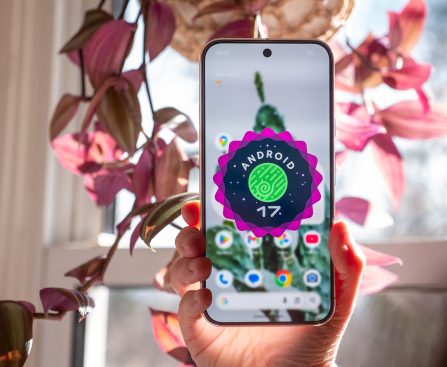
Google Starts Evaluating Initial Significant Update for Upcoming Android 17

Google has introduced Android 17 QPR1 Beta 1 for Pixel devices, signifying an important advancement after the earlier release of Android 17 Beta 4 this month. With Android 17 achieving platform stability, attention has now turned to resolving bugs and enhancing stability, with new features anticipated to be included in QPR1 updates instead of the foundational release.

The QPR1 Beta 1 update, which came out on April 22, 2026, mainly focuses on addressing bug issues, such as enhancements to the Terminal app and resolving wireless printing problems. The update is accessible for Pixel devices ranging from the Pixel 6 series to the Pixel 10 lineup, provided they are part of the Android Beta Program. Google has commenced the rollout of the OTA update, and users also have the option to sideload or manually flash the factory images.

The stable Android 17 update is expected around the middle of 2026, with Android 17 QPR1 likely to be released later in the year, potentially coinciding with the launch of Pixel 11 in August or September. This early transition to QPR1 indicates that Android 17 might be launched in a more refined condition, which is vital for Google in light of recent updates that led to battery drain complications.

Google’s Agentic AI Epoch: How Gemini Revolutionizes Workspace Intelligence for Genuine Support

Cloud Next 2026 had plenty to offer, so we’re dissecting it.

What you should know

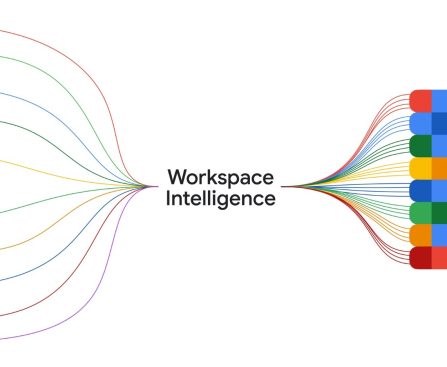
– This week, Google is introducing some Workspace Intelligence, outlining the agentic AI future for users during Cloud Next 2026.
– Workspace Intelligence is embedded into each app, comprehending what is important to you, which allows it to deliver it through automation.
– Docs, Slides, Sheets, and Chat are all receiving Gemini, enhanced by Workspace Intelligence updates for file generation and AI support.

Workspace aids businesses (large and small) throughout their days, and now Google is revealing significant AI-driven updates to enhance their productivity.

During the Cloud Next 2026 event, Google unveiled Workspace Intelligence as part of its agentic initiative to assist users in working more efficiently. Google states that this new method aspires to provide “real-time understanding” to your applications by consolidating your projects into an automated workflow. It asserts that Workspace Intelligence grasps the connections between your applications, projects, collaborators, and more.

This comprehension is achieved through intelligence gathering. Google claims Workspace Intelligence will “collect the information you require” from Gmail, Docs, Slides, and more, ensuring you have everything when you are engaged in your project. “Situational Awareness” relies on Gemini to identify “what’s significant to you.” This can include dates, emails, files, and similar items.

The personalization aspect emerges as the agentic AI becomes acquainted with your identity and your communication style, even grasping your work habits and formatting tendencies. While Workspace Intelligence serves as the overarching component linking all its applications, Google announced several updates for those apps.

Agentic AI for the future of work

Enhancements for the core trio—Docs, Slides, and Sheets—elevate Gemini, in addition to Workspace Intelligence. For Google Docs, Gemini’s role can create infographics using your information, make adjustments based on other comments, and “edit multiple images,” thanks to the new agentic AI upgrade. Gemini in Sheets can review your emails, documents, chats, and online data to “visualize all your information.”

Workspace Intelligence will consider your files and your organization’s visual identity to generate presentations in Slides. Google Chat introduces “Ask Gemini in Chat,” a cohesive experience designed to integrate the AI with every conversation you have with colleagues and partners. If you need help, Google indicates that you can query the AI, and its answers will be presented in the chat once it has compiled the information.

Additionally, Ask Gemini in Chat can provide a daily summary of unread messages and “urgent action items,” create new Docs or Slides, arrange meetings, and locate files for you. The company also emphasizes the new AI Inbox for Gmail, which was launched earlier in April. This innovative inbox ensures you are informed of vital emails regarding impending bill payments, appointments, and messages from “priority” contacts.

Following testing, AI Inbox is now available, but only if you’re inclined to use it. Google is providing this feature at $250 per month for Google AI Ultra subscribers in the U.S.

Android Central’s Perspective

I’ve mentioned it before, and I’ll reiterate: this is where Google’s AI truly excels. The practicality of Gemini merging with Workspace Intelligence is evident when you begin to recognize a genuine work assistant. For larger organizations and individuals tasked with overseeing numerous projects, this will likely be a significant advantage. I’m uncertain about the AI attempting to produce something in my voice or my company’s branding. That seems like a potential issue, but regarding everything else? I’m on board.

Fitbit’s Sleep Score to Serve a Crucial Function in Significant Public Preview Update

The update is expected to begin showing up for users.