Upcoming Launch: macOS 26.4 to Unveil Four New Functionalities

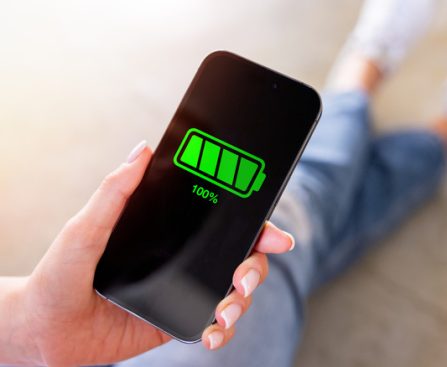
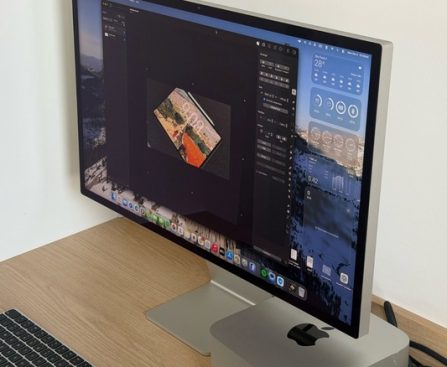
once macOS 27 is rolled out to all users. As we anticipate the forthcoming features and alterations with Apple’s next significant software update, we already have a clear idea of what is on the horizon with the closer update, macOS 26.4, featuring new emojis, enhanced battery settings, and more.

Nonetheless, beyond discussing the features that are set to arrive with macOS 26.4, it is crucial to highlight those that are absent. Some of the key functionalities of iOS 26.4 are simply not present in the most recent beta of macOS. For instance, redesigned playlists and albums (some of the new iOS 26.4 functionalities debuting in Apple Music) are missing from this macOS iteration, nor is the “Upcoming Concerts” section. Furthermore, Apple Podcasts will not be introducing the new video feature observed on iOS, which allows for HTTP Live Streaming (HLS) technology for superior video streaming quality. While these features may be included in a future software update, at this moment, they indicate an increasing divide between Apple’s platforms.
New emojis are arriving shortly

Consoles That Kids of the ’80s Used Before PlayStation and Xbox

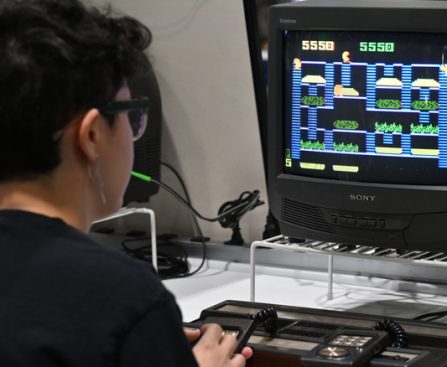
Intellivision in 1980. This 16-bit console aimed to compete with the Atari 2600 and offered improved graphics and sound, boasting a variety of unique games. Intellivision’s innovative controller featured a directional disc and numeric keypad, making it distinctively different from its competitors. Although it didn’t achieve the same level of success as Atari, it garnered a loyal following and introduced titles such as “BurgerTime,” “Dungeons & Dragons,” and “Skiing.”

The console’s marketing strategy targeted older gamers and families, distinguishing itself from the more child-centric approach of many of its rivals. Intellivision’s legacy endures today, remembered as a pioneer in the gaming industry and a symbol of early competition that helped shape the future of home consoles. Despite its limited market impact, many who experienced the Intellivision fondly recall the fun it brought to their living rooms.

ColecoVision

Released in 1982, the ColecoVision was another formidable challenger to the successful Atari 2600. With impressive arcade-quality graphics for its time, it attracted gamers with titles like “Donkey Kong” and “Zaxxon,” which translated popular arcade experiences to home consoles effectively. ColecoVision’s innovation lay in its expansion potential, allowing users to add accessories and additional modules that enhanced gameplay, making it ahead of its time.

While it enjoyed initial success, the ColecoVision also faced the brunt of the video game crash of 1983, reflecting the industry’s volatile nature. Despite this downturn, the console holds a special place in the hearts of its users who fondly remember its contribution to the evolution of video gaming and the fun shared among friends and family. Its legacy is a testament to the creativity and experimentation of the early video game era, showcasing how competition drove advancements within the industry.

The Presence and Redundancy of ‘B’ Size Batteries

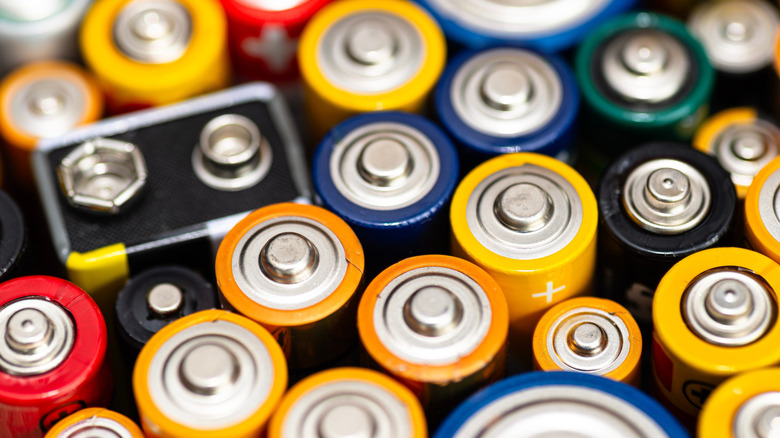
The AA battery size reigns as the most commonly utilized size around the globe, in addition to AAA. Following these are the C and D batteries. It raises the question of what became of B-size batteries. Did they ever come into being? What were their applications, and why did they fade away?

Interestingly, B-size batteries did have a presence at one time, but they became obsolete due to a lack of demand. As the battery market evolved, AA and AAA batteries gained traction for less power-hungry devices, while C and D batteries were ideal for items requiring higher power. B-size batteries, on the other hand, matched the voltage of A-size batteries but were larger, making their retention unnecessary. Nevertheless, examining the past of B-size batteries, their original purpose, and the reasons for their disappearance is quite fascinating.

The tale of B batteries

Comparison of 1980s Supercomputers and Contemporary iPhones

It’s astonishing to contemplate, but the mobile gadgets we now carry in our pockets and grasp in our hands are exponentially more powerful than some of the earliest computers — in comparison, we’re carrying around supercomputers. Those initial machines were actually room-sized, in some instances reaching from floor to ceiling. We’ve evidently made significant advancements in miniaturization through the creation of small components like transistors and microprocessors. Nevertheless, it sparks curiosity — just how much more potent is the standard smartphone?

How does an ’80s supercomputer, one of the most advanced and capable machines of its era, measure up against today’s typical iPhone? Adobe previously explored this comparison, focusing on the iPhone 12 at that time. However, it is more relevant to examine the iPhone 17 today, as it represents the latest addition to Apple’s smartphone range.

The Cray-2 was claimed to be the fastest and most powerful computer ever created by 1985, with the ability to process at 1.9 gigaflops, or 1.9 billion floating point operations per second (FLOPS). According to an assessment by NanoReview, the iPhone 17 is estimated to process around 2,073 gigaflops, or 2 trillion FLOPS (specifically 2,073,600,000,000). That means it’s over 109,000 times more powerful than the supercomputer from the ’80s. Even more astonishing is that the Cray-2 weighed over 5,500 pounds, while the iPhone 17 weighs just 6.24 ounces — more than 14,000 times lighter. Additionally, there are several smartphones that surpass the iPhone 17 in power already available on the market.

What is the comparison between the Cray-2 supercomputer and the phones of today?

We can accomplish a great deal with our phones today, particularly with the iPhone 17. Capturing photos, writing notes, calling or messaging friends and family, browsing the internet from almost any location, managing banking tasks, playing games — you name it. This far exceeds what an ’80s supercomputer could accomplish, as those machines were initially designed for specific tasks. They certainly weren’t the multifunctional Swiss Army knives that our current phones are.

The Cray-2 was mainly employed by NASA to simulate aircraft flight at the Langley Research Center. Another variant was utilized by the U.S. Departments of Defense and Energy for nuclear weapons research and oceanography applications. The sheer computing capability was primarily directed toward mathematical computations and simulations, consuming between 150 to 200 kilowatts of electricity. In contrast, the iPhone 17, 17 Pro, and 17 Pro Max all operate on 40 watts for rapid charging. There are 1,000 watts in a kilowatt, providing a clearer perspective on the power needed to operate the Cray-2. Thus, not only were those supercomputers considerably less powerful in terms of computing abilities, they also consumed an absurdly greater amount of energy.

Of course, contemporary supercomputers aren’t intended for general-purpose usage either. They’re engaged in determining potential scenarios for when all life on Earth may cease and exploring the limits of quantum computing, a completely new frontier for computers. Scientists have even achieved teleportation using quantum supercomputers. A machine like the Cray-2 could never replicate such achievements, but it certainly laid the groundwork for them.

The 4 Most Unfavorable Places to Keep a USB Drive

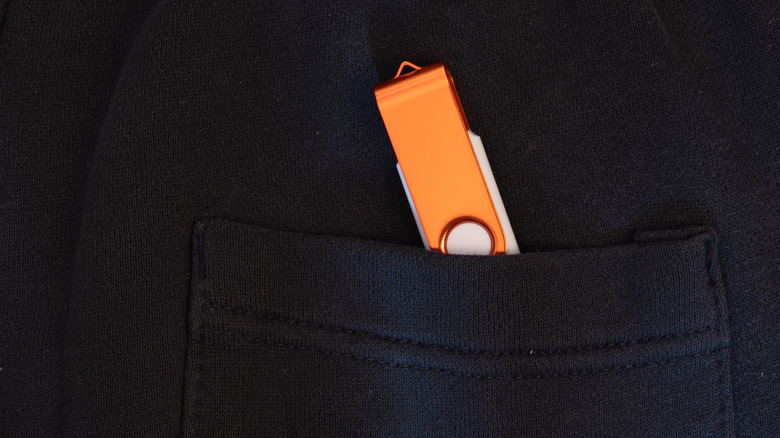
When dealing with USB drives, a frequent error is placing them in locations where they could be easily misplaced or harmed. Therefore, to ensure your data remains secure and intact on your USB drive, and to guarantee you can access it when necessary, it’s advisable to steer clear of these typical storage areas if possible.

In your pockets

Five New Categories of Devices That CBP May Inspect When Entering the US

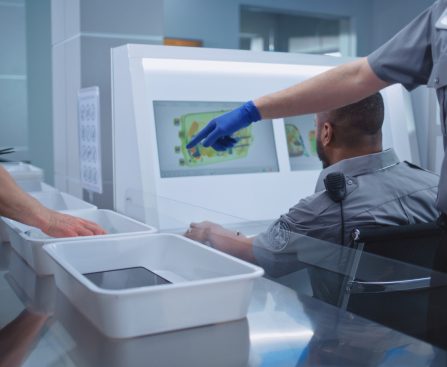
Travelers arriving in the United States need to be informed about the enhanced powers of U.S. Customs and Border Protection (CBP) to inspect electronic devices as per the newly issued directive 3340-049B. This directive, released in early January, expands the types of devices eligible for searches, now encompassing flash drives, SIM cards, smartwatches, vehicle infotainment systems, GPS units, and drones. In contrast, the previous directive 3340-049A restricted the list to computers, tablets, disks, drives, tapes, mobile phones, and other communication gadgets, cameras, music, and media players.

The addition of these extra devices signifies the increasing variety of personal data storage means that travelers might possess. Although smartphone access by CBP officers remains the same, the directive underscores the significance of smartphones, which frequently hold the most personal data.

Reports suggest a rising trend in electronic device inspections at the U.S. border. As stated by The National Post, CBP executed 55,318 searches over a 12-month period covering 2024 and 2025, reflecting a 17% rise from the preceding year. This number includes searches of devices owned by 13,590 Americans, a notable 56% increase compared to the previous year. Nevertheless, these searches account for only 0.01% of international travelers. With the directive broadening the array of searchable devices, travelers must remain aware of the possibility of their electronic devices being inspected upon arrival in the U.S.

Ranking the 15 Most Potent Desktop CPUs Based on Geekbench Score

**15 Of The Most Robust Desktop CPUs Currently Ranked By Their Geekbench Score**

In the continuously advancing realm of desktop computing, the pursuit for the most formidable CPU remains a relentless endeavor for gamers, editors, and multitaskers alike. With rising expenses for GPUs, SSDs, and memory, investing in a high-end CPU can unleash unmatched performance and guarantee your system operates seamlessly. Here, we rank the most robust desktop CPUs according to their Geekbench scores.

1. **AMD Ryzen Threadripper PRO 9985WX**
– **Cores/Threads**: 64/128
– **Geekbench Score**: 31,343
– **Price**: $7,894
– **Highlights**: Unsurpassed performance with a colossal 320MB cache. Perfect for extreme multitasking and productivity.

2. **AMD Ryzen Threadripper PRO 9975WX**
– **Cores/Threads**: 32/64
– **Geekbench Score**: 27,846
– **Price**: $3,924
– **Highlights**: Elevated base clock speed and remarkable performance for its cost.

3. **AMD Ryzen Threadripper PRO 9995WX**
– **Cores/Threads**: 96/192
– **Geekbench Score**: 27,272
– **Price**: $11,499
– **Highlights**: Excessive for most, but ideal for high-performance workstations.

4. **AMD Ryzen Threadripper 9980X**
– **Cores/Threads**: 64/128
– **Geekbench Score**: 27,228
– **Price**: $4,775
– **Highlights**: Top-tier performance with PCIe 5.0 and DDR5 compatibility.

5. **AMD Ryzen Threadripper 9970X**
– **Cores/Threads**: 32/64
– **Geekbench Score**: 27,012
– **Price**: $2,385.07
– **Highlights**: Superb for content creators due to its high thread count.

6. **AMD Ryzen Threadripper 9960X**
– **Cores/Threads**: 24/48
– **Geekbench Score**: 26,007
– **Price**: $1,499
– **Highlights**: Cost-effective high-performance CPU with future-proofing attributes.

7. **AMD Ryzen Threadripper PRO 9965WX**
– **Cores/Threads**: 24/48
– **Geekbench Score**: 25,847
– **Price**: $2,699.99
– **Highlights**: Excellent choice for professionals with outstanding memory bandwidth.

8. **AMD Ryzen Threadripper 7980X**
– **Cores/Threads**: 64/128
– **Geekbench Score**: 25,109
– **Price**: $4,499
– **Highlights**: Smooth multitasking with a substantial cache and enhanced frequency.

9. **AMD Ryzen Threadripper PRO 7985WX**
– **Cores/Threads**: 64/128
– **Geekbench Score**: 24,682
– **Price**: $7,927
– **Highlights**: High-intensity workstations reap the rewards from this capable CPU.

10. **AMD Ryzen Threadripper PRO 7995WX**
– **Cores/Threads**: 96/192
– **Geekbench Score**: 24,510
– **Price**: $8,599.99
– **Highlights**: Perfect for tasks that require CPU rendering.

11. **AMD Ryzen Threadripper 7970X**
– **Cores/Threads**: 32/64
– **Geekbench Score**: 23,771
– **Price**: $1,999.99
– **Highlights**: Excellent for demanding workstations thanks to PCIe 5.0 support.

12. **AMD Ryzen Threadripper PRO 7975WX**
– **Cores/Threads**: 32/64
– **Geekbench Score**: 23,746
– **Price**: $3,841.49
– **Highlights**: Facilitates hardware virtualization, ideal for virtual machines.

13. **AMD Ryzen Threadripper 7960X**
– **Cores/Threads**: 24/48
– **Geekbench Score**: 23,632
– **Price**: $1,199.99
– **Highlights**: High-performance cores with SMT.

The Quantity of Gold Found in a Vintage Laptop

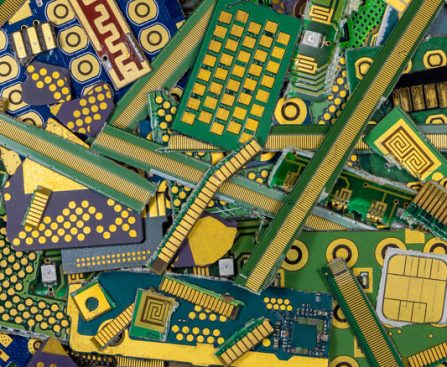
the amount of gold contained in your smartphone is likely not substantial enough to make it a worthwhile pursuit. For instance, experts on gold indicate that it would require multiple phones to extract a single gram of gold.

This raises an interesting follow-up question: How much gold can you find in your old laptop? Given that laptops are typically larger than smartphones and consist of more parts, one might anticipate a slightly higher gold content. Indeed, gold is utilized rather extensively within a computer, primarily for circuit boards, connectors, and various other contacts. However, despite its presence in several areas, the total amount of gold within a laptop remains relatively minimal and would yield little value if harvested and refined.

SD Bullion approximates that around one-fifth of a gram of gold is incorporated within the average computer, perhaps even a bit more. Laptops are generally on the smaller side of computers, and SD Bullion suggests that each one contains roughly a tenth of a gram of gold. Like smartphones, that’s not a significant amount, but could become valuable in bulk … provided you were prepared to disassemble hundreds of devices to make it economically viable. Consider the labor involved in gathering the devices, dismantling them, and then sorting and melting the materials!

What is the reason for using gold in a desktop or laptop?