Gadgets for Streaming PlayStation 5 Games

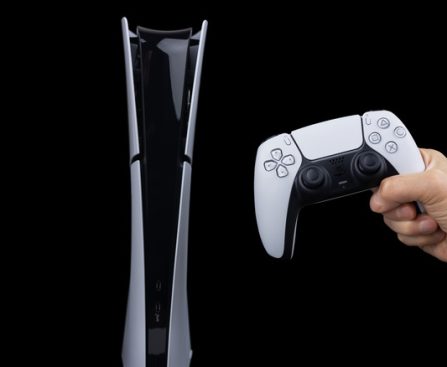
The PlayStation 5, particularly in its Pro version, offers exceptional performance capabilities. In fact, upon its release, even PC gamers noted that the value ratio of money spent to performance was quite similar to that of comparably-priced PCs. Furthermore, with the PlayStation library boasting some of the finest titles and franchises available, it truly deserves a spot in your gaming collection.

Nonetheless, one of the most effective methods to enjoy a modern console in 2026 is actually to bypass playing directly on your console altogether. Similar to Xbox, this allows for game streaming in quite unique venues, including car displays. Likewise, PlayStation games can also be accessed on various devices. PS Remote Play stands out as one of the top methods to utilize your PS5 as a remote-play device, enabling gameplay across numerous gadgets, such as a handheld PC, smartphone, tablet, or even the dedicated PlayStation Portal.

The greatest advantage of Remote Play is that it functions not only on high-performance PCs or the latest smartphones but also on lower-end devices like smart TVs or affordable tablets. All that is needed is a reliable, high-speed internet connection. Let’s delve into the top devices capable of streaming your PlayStation games.

**Your PC or PC handheld**

Utilizing a high-end gaming PC to access your PS5 remotely may appear excessive, but it’s one of the most dependable ways to gain entry to your PlayStation. Both Windows and Mac are supported by this service, although PlayStation does mandate the use of a DualShock 4 or newer first-party controller for official gameplay. However, there exists third-party software called PXPlay that can “fool” your PC into recognizing a different controller as a bona fide PlayStation controller; it is essential to mention that this isn’t officially endorsed by PlayStation.

Where this usage becomes particularly beneficial is when considering a handheld PC. With so many fans of the Steam Deck, ROG Ally, or Lenovo Legion Go, it’s only natural to want to pair it with the PS5. While the restrictions regarding DualShock or DualSense controllers still hold, utilizing the PXPlay app we previously referenced will allow the PC to identify connected controllers as compatible. This means you can access your PS5 similarly to how you would on an officially supported system. It represents a truly refreshing blend of the PC and console gaming realms.

**Your mobile phone or tablet**

If you seek an even more portable solution than a PC handheld, consider the device you likely already carry: your mobile phone. Indeed, your smartphone is perfectly capable of streaming games from the PlayStation 5 anywhere with a stable internet connection. As previously mentioned, a licensed PlayStation controller is necessary for this to function. Thankfully, there are officially sanctioned grip controllers like the PlayStation-compatible Backbone that work seamlessly, transforming your phone into a powerful gaming device.

A tablet also serves as a fantastic platform for streaming games from your console. PlayStation officially accommodates iPads running iOS 14.5 or higher and Android devices with version 10 or above, so long as (you guessed it) you can pair a PlayStation controller. Once this arrangement is established, you will possess an impressively mobile gaming configuration. iPad displays, in particular, are often regarded as some of the finest available, and the PS5 gameplay translates beautifully onto this medium.

**The PlayStation Portal**

As we discuss portable gaming for the PlayStation, it’s essential to mention the PS Portal. Although it recently gained support for streaming cloud games from the PlayStation network, it has always served as a remarkable means to “portal” into the PlayStation 5 already present in your entertainment setup. Its display provides a sharp, vibrant experience finely tuned for PS5 graphics. The accompanying controller also boasts all the features found in a first-party DualSense controller, including excellent haptics and adaptive triggers.

The straightforward software and underlying philosophy behind this device are perhaps its most intriguing elements. When it launched, some individuals dismissed its value. You cannot play games locally, nor can you store anything on it. It is solely a game-streaming device. While this may seem limiting, it actually ensures the device is entirely focused on granting access to your PlayStation. No distractions from other apps, no unnecessary software to hinder performance. It serves a single-use function that might not suit everyone, but if you desire a premium remote-play experience, it’s worth a try.

**Some Android TVs and streaming devices**

Remote play for any console might be most naturally suited for a mobile format, allowing for gameplay on the move. However, there is a compelling argument for expanding remote play to another couch-friendly device. Imagine your PlayStation
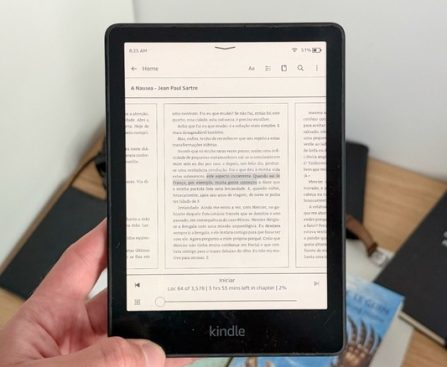
Going back to the Home Screen on Your Kindle

When I first received my Kindle Paperwhite, I spent a considerable amount of time figuring out how to navigate back to the Home Screen after diving into a book. To do this from an open book page, tap near the clock on your Kindle, and then select “Home” from the upper left corner.

In contrast to smartphones and tablets, which have more intuitive interfaces, Kindles do not utilize a swipe up gesture to return to the Home Screen, nor do they include a physical Home Button. While it’s true that once you start reading a book, you might not want to put it down until you’ve finished, it still feels a bit odd that the easiest method to get back to the Home Screen on a Kindle necessitates two taps. However, if you’re browsing the Kindle Store, you can simply hit the “X” button located in the top right corner, which also takes you directly to the Home Screen, allowing you to explore titles from your library, Amazon’s recommendations, and more.

Gestures and additional tips and tricks for using your Kindle

Reasons to Secure Your Files Before Uploading to the Cloud

add end-to-end encryption for your iCloud backups, for instance. However, prior to uploading the associated files, it is advisable to encrypt them yourself locally with a security tool.

Consider it like this. You may have a deadbolt on the main entrance to your home, but adding a chain or a latch at the top enhances security even further. That additional lock is similar to the personal encryption you would implement before uploading data. If someone attempts to force open the door with just a deadbolt secured, it might give way, but with added locks providing reinforcement, that brute force effort is less likely to succeed.

Which files should you encrypt for an additional layer of protection?

Smartwatch Function That Rapidly Depletes Battery Life

smartwatches that operate for days, even weeks on a single charge. Some can endure nearly an endless duration, at least for months, when consistently exposed to sunlight or a potent light source through solar energy. However, with any smartwatch, even those that outperform others in battery longevity under normal usage, there’s one characteristic that rapidly consumes battery life: built-in GPS. Utilizing this function will significantly affect battery duration, as indicated in the specifications for any design that includes it. The more you utilize it for walking, running, cycling, hiking, or even for navigation to a location, the quicker the battery will deplete.

You can adjust your expectations, naturally, being aware that if you run every morning, you’ll probably need to recharge your smartwatch more frequently than the specifications imply. If you’re employing it to find your way on a biking excursion, the same observation applies. Some models are more efficient than others at preserving battery life, even with this feature in use.

How GPS operates in a smartwatch

The Explanation for Why Rockets Trace a Curved Path Rather Than Ascending Vertically During Launch

At various times in your life, you have likely observed a rocket taking off vertically into the heavens. You may have even seen Artemis II’s Orion spacecraft swiftly ascend to space, initiating NASA’s most significant mission in decades. However, you may have also observed that, following liftoff, the rocket does not remain upright. As the spacecraft ascends, it starts to arc, giving the impression of flying horizontally, parallel to the Earth. This might seem counterintuitive for a vessel aimed at escaping the atmosphere and venturing into outer space, but it is actually a crucial aspect of a rocket’s voyage. And it involves fuel.

Rockets, similar to other aerial vehicles, contend with gravity. They require maximum thrust for their initial ascent, which is why they begin in a vertical position. Nevertheless, this also leads to a substantial consumption of fuel. Maintaining that stance for an extended period would deplete their reserves and cause them to plummet back to Earth. Such an event would be catastrophic for both the crew and anyone unlucky enough to be at the crash location, hence rockets must curve to conserve fuel, combat gravity, and attain orbit.

Rockets employ a gravity turn to achieve orbit

Once they penetrate through the densest layers of the atmosphere where gravity is most potent, rockets curve to harness it to their advantage. This is referred to as a gravity turn. It is vital to understand that the Earth’s gravity pulls objects towards its core, not merely downward. By tilting until the denser side is oriented towards the ground, rockets can enhance their acceleration by utilizing gravity rather than relying solely on fuel to reach orbit.

In technical terms, orbit is achieved when the spacecraft’s horizontal acceleration and the gravitational pull equate, essentially falling without making contact with the ground. For numerous missions, that is the objective. However, for Artemis II, which transported astronauts to the moon for the first time in over half a century, Orion required an additional maneuver known as the translunar injection burn to escape Earth’s gravity and enter deep space. Subsequently, the spacecraft utilized the moon’s gravity to adjust its course back to Earth, enabling the four Artemis II crew members to return home safely with vibrant new findings.

“Explore 4 Key Brands and Applications Under Sony’s Ownership”

audiophiles who reminisce about certain discontinued models such as the Audeze Sine.

Although Audeze acknowledges its affiliation with Sony broadly, it functions independently, making the link easy to overlook, even if you have a pair of these headphones. After the acquisition in 2023, Sony launched a set of its own branded headphones incorporating Audeze’s magnetic planar driver technology, the PlayStation Pulse Elite.

<div class="

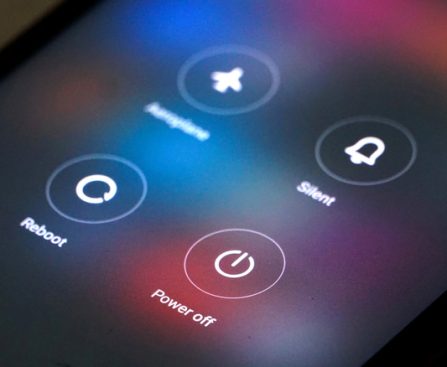
Contrasting Power Off and Restart: Best Option for Your Android Device

the frequency with which you ought to clean your phone is determined by your individual requirements; similarly, the necessity to reboot a smartphone varies from user to user. Most specialists advise performing this at least periodically if you wish to keep your phone functioning for an extended period or are experiencing sluggish performance.

When is the right time to turn off your phone?

According to What Car?, This Brand Holds the Title for the Most Dependable EV

“`html
electric vehicles can lose value and repairing them can be both difficult and costly; therefore, anyone considering an EV should conduct some reliability research before fully embracing the electric lifestyle. Fortunately, the well-established U.K. car-buying brand and magazine What Car? releases an annual, detailed survey of the most dependable vehicles, which includes electric cars and SUVs, and for 2025, two BMW models topped the EV ranking.

This survey, carried out in partnership with MotorEasy, a U.K. car-management and protection service, gathers insights from 32,493 owners over the last 24 months. The 2025 assessment featured 46 fully electric models (along with 27 electric SUVs), covering vehicles up to five years old.

With the survey findings, What Car? developed a ranking focusing on overall reliability, frequent issues, average repair costs, and additional metrics. BMW dominated the electric rankings, with the i3 and i4 claiming the first and second positions respectively. Let’s explore why BMW electric vehicles are so reliable, as well as review the remainder of the list.

Reasons for BMW’s top position

Both BMW models achieved exceptional reliability ratings, with the i3 earning a 97.4% and the i4 not far behind at 96.8%. The most notable figure was repair expenses: 100% of surveyed owners indicated they incurred no repair costs at all. This suggests they either experienced no problems needing repairs or that any repairs were entirely covered by BMW. However, there is a slightly concerning aspect regarding the no-cost repairs for the i3; for half of the reported repairs, the i3 was unavailable for a week or longer. This may partly be due to BMW halting production of the i3 in 2022, making replacement parts harder to obtain.

In contrast, the i4, the electric counterpart of the BMW 4 Series Gran Coupé, remains in production, with only 16% of the i4s in What Car?’s survey reporting any issues. Repairs were generally quicker, with 67% addressed in a day or less, and just 25% at the dealership for more than a week. Though it’s not a reliability measure, the i4 surpassed its stated range in a test by Consumer Reports, particularly impressive considering that some EVs fell short by 50 miles or more.

BMW has a natural advantage in the EV sector stemming from extensive experience. The brand has not only been manufacturing premium vehicles for many years, but has also been in the EV arena longer than most conventional manufacturers and electric-only startups. The i3 started production in 2013, and the company’s first production EV, the Mini E, began testing in 2008. Indeed, BMW’s electric heritage traces back to 1972, when it developed a prototype electric vehicle known as the BMW 1602 Electric for the Munich Olympics.

The remainder of the ranking