iPhone 18 Pro Anticipated to Showcase Major Camera Enhancements, According to Report

**iPhone 18 Pro and Pro Max: Expected Camera Improvements**

The iPhone 18 Pro and Pro Max are scheduled for release this autumn, heralding notable advancements, especially in camera capabilities. Recent reports suggest that these models will boast some of the most significant camera hardware enhancements seen in the iPhone series.

### Key Camera Hardware Improvements

Fresh information from Bloomberg reveals that the forthcoming iPhone models will include a new ‘Siri’ mode within the Camera application, tapping into advanced visual intelligence features. This new option is anticipated to work in tandem with the hardware upgrades, enriching the photographic experience for users.

### Adjustable Aperture Feature

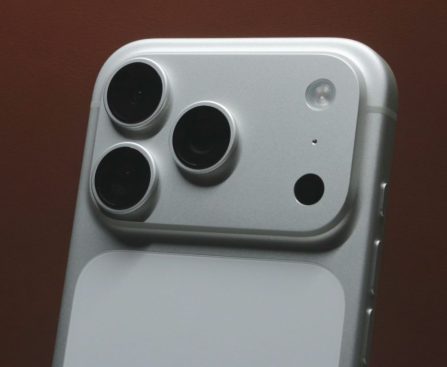
One of the most thrilling speculated upgrades is the arrival of an adjustable aperture feature for the primary camera. This breakthrough would enable users to modify focus and depth of field, potentially transforming the way photography is accomplished on smartphones. Moreover, the Telephoto camera is also expected to gain a larger aperture, which would enhance low-light capabilities and overall image clarity.

### Expected New Features

Though precise information about the upcoming camera features is still scarce, the buzz around these enhancements indicates that Apple is gearing up to redefine smartphone photography. The fusion of hardware gains and software improvements in iOS 27 could result in a more user-friendly and robust camera system.

### Conclusion

As the launch date nears, excitement rises for the iPhone 18 Pro and Pro Max. With pledges of revolutionary camera technology and creative features, these devices are positioned to establish new benchmarks in mobile photography. Users are keen to discover how these enhancements will enrich their photographic endeavors and what innovations Apple might reveal.

How to View Formula 1’s Miami Grand Prix on Apple TV

Apple TV serves as the destination for Formula 1 races for viewers in the US, and this weekend F1 heads to the US for the Miami Grand Prix—here’s the way to watch.

## Information on F1’s Miami Grand Prix, streaming this weekend on Apple TV

Apple TV is now the streaming hub for F1 in the US, meaning that Apple TV and Apple One subscribers enjoy full access to everything Formula 1 without any extra charges. This weekend marks the initial US race of the season.

You can sign up for Apple TV to view the F1 Miami Grand Prix as well as all upcoming races.

The major race is set for **this Sunday, May 3 starting at 4 p.m. ET / 1 p.m. PT**.

Here’s the agenda for this weekend’s additional coverage:
– Practice: Friday, May 1 at 12 p.m. ET
– Sprint Qualifying: Friday, May 1 at 4:30 p.m. ET
– Sprint: Saturday, May 2 at 12 p.m. ET
– Qualifying: Saturday, May 2 at 4 p.m. ET

You can tune in via the Apple TV app on iPhone, iPad, Mac, Apple TV 4K, Vision Pro, Android devices, or any smart TV or other platform that supports Apple TV, such as Prime Video and Roku. You can also watch online.

Indeed, you **don’t** have to possess an Apple device to enjoy Formula 1 on Apple TV.

Apple further provides various ways to keep up with the action:
– Apple Maps has recently introduced an extensive Miami experience
– Apple’s Sports app allows you to monitor drivers’ performances
– Apple News will provide exclusive coverage from Miami
– Apple Music showcases Miami-themed playlists

The race this weekend will also be broadcast live in Times Square, New York City.

Apple TV is priced at $12.99 per month, or you can get a reduced rate through the Apple One bundle.

Thorough Examination: Investigating the Motorola Razr 2026 Line with a Distinctive Variant

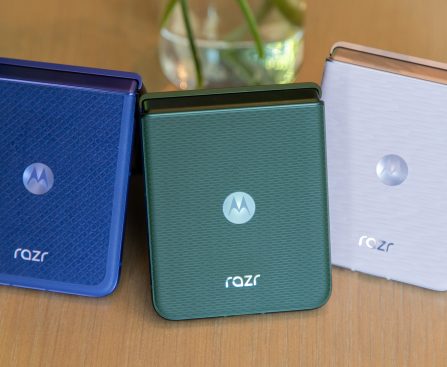
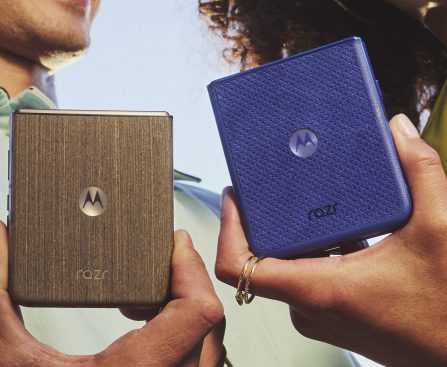
The Motorola Razr 2026 lineup has been revealed, but it appears to be more of an enhancement of last year’s models rather than a revolutionary change. Although there are a few exciting new additions, the series has fallen victim to the persistent RAM crisis that has impacted the tech sector worldwide. The Razr 2026 lineup holds onto many components from the Razr 2025 series, featuring just a handful of upgrades, such as a boost in battery capacity thanks to new silicon-carbon batteries. The choice to use older processors, like the Snapdragon 8 Elite instead of the latest Snapdragon 8 Elite Gen 5, was likely intended to avoid soaring prices in light of the RAM crisis.

The series features the standard Razr 2026, Razr Plus, and Razr Ultra, each offering different color options and minor variations in features. The Razr Plus 2026, for example, retains the same Snapdragon 8s Gen 3 chip as its previous version, despite an increase in price. The Razr Ultra 2026, which has a price tag of $1,499, also continues with the older Snapdragon 8 Elite chip, which Motorola asserts suffices for the device’s requirements.

In spite of the absence of major internal upgrades, the series brings some new additions, including video wallpapers and Android’s Live Updates for the cover display. The primary camera on the Ultra model has been enhanced with a 50MP LOFIC sensor, promising improved dynamic range and energy efficiency. Moreover, Motorola has rolled out features such as Camcorder mode and Frame Match to elevate the user experience.

In summary, while the Razr 2026 series presents some enhancements, the absence of significant modifications and the repercussions of the RAM crisis make it hard to rationalize the higher prices. Nevertheless, the launch of the new Razr Fold model, with its cutting-edge features and competitive pricing, could be the standout of Motorola’s 2026 collection.

Moto Buds 2 Plus: Bose Sound and AI Capabilities in a $150 Bundle

These Motorola earbuds have everything needed, except a solid reason to purchase them right now.

Motorola has introduced the Moto Buds 2 Plus, which are priced at $150 in North America. The buds are distinguished by Bose-tuned sound and a dual-driver arrangement (11mm dynamic + Knowles armatures) for enhanced bass and sharper highs. Bluetooth 6.0 allows for dual-device switching, but its true advantages are limited until additional devices adopt it.

The wireless earbud market is filled with similar designs and grand claims that frequently do not deliver. To set themselves apart, companies might need to provide more than just decent audio and a recognizable brand. Motorola is targeting the premium market with its latest Moto Buds 2 Plus.

Set to be available on the Motorola website in North America starting April 30 for $150, these earbuds strive to overcome hardware constraints by integrating advanced audio technology with strong on-device AI.

Examining the acoustic components, typical single drivers often struggle to distinguish deep bass from clear highs. These earbuds come with an audio profile crafted in collaboration with Bose. Internally, they utilize dual 11mm dynamic drivers for potent bass and balanced armatures from Knowles for accurate, clear treble.

This dual-driver configuration is essential for producing clear, high-resolution audio without distortion. Motorola also supports LHDC (both LHDC4 and LHDC5), in addition to the standard AAC and SBC codecs. With Spatial Audio incorporated, these specifications are remarkable for the cost.

Sophisticated noise management

To help you stay aware of your environment, the earbuds feature Dynamic Active Noise Cancellation and a standard Transparency Mode. If you need to answer a call in a loud environment, six integrated microphones employ Environmental Noise Cancellation and a high signal-to-noise ratio to minimize background sounds. The Moto Buds app also offers a CrystalTalk AI functionality that uses advanced noise reduction to enhance your voice clarity.

Regarding specifications, the earbuds are equipped with Bluetooth 6.0, enabling seamless Dual Connection auto-switching. This allows for a quick transition from a call on your laptop back to your phone.

Additionally, there is an Audio Share feature, allowing two pairs of Moto Buds 2 Plus to connect to the same device simultaneously. The earbuds provide up to 9 hours of playback on a single charge, while the case amplifies total battery life to 40 hours. If the battery depletes, a 10-minute charge provides another two hours of listening.

The earbuds hold an IP54 rating for dust and moisture resistance, whereas the charging case only has an IPX2 rating.

The primary distinction, however, lies in the software. When paired with a compatible Motorola device, pressing and holding the earbuds activates “Moto AI.” This does more than initiate a digital assistant. Features include “Catch me up” for notification summaries, “Pay attention” to record, transcribe, or summarize meetings hands-free, and “Remember this” to store and retrieve details later. AI-driven translation can also be used directly in your ear.

Android Central’s Perspective

Motorola’s latest earbuds present many practical features and come in a Pantone Silhouette finish, challenging rivals with higher price points. However, Motorola must convince consumers to invest in Bluetooth 6.0 before it becomes extensively beneficial. The new standard is expected to reduce power consumption and perform better with other wireless signals, but these advantages won’t be realized until more devices support it. For the time being, the earbuds’ success relies on their audio quality and noise cancellation. With Bose and Knowles involved, that might suffice.