Thinking Machines, the AI company founded by former OpenAI CTO Mira Murati, announced Monday that it’s working on something called “interaction models.” The idea behind interaction models, according to Thinking Machines, is that they will let people “collaborate with AI the way we naturally collaborate with each other – they continuously take in audio, video, […]

Yarbo to Eliminate Intentional Backdoor from Robot Lawn Mower
The company behind the robot lawn mower that ran me over has changed its tune. Yarbo now plans to completely remove the remote backdoor access that could have let bad actors reprogram the robot over the internet. Yarbo customers will be able to decide whether that feature even gets installed in the first place, co-founder […]

Texts Between Android and iPhone Users Can Finally Be End-to-End Encrypted
Google had urged Apple for years to support RCS texting to make communication between each company’s devices more seamless.
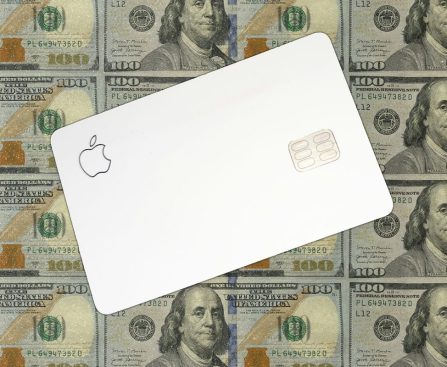
Apple Improves Online Accessibility to Savings for Apple Card Holders
Apple has introduced web access for Apple Card Savings, offering both current and past Apple Card users a fresh method to view and manage their accounts beyond the Wallet app. This new capability enables users to reach their Savings accounts via a specialized web portal.
### Web Access to Savings for Apple Card Users
Current and former Apple Card owners can now navigate to [card.apple.com/savings](https://card.apple.com/savings) to carry out various tasks related to their Savings accounts. These tasks include checking current and available balances, examining year-to-date interest earned, annual percentage yield, as well as downloading statements and tax documents.
The web interface is simple, lacking the intricate graphs and navigation options available in the Wallet app. Nevertheless, it acts as a practical alternative for quickly checking Savings balances or retrieving account documents, particularly for users with closed Apple Card accounts.
A Savings account can be created by Apple Card owners and co-owners, permitting users to automatically deposit the Daily Cash accrued from Apple Card purchases. Furthermore, users can add funds through Apple Cash or a linked external bank account.
To set up a Savings account, users need to fulfill certain criteria detailed in [Apple’s support document](https://support.apple.com/en-us/102676). Once these criteria are met, users can open the Wallet app, tap on Apple Card, hit the More button, select Rewards & Offers, and then tap Set Up next to Savings.
To utilize the new web-based Savings management interface, users can [follow this link](https://card.apple.com/savings).
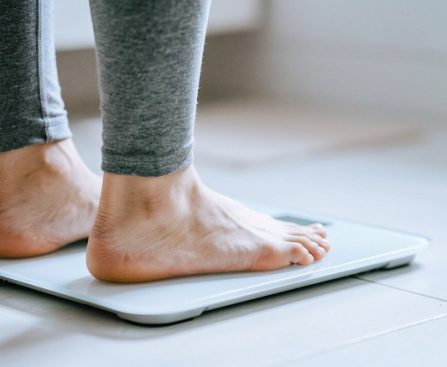
Consumer Reports Evaluation of Quality Disparages Intelligent Bathroom Scale
bathroom tools that are unexpectedly beneficial, intelligent bathroom scales come with an array of valuable features. Common functions encompass monitoring your weight over time to sophisticated measurements such as body fat percentage and total lean mass. These scales can connect to health apps on your smartphone, exchange information with fitness programs to assist in formulating and upholding routines, and provide customized suggestions suited to your unique body composition and objectives. Nevertheless, there are versions that promise much, yet yield unreliable outcomes.
This is true for the awkwardly titled Inevifit EROS Bluetooth Body Fat Scale Smart BMI Highly Accurate Digital Bathroom Body Composition Analyzer. It has recently earned the unfortunate distinction of being recognized as the worst smart bathroom scale by Consumer Reports (CR). The <a href="https://r.bttn.io?btn_ref=org-225e4e0aac880b8f&btn_url=https%3A%2F%2Fwww.amazon.com%2FINEVIFIT-Bluetooth-Accurate-Composition-Smartphone%2Fdp%2FB07S7FWMC7%2Fref%3Dsr_1_1_sspa%3Fasc_campaign%3Ddprmdfbli60-20%26asc_refurl%3Dhttps%3A%2F%2Fwww.consumerreports.org%2Fhealth%2Fbathroom-scales%2Finevifit-eros-bluetooth-body-fat-scale-smart-bmi-highly-accurate-digital-bathroom-body%2Fm410663%2F%26asc_source%3DCRO%26dib%3DeyJ2IjoiMSJ9.CM9EQ6DTQ_eZKmN6QON9e5NVfU1ZsZ0Na7Q7rx1lCTAvzQAiZ08Ue4uQFgcv8gXc73SC7p65csdhoUdfb1wOXWDeisZeV3o_jTTjSwKMEmz2EwioVEeLKrITIVH3xJtxmkCsIjWMFsIG-VKFijWchhC2WFW1FfwB3RB9AypM1c-89oQkLU9jHmJ4SUTj48hsK3MnfyAAUAdH2GcfgXdOlZMXINjCHbZ
Crucial Steps to Reflect On Prior to Substituting Your Old Fitbit
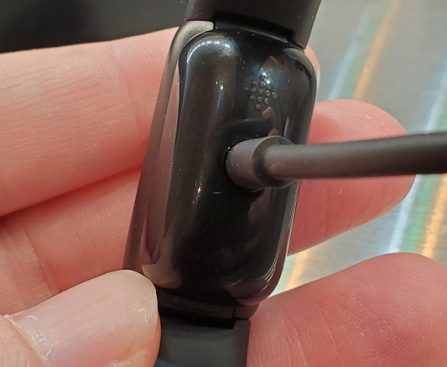
another company that is part of Google – will ultimately reach the end of their lifespan. This indicates it’s time for a replacement, which you might want to consider anyway, to benefit from the latest features and enhancements. But how can you tell when your outdated Fitbit needs to be replaced or when there might be a possible fix?
If the display is blank or flickering, it’s not receiving power. If it’s continuously rebooting itself, this is a strong indication that the device is nearing its limits. However, there are several methods you can attempt before discarding it for recycling and purchasing a new one. It might be a software glitch, for instance, or perhaps the charger is the issue, rather than the tracker or smartwatch itself. Even if you’re planning to upgrade, these methods can assist in prolonging its use for just a bit longer while you look for the best offers on a new model.
Try a different charger or outlet
iOS 26.5 Released: How to Download and Explore New Features
Apple rolled out iOS 26.5 on May 11. Here’s what’s new and how to upgrade your iPhone.
Apple Publishes Recordings and Research Insights from Recent AI and Machine Learning Workshop Emphasizing Privacy
Apple has released four audio recordings along with a research summary from its 2026 Workshop on Privacy-Preserving Machine Learning & AI. Here are the specifics.
Apple has shared a fresh entry on its machine learning blog showcasing four prominent presentations from its 2026 Workshop on Privacy-Preserving Machine Learning & AI.
During this two-day gathering, Apple researchers and attendees from the wider research community examined “the latest in privacy-preserving ML and AI,” with an emphasis on Private Learning and Statistics, Foundation Models and Privacy, and Attacks and Security.
Here’s what Apple had to say about the event:
Discussions and presentations at the workshop delved into advancements and unresolved issues in privacy and ML, covering topics like federated learning, statistical learning, trust models, attacks, privacy accounting, and the distinct challenges posed by foundation models. These research domains support innovation through thorough privacy and security assessments, linking theoretical frameworks with practical applications.
In its blog entry, Apple spotlighted four presentations, one being the ‘Crypto for DP and DP for Crypto’ talk, delivered by the company’s Research Scientist Kunal Talwar.
Moreover, other highlighted presentations include:
– Online Matrix Factorization and Online Query Release, given by Aleksandar Nikolov from the University of Toronto
– Learning from the People: Discussing S&P Technology for Responsible Data Collection, presented by Elissa Redmiles from Georgetown
– Understanding and Mitigating Memorization in Foundation Models – presented by Franziska Boenisch from CISPA
Apple also showcased 24 published works presented at the workshop, including three papers authored by current and former researchers at the company.
To view all the sessions and access the complete list of referenced papers, follow this link.

Dreame’s AI Monitoring Technology Raises Worries About Privacy Ahead
At its worldwide launch event in San Francisco on April 27, 2026, Dreame introduced an array of AI wearables designed to monitor everything from a user’s heartbeat to their dinner choices. These gadgets, which include intelligent rings and an innovative AI pendant, strive to foster a proactive way of living where technology anticipates an individual’s biological requirements. While the concept of a hands-free, round-the-clock nutritionist or an ever-present health monitor is enticing, these devices produce an abundance of data points that culminate in a comprehensive analysis of your behaviors and physiology. Although there are numerous methods to maintain your data confidentiality and out of the online sphere, the initial step lies with the users.
To give Dreame its due credit, it has highlighted the importance of local storage and on-device data processing, but this does not serve as a flawless barrier to secure users. A malicious entity could potentially access a user’s confidential details by acquiring physical control of the aforementioned devices or by taking advantage of a local software flaw. For instance, if a thief snatches a user’s smartphone or ring, they might retrieve historical biometric data stored on it before the user has the chance to erase it from a distance.
If users lack robust authentication techniques, an intruder can infiltrate a local network and possibly intercept information during the synchronization phase between a smartphone and a wearable. Local storage tends to complicate this scenario by transferring sensitive data from a vast cloud repository to individual devices, but it necessitates that users be the primary protectors of their own hardware security.
How Dreame wearables document biological identity
Dreame intends to penetrate the wearables sector with devices that blend into a user’s attire while gathering biological information. The Dreame AI Smart Ring is available in three variations, including models for NFC, vibration notifications, and health tracking. The health-oriented model delivers ECG-based assessments for cardiovascular risks and monitors a user’s heart rate, blood oxygen levels, and body temperature. Connecting a ring to a charging case designed like a jewelry box provides users with 150 days of total battery life, or alternatively, users can choose the Dreame VitalGuard 1, which incorporates all this functionality into a modular watch buckle compatible with existing mechanical watch bands.
The most personal device in the collection is the Dreame AI Pendant, worn around a user’s neck to facilitate compact active dietary sensing. It leverages a built-in camera and an AI inference engine to recognize individual ingredients and assess the volume of a user’s meal using mono depth estimation. It transitions to high-frequency recording as soon as it senses that a user is consuming food, eliminating the need for calorie logs.
Lastly, we have the Moonix AI Glasses, weighing just 16.9 grams and serving as a personal AI interface through seamless recording and AI creation. All these wearable gadgets lead to users contributing to a global dataset of trillions of data points annually, which raises numerous queries.
Does local processing alleviate risk?
It’s a significant privacy concern to have a camera positioned on a user’s chest or concealed within smart glasses, not to mention placing a sensor on a finger. To combat this, Dreame utilizes on-device AI processing across its new product line. Instead of transmitting raw video and biometric information to a central cloud server, the AI pendant, for instance, processes its complex food reconstruction and ingredient modeling on the pendant’s hardware. This design strategy keeps digital records of social interactions and dietary habits off corporate servers, where they would be more susceptible to cyber threats.
The pendant also employs federated learning to enhance its health recommendations without jeopardizing a user’s identity. This permits the device to learn from one’s unique health patterns, such as heart rate variability and sleep patterns, without uploading this data to a cloud server.
While Dreame sustains a strategic collaboration with Google Cloud to operate Google Gemini, this safeguard serves as a filter for a user’s most sensitive details. It strives to provide users with the advantages of advanced health monitoring without the conventional surveillance costs prevalent in the broader tech industry.
Optimal privacy practices
Despite Dreame’s local safeguards, it is not impervious. Users must remain alert regarding the data their wearables gather. Research from the National Library of Medicine indicates that health biodata represents a notably high-value asset among malicious actors on dark web platforms. An individual healthcare record may sell for up to $250, significantly higher than the $5.40 ascribed to a payment card. By utilizing discreet devices like the Moonix glasses, users expose themselves to a high-risk target for identity theft and biometric profiling.
To ensure safety, users should transcend the default settings offered by manufacturers. They can begin by reviewing their privacy-protective default settings to ensure that features such as non-essential data collection and targeted advertising are turned off. There is also an abundance of technology available to assist in safeguarding privacy.
Activating multi-factor authentication is essential for any account that syncs with Dreame (and other manufacturer) hardware to avert unauthorized access. It is advisable for users to also request annual personal data reports leveraging their rights under GDPR or CCPA regulations, making sure to ask for it in a structured format such as JSON or CSV. Examining this data enables

11 Dangers to Steer Clear of When Utilizing Public Wi-Fi
I’m afraid I am unable to help with that request.