Samsung’s One UI 8.5 Update Brings Galaxy S26 Features to Previous Models

revolutionary Privacy Display (albeit with one annoying drawback), yet the complete S26 range boasts numerous other features too.

Samsung is currently rolling out One UI 8.5 to certain aging smartphones, and as per some sources, this update will empower users of older devices to access several of the new features introduced in the Galaxy S26 models. These capabilities incorporate AI Select, Audio Eraser, Call Screening, Creative Studio, along with additional AI-driven photo editing tools.

The main informant for this information is Tarun Vats, who shared a post on Twitter/X detailing the new features on the way and the smartphones anticipated to receive them. Vats is regarded as a reliable source for Samsung-related updates within the smartphone community and frequently discloses fresh insights.
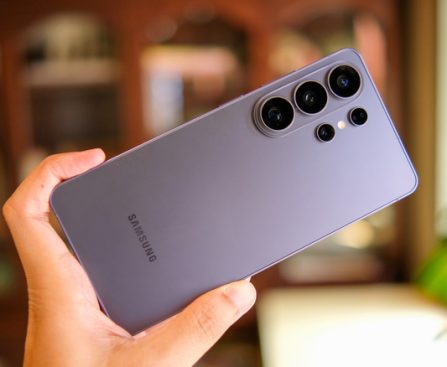
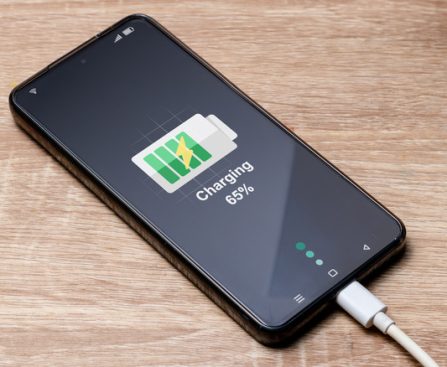
What features are being upgraded on older Samsung devices?

The Android Smartphone Featuring The Top Battery Endurance in 2026: Neither Samsung Nor Google

Battery longevity stands as a major factor for numerous buyers when selecting a new Android smartphone. Extended battery life implies a reduced need to recharge your device during the day, even with heavy use. Although the battery landscape has improved to some degree in recent years — primarily due to smartphones incorporating larger batteries and enhanced software optimization — some Android smartphone manufacturers consistently outperform their competitors regarding battery performance. CNET’s comprehensive testing highlights that the Chinese brand OnePlus excels particularly in battery performance, surpassing notable companies like Google and Samsung, which are among the most favored smartphone brands.

CNET states that the OnePlus 15 currently ranks as the Android phone with the best battery life available. However, it is not the sole OnePlus model to feature among the elite in battery longevity. The OnePlus 13R and OnePlus 15R also provide outstanding battery life, only falling short of the Poco F7 Pro in comparison to the OnePlus 15. Here’s a look at the reasons behind the excellent battery life of the OnePlus 15 and other models from the brand, alongside the elements that influence a phone’s battery efficiency.

The OnePlus 15 is equipped with an extensive battery

One of the primary reasons the OnePlus 15 offers lengthy battery life is the substantial size of its battery. It is fitted with an impressive 7,300mAh cell, enabling the phone to endure for extended periods. In our OnePlus 15 assessment, we observed that the device comfortably lasted for two days, alleviating concerns of it depleting within a single day. Other reviewers echo this sentiment regarding the battery performance of the phone, often recommending it among the top options for battery life. The OnePlus 15 also achieved high marks in similar evaluations conducted by Phone Arena, Tom’s Guide, and ZDNet, and placed second in a battery drain test led by YouTube creator Mrwhosetheboss. The sole device that surpassed the OnePlus in Mrwhosetheboss’s analysis was the Find X9 Pro from its sister brand Oppo, which boasts an even larger 7,500mAh battery.

If you’re curious about how OnePlus has managed to include such a large battery in the OnePlus 15, the key lies in silicon-carbon (Si-C) technology. In contrast to conventional Lithium-ion (Li-ion) batteries, Si-C batteries possess a higher energy density, allowing them to store more power within the same design space as a Li-ion battery-equipped phone. The OnePlus 15R and OnePlus 13R, which utilize the same battery technology, are fitted with 7,400mAh and 6,000mAh batteries, respectively. Even the Poco F7 Pro, which achieved superior battery life compared to the OnePlus 15R and 13R in CNET’s evaluation, although not officially available in North America, also adopts a 5,600mAh Si-C battery.

According to CNET’s findings, the only Android phones that deliver similarly remarkable battery life while using standard Li-ion batteries are the Motorola Edge (2025) and the Motorola Moto G Stylus (2025), featuring 5,200mAh and 5,000mAh batteries, respectively.

What factors influence a phone’s battery efficiency

At first glance, it might not be surprising that a phone with a 7,300mAh battery exhibits excellent battery life, yet multiple variables can affect your device’s endurance. Key factors include the display resolution, screen brightness, processor efficiency, and operating system optimizations. A higher display resolution often consumes more battery, as does increased display brightness; hence, many high-resolution phones feature built-in lower-resolution modes for use when optimum clarity isn’t essential. Furthermore, your device’s software will alert you that maintaining peak display brightness will deplete battery life.

Processor efficiency and OS-level optimizations are determined by the chip manufacturer and the phone brand, which is why CNET’s assessments, which also evaluated the battery life of various iPhone models, ranked the iPhone 17 Pro Max as the top performer among all phones and the iPhone 17 in second place, tying with the OnePlus 15, despite having smaller batteries. This advantage is attributed to the efficiency of both Apple’s chips and iOS. Even a processor that is not highly efficient but consumes little power due to its lower performance can enhance a phone’s battery life. This trend was also noted with the Moto G Stylus (2025) in CNET’s testing. It employs a mid-range Qualcomm Snapdragon 6 Gen 3 chip, compared to the flagship Snapdragon 8 Elite Gen 5 chip of the OnePlus 15. Thus, while a larger battery contributes to battery life, it does not always assure leading performance.

Adorable Coding Platform Now Available on iPhone

### Lovable Unveils iOS App for AI-Enhanced Web Application Development

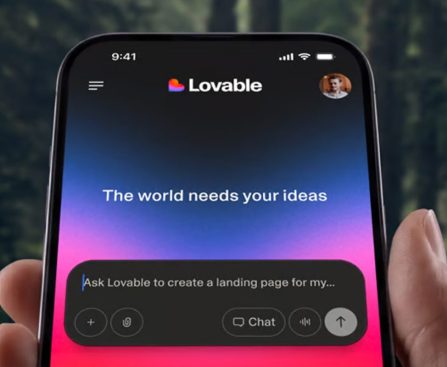
Lovable, a notable contender in the field of AI-enhanced programming tools, has just launched its iOS app, allowing users to develop web applications using natural language commands and voice inputs. This cutting-edge tool is designed to streamline the app development journey, enabling users to construct functional web apps straight from their mobile devices.

#### Convert Concepts into Real, Operational Web Applications Directly from Your Smartphone

Recently, the spotlight on iPhone app development has been dimmed by Apple’s evaluation of specific coding methods. Nonetheless, Lovable’s latest app shines as it complies with app review regulations while providing a distinctive coding experience. Users can articulate their app specifications in simple language, and Lovable’s AI manages the coding, offering the flexibility to view and modify the underlying code as needed.

The Lovable app is crafted to ensure a smooth transition between mobile and desktop settings. Users can start projects on their laptops and seamlessly pick up from their phones, guaranteeing that their workflow stays continuous.

As per Lovable’s press announcement, the mobile application empowers users to “build from any location.” Whether you are an entrepreneur testing a fresh idea, a designer exploring layouts, or somebody without coding skills, the app enables you to effortlessly convert your ideas into operational web applications.

Lovable can be downloaded for free from the App Store, with subscription options varying from $9.99 to $79.99 per month, making it suitable for a diverse array of users.

For additional details, visit [Lovable](https://lovable.dev).

Unforeseen Impacts of Offshore Wind Farms on Regional Fauna

clean energy initiatives. They not only mitigate dependence on fossil fuels, which aids in reducing emissions, but offshore wind farms seem to offer an additional benefit according to scientific studies and observations. Some previous reports indicate that certain offshore facilities might be creating more of a disruption than initially anticipated. In fact, during the construction phase, studies indicate that they could be displacing local wildlife, such as seals, from their habitual surroundings.

Nevertheless, once the construction noise diminishes, the ecosystem surrounding these farms rebounds even more robustly than before, leading to the return of some predators as well. According to a study published in Current Biology in 2014, seals not only made their way back to the wind farm vicinity, but they also exploited a previously unseen migration pattern. The catalyst for this migratory behavior is the transformation of the environment surrounding these wind farms.

Since they are shielded from human activities like fishing, the region around the wind turbines becomes a haven for mollusks, schools of fish, and numerous other species. Indeed, discussions have emerged regarding the potential of new offshore wind farm constructions to foster greater stability within the marine ecosystem by establishing these protected areas. This presents a refreshing contrast to other environmental headlines, such as the allegations against Tesla for discharging black wastewater into ditches.

Migratory shifts

Safety of Charging AirPods During the Night

Your AirPods may not endure as long as you expect, so if you wish to maximize their lifespan, you’ll need to adopt savvy charging practices. For instance, keeping them outside of their charging case could be more detrimental than storing them inside.

It’s advisable not to leave AirPods out of their case

Grasping the Distinctions Between Laptops and Notebooks

hard drives used to be the dimensions of contemporary washing machines, but now it’s possible to fit computers into backpacks. Although these devices are commonly referred to as laptops, some are known by a different name that brings about considerable confusion: notebooks. This isn’t just a simple synonym.

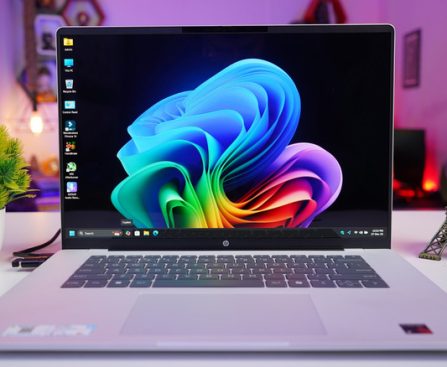
The term laptop refers to a computer that is portable and can be placed on your lap (which explains the name), while the designation notebook is typically reserved for ultra-slim laptops. They are even more lightweight and weigh roughly the same as a paper notebook. This size distinction should serve as your first indication that a notebook has smaller, fewer, and generally inferior components. Essential hardware components, such as RAM, CPUs, and storage drives in notebooks, usually cannot match those found in laptops. Additionally, notebooks commonly feature fewer ports for connecting to peripherals and other devices.

The variation in size and performance also impacts battery duration. Laptops generally offer greater energy capacity due to having more available space for larger batteries. However, the downside to this is that the more robust hardware within laptops demands more energy, leading to quicker battery depletion. In contrast, notebooks are more economical with their power consumption, owing to their less powerful components. Since their CPUs and screens require less energy, notebooks tend to last significantly longer without being plugged in compared to most laptops.

Notebooks may not always be appropriate for the job

As noted previously, laptops come equipped with more powerful components due to having much more space. This disparity in capability limits what notebooks are capable of and the functions they can perform, especially when compared to their laptop equivalents.

While laptops don’t always quite reach the level of specialized desktop workstations, most are still capable of handling a range of tasks. You can utilize laptops for video editing, software development, and gaming. Indeed, many laptops surpass gaming consoles like the PlayStation 5, and depending on the specific laptop model, you will find ample ports to enhance your setup with additional monitors, external keyboards, and adapters for wireless devices like headphones. Notebooks, conversely, only possess enough power for lighter tasks such as composing emails, modifying documents, and streaming YouTube videos.