
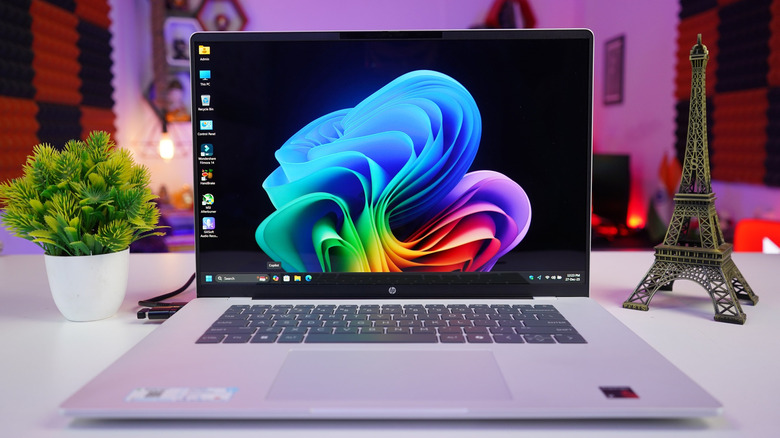

hard drives used to be the dimensions of contemporary washing machines, but now it’s possible to fit computers into backpacks. Although these devices are commonly referred to as laptops, some are known by a different name that brings about considerable confusion: notebooks. This isn’t just a simple synonym.
The term laptop refers to a computer that is portable and can be placed on your lap (which explains the name), while the designation notebook is typically reserved for ultra-slim laptops. They are even more lightweight and weigh roughly the same as a paper notebook. This size distinction should serve as your first indication that a notebook has smaller, fewer, and generally inferior components. Essential hardware components, such as RAM, CPUs, and storage drives in notebooks, usually cannot match those found in laptops. Additionally, notebooks commonly feature fewer ports for connecting to peripherals and other devices.
The variation in size and performance also impacts battery duration. Laptops generally offer greater energy capacity due to having more available space for larger batteries. However, the downside to this is that the more robust hardware within laptops demands more energy, leading to quicker battery depletion. In contrast, notebooks are more economical with their power consumption, owing to their less powerful components. Since their CPUs and screens require less energy, notebooks tend to last significantly longer without being plugged in compared to most laptops.