
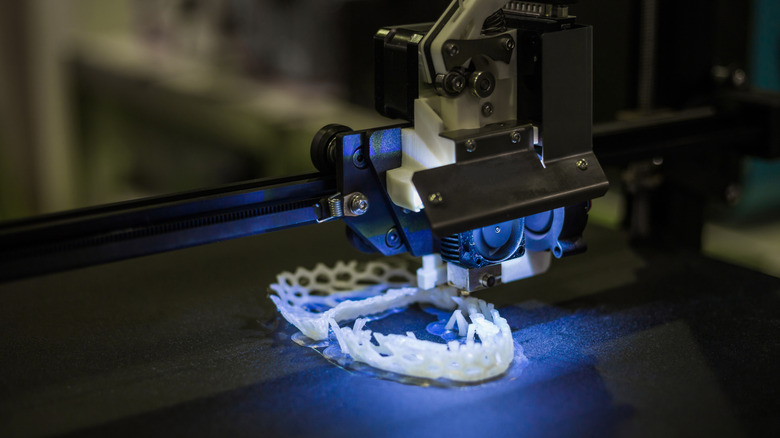

don’t depict the most advantageous applications of this technology). Nevertheless, at the research level, the technology is continuously evolving, with teams investigating the potential of 4D printing. One research group is even testing 4D printing to construct autonomous “soft robots” utilizing materials that have typically been considered waste.
A fundamental difference between conventional 3D printing and 4D printing is the incorporation of a time dimension. This added dimension is what renders it “4D.” 3D printing entails the production of static objects that generally remain immobile unless integrated into machines as components. In contrast, 4D printing facilitates the creation of items that can alter their shapes, functionalities, or both in response to stimuli. Heat and light serve as examples of stimuli that can activate a 4D printed object to change its form or operation.
This innovation holds potential in sectors such as robotics. Take, for instance, the research carried out by a team of Korean scientists. In a publication within Advanced Materials, the researchers describe how they have employed a 4D printing technique to create recyclable structures that can autonomously modify their shape when subjected to heat or light. While this achievement is remarkable by itself, what is perhaps even more impressive is that the team accomplished this milestone using materials that are typically deemed industrial waste: sulfur.