

Summary: Anthropic CEO Dario Amodei met with White House Chief of Staff Susie Wiles and Treasury Secretary Scott Bessent on Friday for “productive and constructive” discussions regarding access to Mythos, the advanced AI capable of uncovering thousands of zero-day vulnerabilities. This meeting marks potential progress in the standoff caused by Anthropic’s refusal to loosen safety restrictions, leading to their blacklisting by the Pentagon. Any eventual agreement is expected to bypass the Defense Department, utilizing civilian agencies instead.
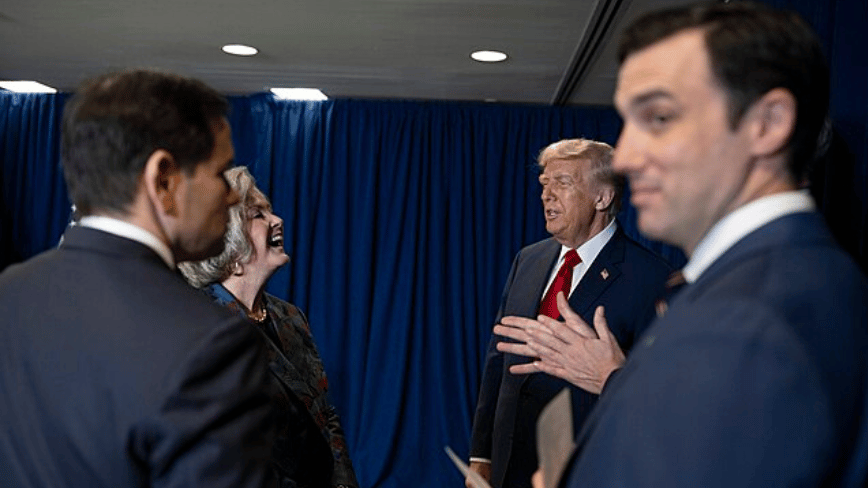
On Friday, Anthropic CEO Dario Amodei had a meeting in the West Wing with White House Chief of Staff Susie Wiles and Treasury Secretary Scott Bessent. Described by the White House as “introductory, productive, and constructive,” the discussions focused on collaboration opportunities and addressing challenges in scaling AI technology. President Trump later claimed ignorance of the meeting.
This development represents a significant move towards resolving a conflict that has kept Anthropic blacklisted by the U.S. government while the government simultaneously seeks access to its most potent AI model. A potential agreement would likely exclude the Pentagon, granting Mythos access through civilian agencies uninvolved in the original conflict.
Background
The issue began in late February when Defense Secretary Pete Hegseth insisted Anthropic provide the Pentagon unrestricted access to its AI models for purposes like autonomous weapons and surveillance. Amodei refused, citing AI reliability concerns and the need for updated legal protections against surveillance. Hegseth responded by designating Anthropic as a supply-chain risk, akin to foreign threats, effectively blacklisting them from government contracts.
Anthropic filed lawsuits against the Trump administration in March for alleged unlawful retaliation. An initial federal court ruling blocked the blacklist, but was overturned on April 8. Despite this, Anthropic remains able to work with non-Defense Department agencies. Following the unfavorable ruling, Anthropic engaged political consultants, and Friday’s meeting is seen as a step towards a resolution.
The paradox leading Amodei to the White House is that Anthropic announced the release of Mythos ten days post-appeal loss, garnering attention from the government which could not overlook its implications.
Capabilities of Mythos
Mythos is a powerful general-purpose AI model that identified and exploited numerous previously unknown zero-day vulnerabilities across prominent operating systems and web browsers during testing. It achieved success in over 83% of exploit attempts, a feat previously unseen in AI models. The UK’s AI Security Institute and JPMorgan Chase CEO Jamie Dimon acknowledged its advanced capabilities, with the Council on Foreign Relations viewing it as a pivotal moment for AI and global security.
Anthropic chose not to publicly release Mythos but instead initiated Project Glasswing, offering controlled access to vetted organizations like AWS, Apple, Google, and JPMorgan Chase, focusing on fixing vulnerabilities pre-exploitation. This decision aligns with Anthropic’s safety-first principles that clashed with the Pentagon’s demands.
Objectives
The Treasury Department aims to use Mythos for identifying vulnerabilities within its systems. Various intelligence and cybersecurity agencies are already trialing it. The White House Office of Management and Budget is creating safeguards for controlled federal usage. Bessent’s inclusion in Friday’s talks indicates the high-level economic and security interests in Mythos.
Anthropic seeks to resolve the blacklisting issue, though Pentagon revenue isn’t vital; the company’s revenue and valuation demonstrate its financial strength. The primary concern is the damage to Anthropic’s reputation and stability among government-linked clients. Amodei desires a resolution that maintains their commitment to safety.
A potential compromise could grant Mythos access for defensive purposes via civilian channels, with the administration potentially narrowing the supply-chain risk designation. The Pentagon would remain excluded unless specific military use cases undergo separate review. Both parties are incentivized: Anthropic to mitigate commercial harm, and the White House to leverage valuable technology.
International Pressure
International dynamics increase urgency. Anthropic plans to offer Mythos to select British banks and is expanding its London office. The Bank of England’s Governor has already called Mythos a cybersecurity threat, urging a high-level meeting involving major banks and security agencies. Canadian officials have also acknowledged its significance.
This scenario presents a situation where key U.S. allies might gain access to a critical security asset before the U.S. itself, prompting the White House to resolve the dispute, emphasizing the broader stakes involved beyond initial disagreements.
Implications of Friday’s Meeting
The term “introductory” in the meeting’s description indicates that discussions are just beginning, not concluding. Although litigation continues and the court ruling remains, the conversation marks a