
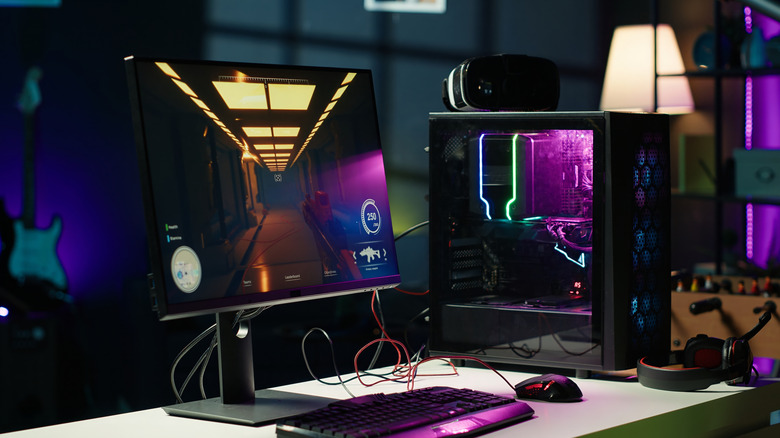

When searching for a new monitor, one key factor to consider is its resolution. Although 4K displays are a coveted option for many, more economical choices typically lead to the debate between 1440p and 1080p. This decision can affect various aspects of your usage, so it’s essential to determine whether upgrading to 1440p is worth the investment.
In general, 1440p should be your preferred pick. It represents one of the top choices available, aside from 4K monitors. 1440p monitors provide Quad HD visuals at 2560×1440 pixels, which is ideal for multitasking, as it allows for more windows to be displayed simultaneously. Games and films also greatly benefit from 1440p; better resolutions can result in breathtaking visuals.
When you compare the 1920×1080 resolution of 1080p monitors, you gain nearly double the visual information, but that doesn’t imply a Full HD monitor is subpar. For years, 1080p has been a primary standard in the industry, and for various basic applications, they remain among the top affordable computer monitors. Moreover, they do not require more robust hardware, and the quality is sufficient for numerous users.
Reasons a 1080p monitor remains adequate for most individuals
Despite being one of the more fundamental monitor choices available today, 1080p continues to represent the standard for many users, as reported by Steam. This is due to its balance between performance and cost. When purchasing one, you can expect your image to be free of jagged edges, unlike older options like 720p. Additionally, you won’t pay a premium, unlike other alternatives. For standard usage, 1080p monitors are more than adequate for the majority of users.
Furthermore, 1080p is still a very viable resolution for gaming, especially if higher-resolution visuals aren’t a priority or if you lack the necessary hardware for them. These monitors have led the industry for years, so while they may not provide the intricate details available at 1440p, you’ll still see all the key elements clearly on screen.
For instance, FPS and competitive games tend to perform better on a high-quality 1080p display compared to an entry-level 1440p monitor. These genres often don’t require a higher resolution as much as they demand a high refresh rate, allowing you to save money on a 1080p screen with such specifications. This results in smoother gameplay, which is significant since our eyes can perceive beyond 60 FPS, contrary to popular belief.
Upgrading to 1440p is advantageous with the appropriate hardware
A valid reason for acquiring a 1440p screen would be if your primary goal is to immerse yourself in single-player and AAA gaming experiences. The heightened resolution of these screens can make many games look stunning, particularly when playing with ultra graphic settings. Additionally, utilizing DLSS and ray-tracing technology can enhance FPS performance and create incredible lighting effects, complementing a 1440p display beautifully.
Computers need to handle nearly twice as much pixel data from 1440p monitors compared to 1080p screens, making it crucial to have hardware tailored for this requirement. For example, while the RTX 4060 is one of the best-value Nvidia GPUs for 1080p gaming, it may not offer the same performance for Quad HD.
Ultimately, while 1440p monitors are a sensible option, they aren’t necessarily the best choice for everyone in the market for a new monitor. To truly benefit from them, adequate hardware is also needed. So, if you’re ready to invest in some additional upgrades, the 2K resolution could be an excellent option, particularly if 4K isn’t an option. Otherwise, it may be wiser to stick with a 1080p display.