
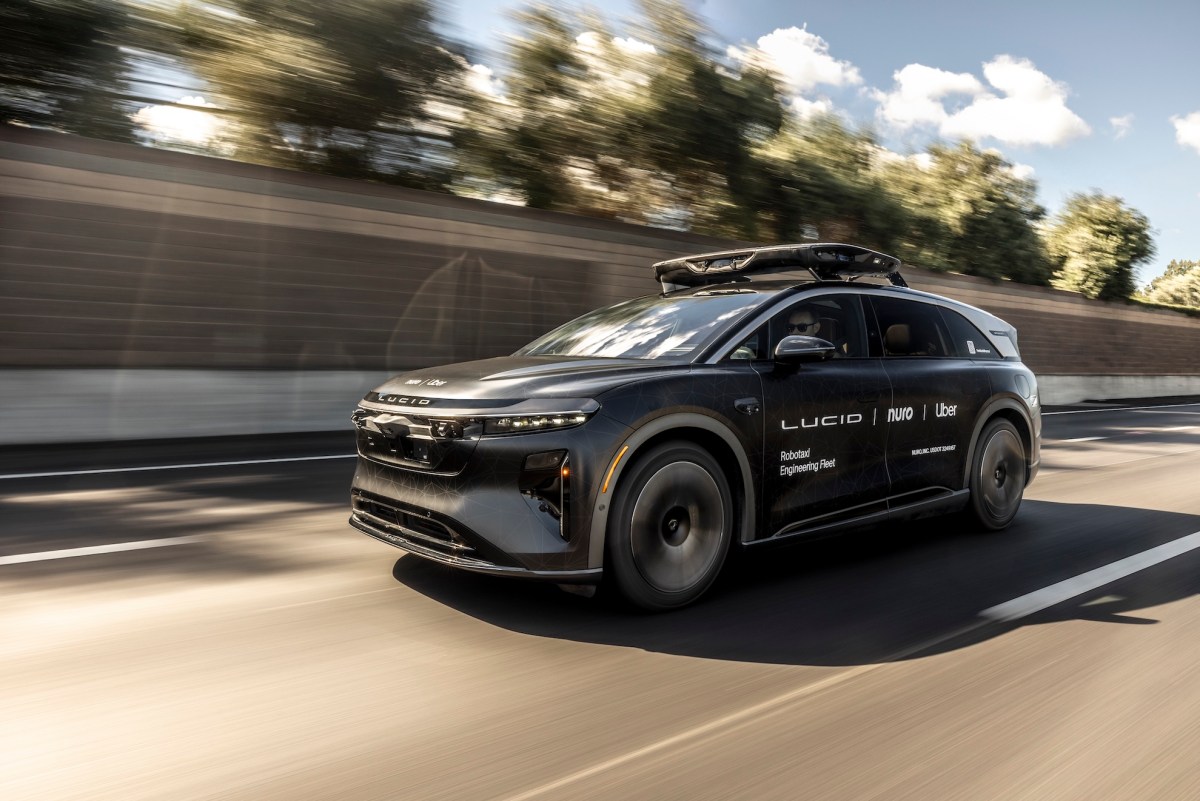

Uber’s upcoming luxury robotaxi service with Lucid Motors and Nuro has added a new partner: Hertz. On Thursday, the companies announced that Hertz will manage fleet operations, including charging, maintenance, repairs, cleaning, and depot staffing. The service, announced the previous year, aims to launch by late 2026 in the San Francisco Bay Area, utilizing Lucid’s Gravity SUVs and Nuro’s self-driving technology.
Hertz will manage these operations through a newly established affiliate, Oro Mobility, designed to offer integrated fleet management solutions across various mobility sectors. According to Hertz’s press release, Oro seeks to address a critical gap as the industry shifts from personally owned to commercially operated and autonomous fleets.
Hertz has a history of following mobility trends, having undergone a bankruptcy restructuring in 2020. In 2021, the company announced it was purchasing 100,000 EVs from Tesla, a move that helped Tesla reach a $1 trillion valuation and boosted Hertz’s image post-bankruptcy. Hertz also announced plans in 2022 to acquire up to 175,000 EVs from General Motors and another 65,000 from Polestar. However, none of these deals fully materialized, and Hertz began selling off EVs in early 2024 due to higher-than-expected maintenance costs associated with Uber drivers renting them, alongside Tesla’s price cuts to stay competitive and boost sales.
Establishing a fleet management and operations division aligns closely with Hertz’s core strengths as a rental car leader, similar to competitors like Avis who are managing robotaxi fleets for Waymo. Given the preference for some robotaxi companies to use third parties for these tasks, Hertz might develop a successful business with Oro.
Hertz and Uber also plan to explore further expansion opportunities in 2027. Uber has agreements with numerous autonomous vehicle firms globally and plans to acquire at least 35,000 robotaxi-ready vehicles from Lucid Motors soon. This includes an initial order of 10,000 Gravity SUVs, with recent plans to purchase another 25,000 EVs from Lucid Motors based on a new mid-sized platform. Additionally, Uber owns over 11% of Lucid Motors through investments accompanying these vehicle orders.