
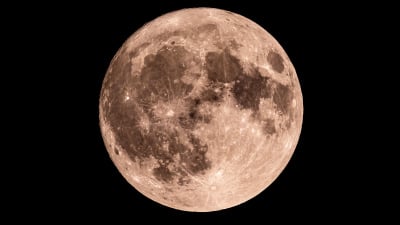

Tonight marks the beginning of a new lunar phase, known as the Third Quarter. Around 50% of the Moon is illuminated, moving us closer to the New Moon.
As of Saturday, May 9, the Moon’s phase is the Third Quarter. According to NASA’s Daily Moon Guide, 56% of the Moon will be illuminated tonight.
Without visual aids, you can see the Mare Imbrium, Tycho Crater, and the Oceanus Procellarum. With binoculars, you’ll spot the Mare Humorum, Alphonsus Crater, and Alps Mountains. A telescope will reveal even more: the Fra Mauro Highlands and Caucasus Mountains.
Two Full Moons occur in May, with the next one on May 31.
According to NASA, the Moon takes about 29.5 days to orbit Earth, transitioning through eight phases. Though we always view the same side, sunlight’s angle creates the full, half, and crescent shapes. There are eight primary lunar phases:
– New Moon: The Moon is between Earth and the sun, making it invisible.
– Waxing Crescent: A small light sliver appears on the right (Northern Hemisphere).
– First Quarter: Half the Moon is lit on the right, appearing like a half-Moon.
– Waxing Gibbous: More than half is illuminated, but not yet full.
– Full Moon: The Moon’s face is fully illuminated.
– Waning Gibbous: The Moon begins losing light on the right (Northern Hemisphere).
– Third Quarter (Last Quarter): Another half-Moon, now lit on the left.
– Waning Crescent: Only a thin light sliver remains on the left before darkness.
Lois Mackenzie is a freelance reporter for Mashable, having contributed to publications like Fit&Well, Metro, and Coach magazine. She holds a Master’s degree in Digital Journalism from Strathclyde University and a Master of Arts in English Literature from the University of Aberdeen.