
The age of the galactic bulge is more than just a number. According to new insights, the Milky Way’s core, once thought to be an ancient collection of stars, might actually contain younger stars than previously believed. A large survey, one of the densest in our galaxy, conducted with NASA’s Hubble Space Telescope, seeks to resolve this debate. While past studies suggested the bulge formed around 10 billion years ago, newer research indicates a portion of these stars may be only 5 to 8 billion years old. Hubble’s project aims to map 20 to 30 million objects in this region, providing an unprecedented view of the crowded core, where dust clouds often obscure the stars. The survey will complement the upcoming Nancy Grace Roman Space Telescope mission, set to explore the area for planets using gravitational microlensing. Results could reshape our understanding of the Milky Way’s growth, showing how stars have evolved and how the galaxy’s structure has transformed over time.
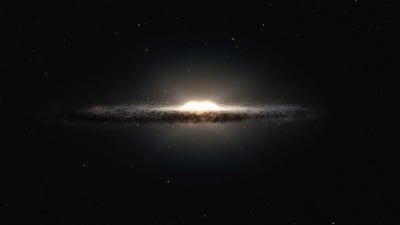
Hubble Discovers Anomalies in the Milky Way’s Core

1 Min Read