
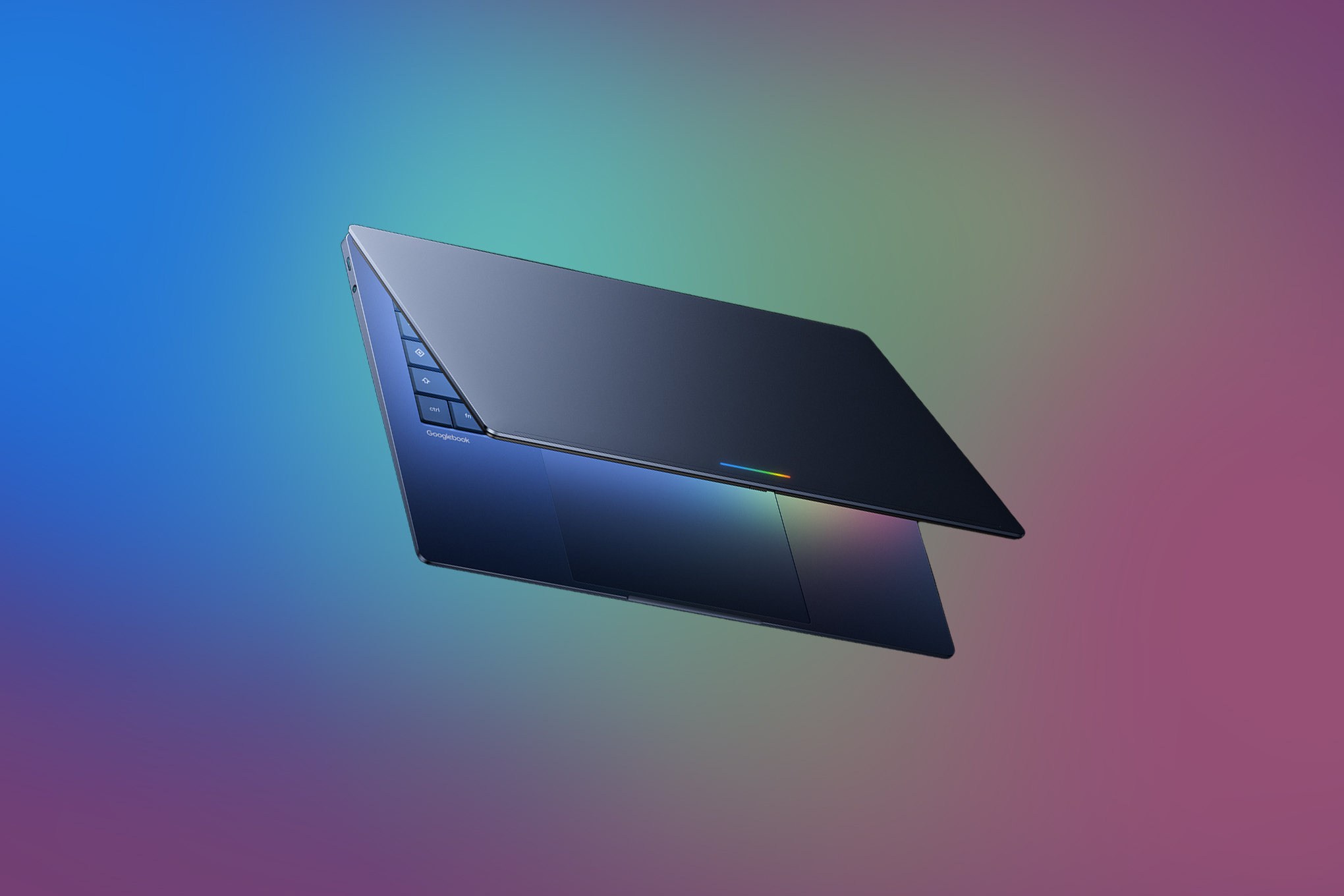

Chromebooks addressed a real need 15 years ago, but I’m uncertain about the purpose of Google’s new Googlebook.
Google announced its Googlebook laptop platform yesterday, leaving me questioning its necessity. Why dismantle its successful Chromebook and ChromeOS platform for this? The anticipation of Android and ChromeOS merging under the rumored Aluminium OS promised exciting possibilities, including transforming Android phones into portable Chromebook desktops, rejuvenating Android tablets, and expanding Chromebook laptops’ functionalities. However, what we received was Googlebooks—awkwardly named laptops lacking detailed hardware information, except for a glowing light bar and Intel’s involvement, running an OS reminiscent of ChromeOS. Google hasn’t clarified their purpose, aside from highlighting some features and emphasizing Gemini’s presence.
The Googlebook appears to offer a decent desktop experience with Android apps, but this isn’t a novel proposition. ChromeOS already supports Android apps and performs adequately. Googlebooks simply adapt a mobile ecosystem to desktop, unlike Windows and macOS which are free from such constraints.
Google’s new operating system and hardware do not seem to address any unmet needs in computing yet. Their presentation lacked compelling innovations, offering just minor improvements in Android phone and laptop interaction and familiar Gemini enhancements. Just two years ago, Chromebooks included a Quick Insert key for Gemini’s features.
I don’t want to dismiss an entirely new OS as unnecessary, but perhaps Google could have developed an app instead? This is especially plausible since their Googlebook features resemble potential Chromebook functionalities. Their AI-powered widgets, app casting, and file transfers from paired Android devices seem achievable without launching a separate platform.
Chromebooks revolutionized low-cost, virus-resistant, browser-based computing, becoming staples in educational settings. ChromeOS has somewhat stagnated, despite promising Chromebook releases last year. In the meantime, competitors have advanced. MacBooks introduced revolutionary M-series chips, and the MacBook Neo remains competitive. Windows on Arm progresses with impressive processors and battery life, while Intel and AMD offer performance upgrades in Windows laptops. Spending on a MacBook Neo or higher on MacBook Airs or Windows machines secures top-tier computers.
Though not flawless—Apple and Microsoft’s OS faces challenges—their hardware excels. Macs are amid the Liquid Glass turbulence, and Microsoft’s Copilot addition in Windows 11 brought controversy. Nonetheless, Google’s introduction of Googlebooks doesn’t avoid scrutiny either. Featuring Gemini prominently led some to derisively label them Slopbooks.
What does acquiring a Googlebook give us apart from Gemini Intelligence? Unlike Macs, known for creative software performance, or Windows’ vast gaming and software support, Googlebooks’ distinguishing features remain unclear. Google must demonstrate their value compellingly.