Preorder the Pokémon TCG Chaos Rising Sleeved Booster Pack at Amazon for $12.99, now closer to TCGplayerâs $10.92 market price.

Motorola Razr Fold Pricing and Availability Information Unveiled Ahead of iPhone Ultra Debut
### The Expanding Market of Book-Style Folding Smartphones
The market for book-style folding smartphones is experiencing notable expansion, particularly with the upcoming release of Apple’s iPhone Fold, also known as the iPhone Ultra, later this year. This cutting-edge segment has already seen involvement from major players like Oppo, Huawei, and Samsung, with Motorola also preparing to launch its latest device shortly.
#### Key Participants in the Market
Samsung has established itself as the leading entity in the book-style folding phone arena, with its Galaxy Z Fold 7 being the most recent version. The phrase “book-style” describes devices that look like conventional smartphones when folded but open up to disclose a larger, tablet-sized screen. This design grants users the convenience of portability while not compromising on display area.
#### Upcoming Motorola Razr Fold
The Motorola Razr Fold has garnered significant attention, with new information about its pricing and release date recently disclosed. Pre-orders for the device will commence on May 14, and shipments are anticipated to start on May 21. Priced at $1,899, the Razr Fold is positioned between Google’s Pixel 10 Pro Fold and Samsung’s Galaxy Z Fold 7.
Ben Shoon, a tech reviewer currently utilizing Samsung’s foldable device, remarks that the Razr Fold offers a well-rounded blend of features and ease of use. He highlights that Motorola has developed an experience that is both streamlined and rich in functionality, leveraging Android’s enhancements for foldable devices.
#### Features of the Razr Fold
The Razr Fold is equipped with several features that boost its functionality. It features a taskbar that remains visible during navigation, enabling effective multitasking with split-screen options. Moreover, users can tilt the device to enter “laptop mode,” turning the lower section of the display into a trackpad while the upper part functions as a screen. This capability is akin to what Samsung provides in its foldable offerings.
#### The Anticipation for the iPhone Ultra
As the market progresses, the iPhone Ultra is projected to be the most premium model, with a price expected to surpass $2,000. This forthcoming launch is likely to heighten competition among established brands and could establish new benchmarks for foldable technology.
In summary, the book-style folding smartphone sector is swiftly advancing, featuring innovative designs and functionalities that address the changing demands of consumers. With more manufacturers entering the market, the rivalry will propel advancements in technology and enhance user experiences.

Meta Experienced a Decline of 20 Million Users Last Quarter
Meta is planning to pump billions more into AI investments this year, despite noting that millions of users have seemingly started to abandon its platforms. In an earning call on Wednesday, Meta reported that figures for “Family daily active people” – the term Meta has coined for all collective users of Facebook, Instagram, WhatsApp, or […]
Is this ‘de-extinction’ project actually onto something?
Dallas-based genetics and biotech startup Colossal has raised hundreds of millions of dollars from venture capitalists, the CIA, and Peter Thiel, among others. Its buzzy “de-extinction” projects aim to “bring back” lost animals like the woolly mammoth, the Tasmanian tiger, and the dire wolf – although it isn’t creating copies of extinct creatures from ancient […]

Instagram says it doesn’t want your tweet roundups
The internet is full of copycat, stolen, reposted, and low-effort content – and Meta, at least publicly, has said it is working to cut off some of the reach. Beginning in 2024, the company has made incremental announcements saying it would begin limiting “unoriginal” content from being recommended on Instagram. It meant that if you […]

Instagram Targets Content Aggregators
The update targets content aggregators that don’t post original content and instead simply re-upload others’ posts.

Meta reports its business AI now enables 10 million weekly conversations
Meta said over 8 billion advertisers have used at least one of its gen AI tools
NASA Designs Nuclear-Energized Expedition to Mars for Enhanced Space Exploration
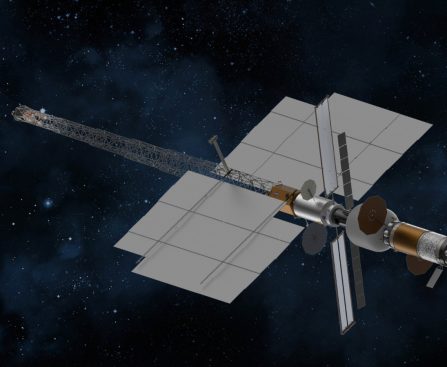
NASA’s upcoming mission resembles an Andy Weir space saga more than a government initiative. Unveiled at NASA’s March 2026 ‘Ignition’ occasion, NASA is pushing towards its inaugural nuclear-powered journey to Mars. The vehicle designated for the task, named Space Reactor-1 Freedom, aims to be the first spacecraft to implement nuclear electric propulsion in deep space, marking a potentially groundbreaking advancement in humanity’s exploration of the vast frontier.
Scheduled conveniently for the closing month of President Trump’s administration, NASA officials are touting the mission as a part of the president’s National Space Policy, which seeks to “broaden the horizon of human exploration, safeguard the nation’s crucial economic and security interests, spur commercial growth, and lay the groundwork for a new era in space.” These efforts are part of an expedited blueprint aimed at establishing “American preeminence in space.” They encompass intensifying the agency’s lunar landing initiatives, including a new phased plan to establish a consistent lunar base, transforming its low-earth orbit strategy in light of the forthcoming decommissioning of the International Space Station, and investing in nuclear electric propulsion. How the administration intends to realize these aspirations while cutting NASA’s scientific budget by fifty percent remains a significant concern.
Per NASA’s disclosure, SR1-Freedom will facilitate the agency’s Skyfall mission to the Red Planet. Skyfall, a joint venture between UAV manufacturer AeroVironment and NASA’s Jet Propulsion Laboratory, aims to examine Mars’ surface using a squadron of three remotely piloted helicopters. If successful, NASA’s delivery system could eclipse its Mars exploration initiative, representing a pivotal moment for the country’s endeavors in space exploration. Nevertheless, experts express skepticism regarding the agency’s declared timeline. Ultimately, NASA anticipates that this mission will provide insights for its Lunar Reactor-1 program, which aims to establish the agency’s inaugural permanent nuclear-powered lunar base.
How it operates
Nuclear propulsion could enhance the distance, duration, and pace of space travel. Present rockets operate on chemical propulsion, where a blend of liquid hydrogen and oxygen ignites to create an explosive reaction. While chemical propulsion generates enough thrust for journeys within Earth’s immediate vicinity, nuclear energy offers a more potent and efficient reaction, allowing spacecraft to travel faster and longer than traditional propulsion methods. Incorporating nuclear reactors might also address NASA’s solar issue. Currently, most spacecraft rely on solar energy for their electrical needs, meaning power supplies diminish as they move further from the Sun. NASA indicates that a spacecraft’s solar energy drops to 4% upon reaching Jupiter. By transitioning to nuclear space travel, NASA could surpass its present exploration boundaries.
Nuclear spacecraft replicate the processes employed in terrestrial reactors, wherein uranium is bombarded with neutrons to produce a significant fission reaction. Gas turbines transform the generated heat into electricity, which ionizes the spacecraft’s gas propellant into plasma, propelling its thrusters. This reaction is considerably more efficient than standard chemical fueling techniques. Utilizing a different type of uranium than their terrestrial equivalents, a nuclear thermal reaction achieves roughly ten times the power density of conventional reactors, reducing missions’ fuel demands to a mere fraction of the immense quantities required by chemically driven rockets.
Importantly, nuclear propellant lacks the initial thrust required to attain orbit, consequently relying on traditional boosters for launch. Nevertheless, nuclear fission facilitates spaceships to gradually accelerate to speeds unattainable by their chemically fueled predecessors. Future endeavors utilizing more potent nuclear thermal propulsion could reduce a journey to Mars by over two-thirds. Some speculate that astronauts could soon reach the outer solar system in just two years.
Moving forward
Nuclear space travel isn’t as implausible as it appears. During the ’50s and ’60s, for example, both the USSR and U.S. launched nuclear reactors into orbit. Additionally, radioisotope thermoelectric generators, or RTGs, have been employed in numerous NASA missions. SR-1 Freedom will shift the utilization of nuclear reactors from generating spacecraft’s electrical power to serving as its primary thrust mechanism. It is noteworthy that American efforts to exploit nuclear propulsion have faltered due to financial and safety concerns. The latest attempt, known as DRACO, fell victim to the administration’s significant 2025 budget cuts affecting the agency.
NASA plans to launch “an American industrial campaign” in collaboration with the Department of Energy to meet its 2028 deadline. Instead of opting for a more powerful and complex thermal propulsion system, SR-1 will implement a more straightforward electric power-and-propulsion system repurposed from NASA’s now-defunct Gateway lunar space station. Reports suggest that this electrical framework will be connected to a DOE-designed nuclear reactor, which NASA Administrator Jared Isaacman claimed is “largely completed.”
While the scientific community holds a hopeful outlook regarding its potential, many harbor doubts about the timeline. Individuals consulted by Science, for example, remarked that a mission akin to SR-1 would typically take three to five years to design and construct.
Alternative Approaches to Lower Expenses on Secondary Displays for Gaming
Before the era of live internet streaming, YouTube, and Twitch, if you wished to indulge in video gaming, you would either visit an arcade or settle in front of a solitary screen to play. Nowadays, one screen may not suffice for those wanting to game, engage on Discord, and browse the web simultaneously. Tools like OBS and Streamlabs, along with splitting your screen, can assist; however, having a secondary screen enables you to observe your game and other windows without obstructing your view. Nevertheless, you don’t have to spend a fortune for that second display.
Your primary screen is intended for your gaming, so it’s advisable to seek high-resolution choices to maximize the graphics, appearance, and gameplay of whatever you are playing. Those specifications can increase the cost, but even a $50 second monitor can transform how you operate and play. That second monitor doesn’t have to be overly pricey or deliver the finest image quality if you plan to use it for tasks outside of gaming.
Multitasking is a crucial skill not just for streamers with an audience, but for anyone who enjoys having more options readily available. A second monitor enables you to keep your game active on the primary screen while you search for walkthroughs, read FAQs, or chat with friends about the latest episode of your favorite show on the secondary monitor. This implies that the screen can be less expensive than your main gaming display.
The advantages of using a second monitor while gaming
Investing in an extra gaming monitor does not necessarily mean your bank account must take a hit. Standard PC monitors usually suffice and are budget-friendly, often priced around $100 or less. You don’t need the second screen to be extravagant, just functional. Opt for a 4K model for your primary monitor and use your second monitor for everything else.
There are numerous monitors that can function as a second screen without breaking the bank. The UFYQL Portable Monitor, for instance, has a listed price of $39.99, and the ASUS 22″ 1080P Eye Care Monitor (VP227HF) is priced at $69, making both viable options for a second monitor. Be sure to research a monitor that aligns with your requirements to ensure you obtain precisely what you need.
Check Reddit, and you’ll find a forum discussing whether a budget monitor is suitable if it’s not intended for gaming. One member noted that the colors between the two monitors were mismatched, with one appearing more yellow, although they did not specify which display was at fault. If you encounter any color discrepancies, you might explore common settings that could be affecting your computer monitor.
The ideal setup for dual-monitor gaming
When it’s time to configure your dual monitors, you have several options to choose from. You can position your second display alongside and aligned with your gaming monitor, utilizing a stand or opting for a mount similar to a wall TV. Screens can also be adjusted to horizontal or vertical orientations, based on your preference. To switch to a vertical view, you’ll need to access your computer’s settings to alter the view for each screen. Many monitors come with an integrated stand, but not all do, so you may need to be inventive. Just ensure that your second monitor has a VESA mount so you can attach it to any stand or desk arm of your choice.
In summary, high-quality computer monitors are excellent for gaming, but it’s wise to purchase a less expensive panel for secondary tasks. If you’re on a limited budget and don’t want to overspend on a second high-performance monitor for your gaming setup, you’re not obligated to do so. A second monitor is not only useful but also enhances the versatility of your gaming experience. You are free to engage in games on one monitor while utilizing the additional monitor for anything else you need. The notable exception to the idea of going inexpensive on your second monitor is if you indeed wish to extend your gaming display across both screens. In such a scenario, you would certainly want high-end capabilities on both sides of the setup.

SPRIND opens applications for €125M competition to build Europe’s first frontier AI labs

The Next Frontier AI Challenge, announced at EurIPS in December, explicitly tells applicants not to try to catch up with OpenAI, but to leapfrog to the next architectural S-curve, with up to â¬1 billion in follow-on funding dangled for the three winning labs. SPRIND, Germanyâs federal agency for breakthrough innovation, opened applications today for its […]
This story continues at The Next Web