
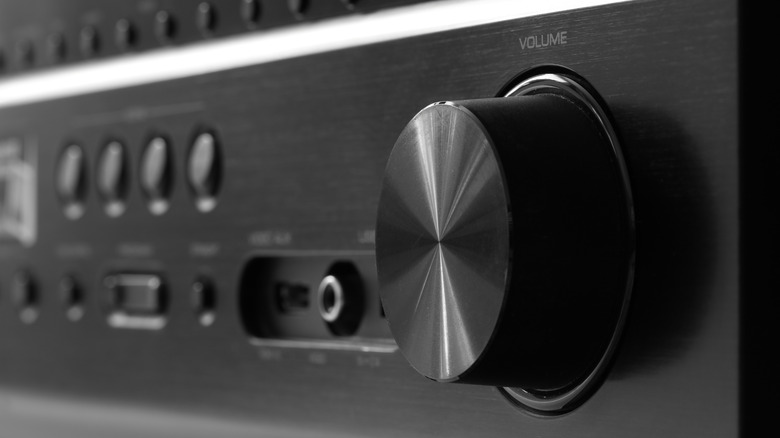

**AV Receiver Vs. Amplifier: What’s the Distinction?**
If you’re delving into your audio-visual arrangement with any level of seriousness, you’ve likely encountered the terms amplifier or receiver for managing sound. But what precisely distinguishes a comprehensive AV receiver from a more conventional amplifier? While there’s some overlap, the key differences emerge in how the two devices process audio and what each is optimally designed for.
In basic terms, an AV receiver is a device intended for handling audio in a video-centered configuration — often equipped with surround sound processing, HDMI switching, and additional functionalities tailored for entertainment systems. Although AV receivers almost invariably include an amplifier among their components, they do much more than simply power passive speakers. Conversely, a traditional stereo amplifier aims to provide stereo sound to passive speakers in a high-fidelity, predominantly music-focused environment. While AV receivers can serve as commendable music devices, as confirmed in our latest roundup of audiophile-favorite receivers, stereo amplifiers are generally more finely tuned for direct audio duties.
**AV Receivers Are Comprehensive Entertainment Units**
When navigating the realm of AV receivers, the designation itself suggests that there’s more than just audio involved — the “V” signifies visual after all. So what truly differentiates an AV receiver? While nearly every AV receiver comes equipped with an audio amplifier capable of supplying a certain wattage level to your entertainment system’s speakers, it’s typically in service of a surround sound arrangement. This makes it perfect for transmitting audio to multiple speakers in a movie room context, although you may need to experiment a little to find the best setup for your surround speakers.
Moreover, the additional features inherent in an AV receiver distinctly differentiate it from a standard stereo amplifier. Firstly, there’s usually a wealth of video-optimized audio processing software integrated within the unit. This software aids in shaping the sound to align more closely with what you’re viewing, often utilizing presets like dialogue enhancement, sports-specific settings, Dolby Atmos surround, and others. AV receivers frequently provide HDMI connections, enabling you to route your TV’s video signal through and use the receiver as the primary connection hub. This can be especially beneficial if you’re familiar with setting it up to work with your TV’s HDMI ARC port.
**What a Stereo Amplifier Excels At**
As previously mentioned, both an AV receiver and a stereo amplifier incorporate some amplification element. What differentiates a stereo amp is its emphasis on audiophile capabilities and the fidelity of the audio itself. An amplifier designed to drive stereo speakers often pairs seamlessly with a lossless audio or vinyl record system, supplying the necessary components and headroom to deliver rich, warm sound for music-centric listening experiences.
Frequently, an amplifier in a listening environment is even complemented by a digital-to-analog converter (DAC) that can transform a collection of lossless audio files into analog sound (which is essential since raw digital binary cannot be deciphered by human ears). Many amplifier models are even hybrid units that incorporate a DAC to ensure they function in harmony. You won’t encounter extensive input/output routing, and typically, there’s only support for stereo speakers. Though amplifiers are straightforward stereo devices, they often perform their role exceptionally well.